
Low-income housing splits field
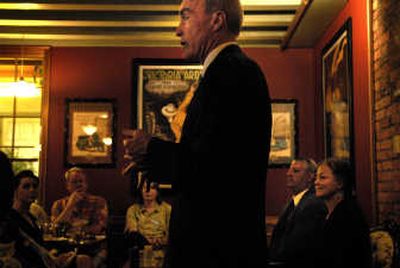
The city of Spokane was caught “flat-footed” by plans to turn downtown hotels used as low-income housing into new residential developments, Mayor Dennis Hession conceded Wednesday.
It should not have been surprised by the plans at all, said Councilwoman Mary Verner.
In a debate with two of his main opponents for the Aug. 21 primary, Hession characterized plans by developers to remodel properties like the Otis and New Madison hotels as a “good news, bad news” situation for Spokane. Good news that property values are up, bad news that it creates a shortage of low-income housing units.
“We frankly did not see it coming, so we are in a little bit of a crisis in addressing the issue of the Otis and the New Madison,” Hession told the Inland Northwest Business Alliance luncheon. When property owners announced plans that would displace poor residents, he said he set up a task force to look for solutions.
But the city should have known that the loss of this type of housing is a downside of downtown revitalization, which has been one of the city’s goals for a decade, Verner said.
“We know it’s coming, let’s get out in front of it,” she said. While a task force might be able to come up with an immediate fix, the community needs to find long-term solutions, which might include requiring developers who receive tax breaks to “address our public needs.”
City Councilman Al French said community development block grants are the best weapon the city has to make sure the community has adequate supplies of low-income housing without blight, but he contended Hession’s administration has tried to redirect that money from neighborhoods to downtown projects.
The minor skirmish over low-income housing was one of the few areas of disagreement among the three candidates in the debate sponsored by a group of gay, lesbian and transgender business people and their supporters.
All three candidates said they support a new state statute providing benefits for domestic partners, just as all supported a city ordinance that offered such benefits to city employees. The ordinance affects few workers, however, because those covered by union contracts must wait for such benefits to be bargained into their labor agreements.
Only four contracts have been negotiated since the ordinance passed, and none of those bargaining units asked for it to be included.
All three said a key issue in the race is leadership, with the only real difference being that each said he or she had the best leadership skills to do the job.
Hession said he’s been doing the job well since being appointed to the post 18 months ago. French said he’s got the “business acumen” – a phrase he used repeatedly – to be the city’s first real strong mayor. Verner said her style, which she described as “all about outreach,” would recognize that diversity is one of the community’s strengths.
Two other candidates – Michael Noder, a demolition contractor, and retiree Robert Kroboth – are also running for mayor but were not at the debate.