
Christian fantasy stories boom
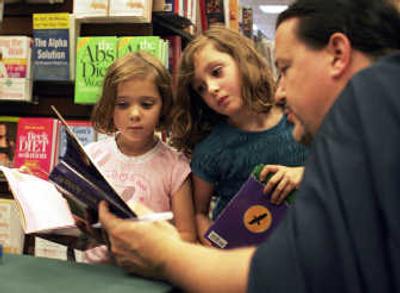
Could the next Harry Potter be a devout Christian?
Even as the seventh and final book in J.K. Rowling’s teen-wizard saga reaches a waiting world, a new breed of fantasy fiction is emerging.
Like the Potter series, it has mystical creatures, macabre events, epic battles and heroic young protagonists.
But this genre has overt Christian tones: messiahlike kings who return from the dead, fallen satanic characters, and young heroes who undergo profound conversions.
What you won’t generally find: humans waving wands and performing spells.
Christian fantasy, historically a slow seller, has caught fire recently, industry analysts say, thanks to the success of the Potter series – which has sent some Christian readers looking for alternatives.
Some religious leaders and parents have expressed unease with the Potter books, believing, among other things, that humans’ use of magic is forbidden by the Bible. The series is on the American Library Association’s list of most frequently challenged books at school libraries.
“For a Christian family who’s a little skeptical of some of the messages in the Harry Potter books, then they would find my books safe,” says Wayne Batson, a Howard County, Md., middle school teacher who has written a popular three-book series called the Door Within.
His latest book, “Isle of Swords,” part of a new series, is due out next month.
Batson’s Door Within series, published by Christian publishing giant Thomas Nelson, features teenager Aidan Thomas, who is suddenly plunged into an enchanted world.
He must choose to join the forces of good or evil. The forces of good are led by a saintly king who has risen from the dead after being slain by an evil knight, who now leads a corrupt kingdom.
The growth in Christian fantasy books is part of the recent escalation in sales of Christian fiction.
Stirred by the success of the apocalypse-themed “Left Behind” series, publishers are producing works of Christian suspense, thrillers, sci-fi, romance, horror (the devil is a prominent figure), mystery and – the latest trend – “chick lit.”
“Fiction has probably been the strongest category within the Christian book explosion,” said Jana Riess, religion reviews editor for Publishers Weekly. “It’s definitely leading the way.”
More than a dozen Christian fantasy titles are due out this summer from both secular publishers and large Christian publishing houses.
On Tuesday, Random House’s Christian imprint, WaterBrook/Multnomah, which publishes several fantasy series, released “Dragon Fire,” the fourth book in a series by retired teacher Donita K. Paul.
One current hot seller is Fablehaven, a series by Mormon writer Brandon Mull that was the first Christian fantasy series to hit The New York Times children’s best-seller list.
The books feature a sister and brother who set out to save a preserve for enchanted creatures. Unlike the Harry Potter series, it pits people, not wizards, against evil beings.
The use of magical powers by humans is a controversial theme for Christian writers and readers. They cite this biblical verse from the book of Deuteronomy in the Old Testament: “Let no one be found among you who sacrifices his son or daughter in the fire, who practices divination or sorcery, interprets omens, engages in witchcraft, or casts spells, or who is a medium or spiritist or who consults the dead.”
“If God says these things are wrong, unless you don’t believe in the Bible, you don’t want to argue with God,” says Marcia Montenegro, an Arlington, Va., author and speaker who campaigns against what she calls the use of the occult in the Potter books and elsewhere in popular culture.
Many religious leaders have rejected such objections, saying Rowling’s stories have a strong moral message. Some even see Christian symbolism in them.
Christian parenting guru James Dobson has praised the Potter books. Catholic News Service, an entity of the U.S. Conference of Catholic Bishops, has put them on its list of recommended children’s books.
Nonetheless, critics have said the series gives deitylike powers to its hero, although he has no known religion. Some also argue that the books lack a definitive portrayal of good and evil. (Harry does engage in some occasional fibbing, and his skills at deceiving adults are well honed.)
A few critics even have said that the lightning-bolt scar on his forehead represents the mark of the antichrist.
Rowling has dismissed such claims as “absurd.”
Batson says he’s grateful to her for opening up the contemporary market in fantasy.
Some Christian authors deal with their beliefs in overt ways, setting their stories in biblical times. Others follow in the footsteps of C.S. Lewis, using allegory and symbolism to illustrate Christian themes.
“If you’re looking for it, if you know the Bible pretty well, you’re going to pick up on the (Christian) symbolism,” Batson says of his series. “I wanted it to be something that anyone could read and enjoy a great fantasy adventure without feeling like they’re being preached at.”