
All’s well that ends well
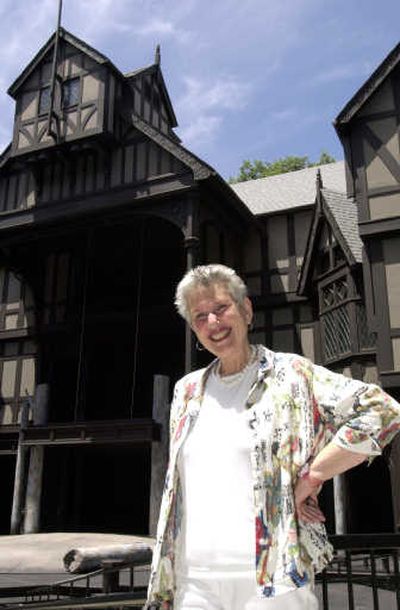
ASHLAND, Ore. – Libby Appel was walking up the steps of the Oregon Shakespeare Festival’s Elizabethan Theatre, where the stark set for her farewell production of “The Tempest” was still on stage, when a voice came out of the shadows.
“Libby, thank you so much for all you have done,” said the woman. “This was the best ‘Tempest’ ever!”
After 12 years as the festival’s artistic director, Libby Appel is bowing out.
To say goodbye, she chose William Shakespeare’s final play, where Prospero creates a storm to achieve his goal of finding a husband for his daughter, lets go of his magic and frees his slaves.
Appel also did her own translation of Anton Chekhov’s last play, “The Cherry Orchard,” which examines the passing of the feudal era in Russia.
“People don’t like any change,” she says. “People get scared of change. But, in fact, change was a very vibrant part of the landscape here right from the very beginning.
“The audience, I think, has made it possible for us,” adds Appel, who at age 70 blends well with the theater’s demographic. “Even when they don’t like it, they have stayed with us, been willing to see it happen.”
Appel created a storm of her own when she started in 1995 by firing a longtime and very popular director, and weathered complaints over her determination to diversify the acting company – featuring black actors in traditionally white roles.
Martha Lavey, artistic director of Chicago’s Steppenwolf Theatre Company, admires the way Appel raised the standard for racial diversity in casting, which “announces to people that you don’t just go to the Oregon Shakespeare Festival to have a bucolic setting and reliable Shakespeare plays.
“It makes it an environment where one can actually be stimulated artistically.”
Like Prospero, Appel is satisfied with what she has done and has yet to do.
During her partnership with executive director Paul Nicholson, the festival – founded in 1935 as an intermission between outdoor boxing matches – has seen its budget double to $24 million with the help of donors such as Microsoft Corp. co-founder and billionaire entrepreneur Paul Allen.
It was named one of the top five regional theaters in the country by Time magazine and has grown into one of the nation’s biggest repertory companies, with 774 performances of 11 plays and a company of 475, including 91 actors.
Appel has boosted the caliber of actors and directors, commissioned new plays from Tony Award winners, and taken original shows to the Kennedy Center in Washington, D.C., and the Barbican Theatre in London.
“You have to vigorously reinvent them,” she says of Shakespeare’s plays and other classics.
“You have to speak through the filter of the world you live in.
“Shakespeare has always been done since the 16th century through its modern eyes. So when people say they want the tradition, what tradition are we talking about?”
Appel was dean of theater at the California Institute of the Arts and artistic director of the Indiana Repertory Theatre before landing the Oregon job on her second try.
Nicholson, who became executive director of the festival the same day Appel became artistic director, remembers the clear vision that she brought to the festival.
“When a new artistic director comes in, everybody says, ‘We want to raise the theater to a new level,’ ” says Nicholson. “It’s almost like football coaches.”
But Appel was able to deliver, he adds, primarily by bringing in top directors and nurturing gifted actors. As an effective fundraiser with elite donors, she helped raise money to pay top directors top commissions, and give talented actors an artistic home.
“What has happened with Libby and I at the helm, we de-emphasized the Elizabethan side of the operation,” says Nicholson.
“We don’t want to be known as one of America’s top Shakespeare festivals. We want to be known as one of America’s top theaters.”
Linda Alper, who was a guest director of Appel’s first production at the festival, “Enrico IV” in 1988, found a home and welcomed the changes.
She’s been an actor with the festival for 20 seasons, and this year – with Appel’s backing – joined in writing the book and lyrics for one of the season’s hits, “Tracy’s Tiger,” an original musical based on a story by William Saroyan.
“None of that was happening before she was here,” said Alper. “She took some real chances on those.”
Appel plans to stay in Ashland with her two aging dogs and will direct Arthur Miller’s “A View From the Bridge” next season for new artistic director Bill Rauch.
Meanwhile, she’s hoping someone will hire her to do another Chekhov translation. Not a Russian speaker, she works with a translator.
“I realized maybe I do have something to say about Chekhov, not only as a director, but through an interpretation of his language,” she says.
“That passion has come upon me like I’ve been hit with a bulldozer. All I want to do is do this.”