
Don’t allow knapweed to be a thug
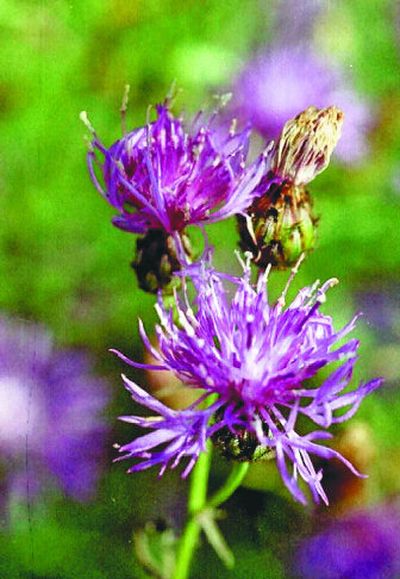
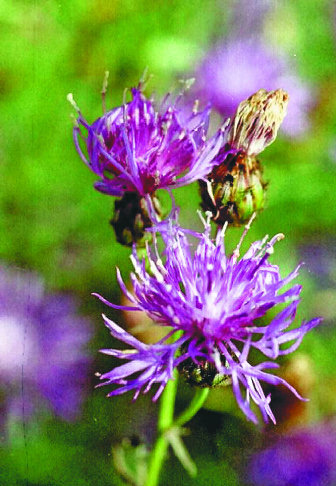
I have a problem with spotted knapweed. I have several acres of the stuff and no way to cultivate the area. Hand pulling is out of the question. I have heard that there is a weevil that thrives on this particular plant. How fast, how effective and where can we get them.
A Frustrated Otis Orchards Gardener
Knapweed is one of the most widespread and persistent weeds in the region. It is on the noxious weed lists for most counties of the Inland Northwest. Both spotted knapweed (pink flowers) and diffuse knapweed (white flowers) are Class B weeds in Spokane County, which means it is mandated for control in the county.
This invader from Eastern Europe is particularly invasive for several reasons. First, it has no natural enemies to keep it in check. Second, its roots exude a chemical that inhibits the growth of other plants around it. The other plants slowly die off, leaving only the knapweed. The last challenge is that each knapweed seed head can have as many as 400 seeds that maintain their ability to sprout for several decades
Control methods include building up an existing stand of grass, mowing the weeds, using biological controls or treating them with chemicals. Tilling knapweed-infested ground isn’t recommended because it brings more seed to the surface and continues the problem. If the area has at least a 50 percent cover of good grasses, fertilize them to encourage their growth. The grasses will shade out the knapweed over time. Mowing the weeds in late June to cut emerging flowers will begin to reduce seed production. Repeat mowings may be needed until the fall.
Biological controls in the form of a seed head weevil and a root weevil are available for knapweed, but they are not a silver bullet. They need several acres and three to five years to do their work. Availability of the bugs is somewhat limited, as they have to be collected in the wild and then transported to their new homes quickly. They also are limited because they are a controlled biological agent that needs to be tracked by weed authorities.
Because knapweed is basically a thug that uses the unfair advantage of altering the chemical relationship with plants around it, using chemicals to gain the upper hand first is something to seriously consider. It levels the playing field so you can use more sustainable methods to keep them out. There are a number of broadleaf herbicides that are effective and several criteria to be evaluated when selecting the right one.