
Cultivate ideas on tour
You’re probably familiar with that famous Joni Mitchell song, the one about how they paved paradise and put up a parking lot.
Seems the Master Gardeners of Bonner County have it backward. Last year, the Sandpoint-based group took a plot of land that was meant to become a parking lot and instead planted a garden.
The Master Gardeners’ Learning Garden, adjacent to the University of Idaho Extension Service office at the Bonner County Fairgrounds, is among the seven gardens on display for this year’s Sandpoint Garden Tour, on Sunday.
The small Learning Garden features fruits, vegetables, herbs and flowering plants. The idea behind the garden, said tour organizer Penny Barton, is to demonstrate the different ways one can grow things.
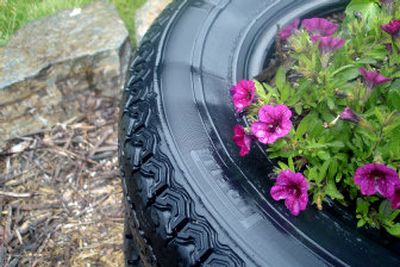
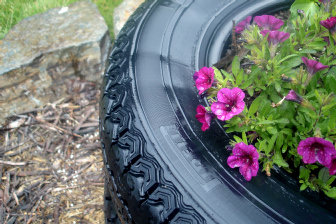
Tomatoes are suspended in the air and grown upside down. Raised beds hold vegetable seedlings. Squash and cucumber plants pop up from straw bales. Old tires are stacked up, filled with dirt and give rise to pretty annuals, rhubarb and other plants.
“It’s very sweet,” Barton said. “We started it last year and are still working on it.”
Elsewhere on the garden tour, potential green thumbs will see any number of things, Barton said. The “Deliberately Wild” garden of Barb Pressler “is one that’s fun,” she added. Pressler has landscaped with 70 percent native plants. She also has two ponds, one for relaxation and the other for frogs and grandchildren. Barton also described Pressler’s new concrete walkway, which is stained red and imbedded with gardening tools.
“She does such interesting things with cement,” Barton said.
Barton’s own garden, dubbed “Phoenix,” is the largest on the tour. Barton lives on 30 acres on the north end of Sandpoint. Two acres are planted just with flowers. She has 2,500 iris plants, 75 varieties of day lilies, 30 ornamental trees and countless perennials.
One flower bed measures 65 feet by 340 feet. “That’s just one (bed),” Barton added.
Some of the gardens are new, as young as four years old, while others have been long established. They feature cultivars and native plants, water features and rock walls, and trees and grass.
Barton hopes people find beauty and inspiration in the local gardens.
“They’re all such nice gardens. Everybody’s is so completely different from the other,” she said. “If they don’t go home with some ideas, I’ll be surprised.”