
Prep your property for fire season
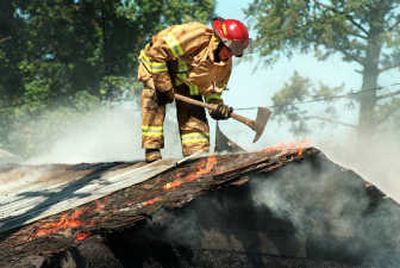
Fire season is again upon us in the Inland Northwest.
“It’s not a matter of if a wild land fire will happen,” says Garth Davis of the Spokane County Conservation District. “It’s when.”
And when it happens in your neighborhood, all you will have time to do is run. Just ask anyone who dealt with Firestorm in 1991.
For Davis, a forester with the conservation district, running from a wildfire is plain common sense, but it should be the last step in an overall strategy that also improves the chances you will have something to come home to when it’s all over.
Davis and the conservation district are embarking on an effort to help Spokane County landowners plan for the worst by offering a free fire-risk assessment of your property. That assessment will tell you what you need to do to improve the chances of your property surviving a fire. Using a standardized rating system, Davis will walk your property and rate the risk your landscape and buildings face. He says getting an assessment lets you know not only what you need to work on but also what you are doing right.
The assessment looks at a number of factors related to reducing a fire’s access to fuels. Davis will be looking at what kinds of fire-resistant materials are used in your house and outbuildings. Are the gutters clean? Are wood piles and other flammable materials stored well away from your buildings? If you have a deck, is the space under it enclosed to keep a fire from coming in under it? Are trash and clutter picked up?
Davis recounted the story of a camera crew filming a California wildfire that actually taped a broom left leaning up against a house catching fire. They put that fire out and the house survived.
Davis will look at how “lean, clean and green” your landscape is. Are needles, cones and leaves raked up and removed? He will pay particular attention to piles that were blown in by the wind, as the wind will bring sparks to the same areas. He will look at what type of plants and mulches are used in the landscaping around your buildings. Evergreens, especially junipers, are very flammable and should be cleared within a 30-foot radius. Bark mulches should be replaced with rock or hardscape. Is your lawn kept watered and cut short? Trees should be “limbed up” at east 12 feet off the ground to reduce the potential of ground fire moving into the tree’s crown. Deciduous shrubs should be cleaned up to remove dead and twiggy wood that could catch fire easily.
It’s also important to have trees and brush trimmed away from your driveway so your escape route is clear. And finally, post your address on a fire-resistant sign so fire crews can easily find it.