
Prune after spring bloomers bloom
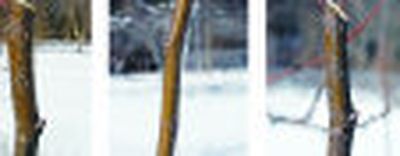
The big dilemma for gardeners this time of year is to determine what flowering trees and shrubs should be, or can be, pruned now and those that should be left to another time of the year. This is important because if the plants are pruned at the wrong time, you may be removing the unopened flower buds with your attempt to rein in the plant.
Proper pruning actually starts long before you get the loppers out of the garage. It starts with placing the shrub or tree in a space that fits its mature size when you plant it and then letting it grow into its natural shape. Planted this way, you will have to prune it infrequently if at all. Each shrub or tree has its own natural form, so resist the urge to trim every shrub into a little round ball.
As a rule, spring blooming trees and shrubs should be pruned after they finish blooming. Many of these plants, especially shrubs, over winter their flower buds on wood that grew last year. Pruning them in late winter will remove these buds and the plant won’t bloom.
Use Caution
Shrubs and trees that should not be pruned now include:
Rhododendrons and azaleas
Forsythia
Bridal wreath spirea
Bigleaf hydrangea (blue flowering)
Lilac
Magnolia
Mock orange
Weigela
Flower crabapple
Beautybush
Hawthorn
Serviceberry
Oregon grape
Prune Away
Now is the right time to prune summer flowering shrubs, evergreens like junipers and yew, and fruit and shade trees. Summer flowering shrubs produce their buds on wood that will grow this spring after you prune them and include:
Butterfly bush
Dogwood
Flowering plum
Flowering cherry
Flowering pear
Honeysuckle
Peegee hydrangea (white flowering)
Golden rain tree
Spiraeas other than the bridal wreath
Potentially
Redbud
Wisteria
Pruning Basics
Regardless of the time of year, there are three basic methods used in pruning.
Thinning involves removing a few branches from a shrub that has become too dense. Look for branches that are growing back into the plant, are rubbing other branches or are the oldest wood, and remove these first. Remove no more than a third of the plant at a time
Heading back involves cutting a branch back to an outward growing bud. The goal is to reduce the overall size of the shrub and open up the center of the plant. Do not prune branches to a uniform, flat height, as this removes the central leader of the plant that controls growth of the other branches and can result in wild growth.
Rejuvenation involves the major removal of branches in old, overgrown shrubs to force the plant to put out new growth. This can be a multiyear process. The first year, remove the oldest stems, cutting them to the ground. Take no more than one third of the plant each year. With the old branches removed, the plant will send up new growth to replace the old. Lilacs, forsythia and spireas are good candidates for this type of pruning.