
Church-singing roots

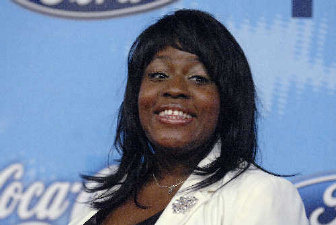
When LaKisha Jones belted out a song from the movie “Dreamgirls” in her debut in this season of “American Idol,” the Michigan church that helped nurture her soulful sound was rooting her on.
The musical careers of Jones and some other “Idol” contestants – past and present – were birthed in churches across the country, settings where many singers perform each Sunday to a not-so-nationwide audience.
“Years and years of singing in church and never making a living off of something that I love to do,” said Jones, a 27-year-old bank teller, summing up her musical career in a videotaped interview aired on the Fox talent show.
“And now to have the opportunity … it’s a good feeling.”
Churches, especially African-American churches, often have been the training ground for artists who make it to America’s most prominent stages.
Members of Mount Zion Missionary Baptist Church in Jones’ hometown of Flint, Mich., are busting with pride over the singer, whose powerful voice once belonged to their Voices of Mount Zion adult choir.
“She’s always been our ‘American Idol,’ ” says Cassandra Ellison, a Voices member for 13 years. “She was always the one who stood out.”
The connections between contestants and churches don’t surprise Christian music experts like Teresa Hairston, founder of Gospel Today magazine.
“There are so many people that have started in gospel, famous people like Elvis Presley, Al Green, Aretha Franklin and Gladys Knight,” she says.
When artists move on from the church, music ministers hope their faith remains with the fame.
Minister Ternae Jordan Jr., a worship leader at Mount Canaan Baptist Church in Chattanooga, Tenn., once sang backup for gospel artists along with current “Idol” contestant Melinda Doolittle.
“Though she’s doing the majority of everything in the secular realm, in the secular field, right now, she’s bringing the cross over instead of crossing over,” Jordan says.
Doolittle, who attends the same Nashville, Tenn., church as gospel artist CeCe Winans and sang backup on one of her CDs, talked about her faith in a “Fast Facts” feature on the “American Idol” Web site.
Her personal goals, she said, are to “represent Christ well and do everything 150 percent.”
Demetrus Stewart, president of the PureSprings Gospel Label that features Winans and other artists, says the style of many black churches gives singers the ability to do the musical runs and note-stretching that bring audiences to their feet.
It’s the kind of sound that differentiates R&B from pop, she says, and urban gospel from contemporary Christian music.
“You’ve got to be able to, in the words of our slang, ‘throw down,’ ” said Stewart, who is African American.
Sam Patton, a music director at New United Church in Chattanooga, says the range of church music – including elements of jazz and R&B, country and classical – helps prepare artists, such as former “Idol” celebrities Ruben Studdard and Fantasia Barrino, for musical careers.
“It’s easier for them because they have sung so many different styles in church,” says Patton. “With praise and worship evolving like it is, you have to be versatile.”
Another current “Idol” contestant, Jordin Sparks, placed second in the Gospel Music Association’s Music in the Rockies competition in 2005.
For members of Jones’ Flint congregation, the “Idol” stage seems particularly attractive now that one of their own is there.
“When I’m 16, I’m going to try out,” says Ariele Hayman, a 13-year-old member of the same youth choir that once included Jones.