
Wolves in the wilderness
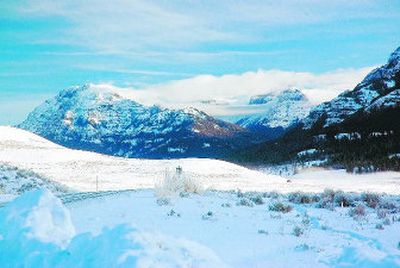
Yellowstone National Park is a wilderness where people can watch the drama of the wolves hunting, living and playing in a natural way that hasn’t been possible for the last 100 years. Since the predators’ reintroduction into the park, wolf-watching has become almost as popular as geyser-watching in Yellowstone. Come, watch and enjoy these powerful and impressive animals.
George Bumann, a wildlife biologist associated with the nonprofit Yellowstone Association Institute, leads tourist groups wanting to learn about and hopefully see wolves and other animals in the Yellowstone ecosystem around the Lamar Valley. Wolves now live in other parts of the country. Notably there are more than 450 thriving in the wilderness areas of north-central Idaho. But without a lot of luck, the chance to consistently spot and watch wolves just off a paved road is very remote, unless you travel to Yellowstone.
After the park was established, animals were designated either as “good” or “bad,” and the good ones were protected from the bad ones, according to Bumann. This protection was accomplished by trapping, shooting and poisoning wolves, mountain lions, foxes, coyotes, raccoons, pelicans and otters (they ate fish). Three hundred skunks were disposed of because, at the time, the U.S. Army was responsible for the park and the skunks were “keeping the soldiers awake with their odor,” Baumann said. Even today there are very few skunks or raccoons found because their populations have not recovered. In 1926, the last known wolf was killed in the park.
Visitors dining at the various hotels ate deer and elk meat that was harvested within the park boundaries. Controlled hunts for animals in Lamar Valley were conducted for visiting dignitaries as late as 1968.
Despite serious controversy, 31 gray wolves from Canada were transplanted into the elk-rich north valley of the Lamar area in 1995-1996. The wolves have flourished in the park, with a peak population of 180 and 12 packs. Recently the number of wolves has actually been reduced to about 130 because of distemper and virus infections. But there is no doubt that they are back for good.
Yellowstone wolf-watching is outstanding because sightings can be made year-round. The northern end of the park near Mammoth Hot Springs has a road that is open in winter. It is the only area of the park where cars are allowed to enter during the winter. Year-round visitors can drive through Lamar Valley and look for wolves. (Hint: Daybreak is when wolves are most active.) Look for turnouts where guides in vans have set up spotting scopes. Be sure to bring your own binoculars. One of the best ways to possibly see and learn about wolves is to join a commercial tour or the Yellowstone Association Institute wildlife group.
Sleeping accommodations are necessary for this trip. Within 20 to 39 miles of the wolf packs is a classic national park hotel. Open for the winter and summer, Mammoth Hot Springs Hotel is the only winter lodging accessible by car in the park.
Opened by the Park Service in 1937, the hotel retains its historical flavor, with wicker furniture scattered around a flickering fire built into an outside wall. The sound of live music from a piano greets guests in the evenings. Through open doors to the right of the lobby is a spacious area called the map room, where a huge wooden map (17 feet, 10 inches by 10 feet, 4 inches) with 2,544 pieces, makes a unique map of the United States. The map and the building were designed by Robert C. Reamer, who also designed the Old Faithful Inn.
The hotel rooms have been kept with that historical feel to them. In fact, there are rooms still available that require a walk down the hall to public bathrooms. However, most rooms now have private bathrooms. The rooms are simple and not as elegant as the other hotels in the park, but they are also less expensive.
The hotel was built next to the limestone terraces of Mammoth Hot Springs, and the buildings of Fort Yellowstone allow visitors ample opportunities for sightseeing after wolf-watching in the Lamar Valley. Some of the distinctive sights unique to Yellowstone National Park are within walking distance of the hotel. Watch for elk that can be seen grazing on the hotel grounds.
Love them or hate them wolves have made a home again in Yellowstone. The chances of seeing wild wolves is better here than anywhere else in the country. The sight and the sound of howling wolves is a classic American Western wilderness event. Yellowstone offers a chance to experience it in person.