
Climbers balk at bill
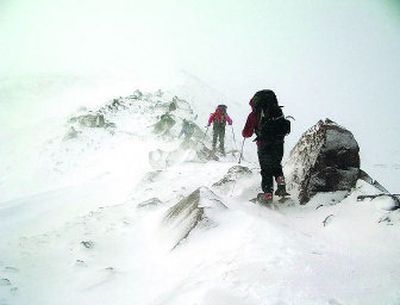
SALEM — One after another, veteran mountaineers pleaded with state lawmakers last month not to require them to carry electronic locator units every time they head for the summit of Mount Hood.
Some warned the locator requirement would foster passivity among climbers who get into trouble and activate the beacons.
“They will wait for a rescue, and not do enough to rescue themselves,” said Leslie Brown, a spokeswoman for Access Fund, a national mountaineering group.
Another said nothing can replace basic common sense when it comes to keeping people safe, and requiring electronic beacons would not be a “panacea.”
“Pulling the cord (on a locator unit) doesn’t turn the sky black with helicopters coming to pick you up,” said Scott Russell, a veteran of numerous search-and-rescue operations. “Self-reliance and knowledge are what’s going to keep you alive on the mountain.”
Those arguments came in the first of two House panel hearings on a bill (HB2509) to require that climbers who intend to go above 10,000 feet on Mount Hood from November through March carry locators that send signals to help searchers find them if they run into trouble.
Rep. John Lim, R-Gresham, said he introduced the bill mainly in response to last December’s climbing accident in which three out-of-state men perished after they got caught in a blizzard near the summit of Mount Hood.
The legislation received a boost the week of the hearings when three climbers trapped on the mountain overnight were rescued after they activated a mountain locator unit that led searchers directly to them.
“Certainly the timing was right,” Lim told the House committee. “Instead of losing lives, they were able to save lives this time.”
Lim’s measure was endorsed by Sheriff Joe Wampler of Hood River County, who led the December effort to find the three climbers, none of whom was carrying an electronic beacon. One of them was found dead in a snow cave; the other two are missing and presumed dead.
Wampler said requiring all climbers to have locators would cut down on the cost of rescue operations and reduce the risk to volunteer searchers by allowing them to pinpoint the location of missing climbers.
“My allegiance is with the search and rescue volunteers,” he said. “As a sheriff, I can do to reduce the risk to them, I’m all for it.”
In recent interviews, mountaineers who oppose Lim’s bill had argued that while it’s a good idea for climbers to carry electronic locators, requiring all climbers to do so would infringe on their freedom to pursue the sport without government interference.
In the hearings, however, the climbers emphasized the argument that requiring the locators would give many climbers a false sense of security in what is an inherently dangerous sport.
“Mountaineering is all about judgment and making good choices,” said Rocky Henderson, a team leader with Portland Mountain Rescue.
Other climbers have argued that Mount Hood’s handsome photo opportunity and easy access from Portland encourages media attention on climbing incidents that’s out of proportion to other outdoor activities.
Search and rescue activities for snowmobilers occurs somewhere in the West almost weekly through the winter with little media attention, they say.