
Mackenzie Bristow
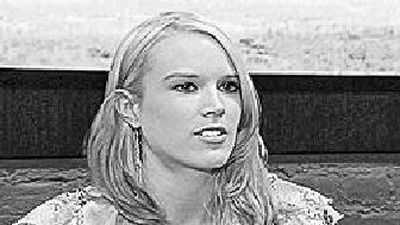
Bristow, 33, was at work at Lincare Inc., a Spokane home health-care company, on July 28, 2004, when she was confronted by Spokane police Detective Craig Brenden, who accused her in front of her supervisor of forging six checks stolen from an elderly client.
Brenden also accused her of using methamphetamine, although he later admitted in a sworn deposition that he had no evidence she’d ever used drugs and only raised the issue to see if he could rattle her. He also falsely told Bristow that a Washington State Patrol handwriting expert had examined the forged checks and concluded the handwriting was hers.
Despite Bristow’s strong denials, she was arrested without a warrant on Aug. 3 after she refused to take a police polygraph without her attorney present. Although she had no criminal record, Bristow spent a day and a half in the Spokane County Jail.
Bristow hired private investigator Ted Pulver, a former Kootenai County sheriff’s deputy, who discovered that the home of the elderly client had been burglarized, and a phone number on the back of one of the checks belonged to a man with a criminal history.
Bristow took a polygraph test arranged by her lawyer that concluded she was telling the truth. A second handwriting expert also said the signatures on the six checks weren’t hers.
Expert Curtis Baggett, in a sworn statement, said Brenden’s method of comparing Bristow’s signature with the handwriting on the checks by scanning them and overlaying them on a computer is “reckless … and is highly likely to result in false arrests.”
The Spokane County prosecutor’s office asked a Washington State Patrol handwriting expert to investigate. That expert also concluded the writing on the forged checks didn’t match Bristow’s.
The charges were dropped in May 2005. Bristow was rehired at Lincare after losing 10 months’ salary and amassing $4,500 in legal bills. She immediately filed a $500,000 claim against the city, which was denied.
In August 2005, attorney Richard D. Wall filed a federal lawsuit against Brenden, the city of Spokane and then-Police Chief Roger Bragdon, alleging defamation and civil rights violations.
Brenden acted with “reckless disregard for the truth” when he accused her of forgery and drug use, according to the complaint. The city countersued, charging Bristow with malicious prosecution by filing an action “known to be false and unfounded.”
In a sworn deposition for the federal case, Brenden, who specializes in fraud investigations, said it is standard police interview procedure to mislead a suspect in an effort to obtain a confession. Brenden said he accused Bristow of drug use in front of her supervisor despite having no evidence in order to “take her by surprise.”
Under questioning, Brenden admitted he didn’t pursue the lead uncovered by Pulver – that the phone number on one of the forged checks belonged to a person with a criminal history.
City attorneys defended Brenden, arguing that police officers are generally shielded from liability for civil damages. They also sought to bar any testimony about inadequate police training in handwriting analysis, according to court documents.
In October 2006, U.S. District Judge Edward Shea denied the city’s motion to dismiss the suit, saying that Brenden probably “failed to meet the threshold for probable cause” when he arrested Bristow. Shea also noted the police department is not training its officers in scientific methods of handwriting analysis and is allowing the fraud unit to “rely on their own handwriting analysis as a part of their jobs.”
Status: A month later, on Nov. 6, 2006, the Spokane City Council voted to pay Bristow $125,000.