
Mining shows a new, clean side
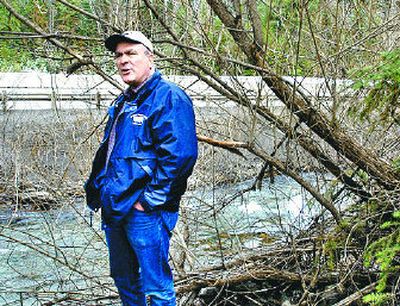
MULLAN, Idaho – In the 1970s, the South Fork of the Coeur d’Alene River was frothy with poisoned mine wastewater. Blood vessels of some Silver Valley children flowed with the highest lead levels ever recorded in the United States – high enough to cause dementia and mental retardation. The mountainsides were unfit for trees.
Today, thanks in part to a $450 million federal cleanup, blood lead levels are safe again, trout swim in the South Fork again and the slopes are covered with forests.
Now, mines also are coming back strong. Surging metal prices have sparked an economic boom in the Silver Valley.
Although health advocates and environmentalists worry that Idaho’s lack of regulations for underground mines invites the past to be repeated, mining company officials say their industry has changed drastically from the days when the smelter belched smoke and contaminated waste rock was dumped into creeks.
“People don’t need to worry that things are being done the same way they’ve been done in the past,” said Vicki Veltkamp, spokeswoman for Hecla Mining Co., which operates Lucky Friday Mine. “Things really are very different these days.”
Though Idaho does not regulate mines, the U.S. Environmental Protection Agency sets strict standards for wastewater discharged into creeks and rivers. For the Lucky Friday mine, this means continuous monitoring of the 500,000 gallons of wastewater it discharges daily into the South Fork River. The water flowing out of the pipe is clear and has been cleaned of 99.99 percent of its heavy metal contaminants. The fine tailings left over from ore processing now end up in a settling pond, not the river.
“Fish live in the discharge water,” Veltkamp said.
About 10 miles downstream from the Lucky Friday is the Galena Mine, which also has a federal permit to discharge mine wastewater into the river.
And Sterling Mining Co. is seeking a discharge permit for the Sunshine Mine between Wallace and Kellogg, said Patty McGrath, mining coordinator for the EPA’s northwest region. That mine is expected to reopen in December.
Federal water quality laws do a good job so long as the mines are in business, but Justin Hayes, program director for the Idaho Conservation League, worries about what will happen when metal prices fall and the mines go out of business or change ownership.
Though mines on federal land are required to post bonds to ensure enough money is left over for cleanup, there are no such requirements from the state for underground mines on private ground, which includes much of the Silver Valley.
“I have no confidence that public health will be protected, because there is no regulation by the state,” Hayes said.
The state oversees open pit mines, including gravel pits, and it recently tightened bonding requirements for gold mines where cyanide is used, Hayes said. No state agency oversees underground mining on private land, even though these mines also produce waste that can be harmful to the health of humans and other creatures.
“When the laws were written, underground mining was king,” Hayes said. “We can’t protect water quality in the state if we allow certain industries to be exempt.”
The Idaho Conservation League recently helped write a bill that would require companies to post bonds for any mine or business that will need “perpetual” water treatment. The bill is sponsored by Sen. John Andreason, R-Boise. A task force will study the bill this summer. It’s not expected to face a vote until the 2008 legislative session.
“We have to make sure they are bonded adequately if it’s necessary to treat the water after they shut down,” Andreason said.
A case in point is Bunker Hill Mine near Kellogg. Taxpayers now spend about $2 million a year to clean water from the defunct mine, said Cami Grandinetti, EPA’s mine cleanup manager for the Northwest. The agency is in litigation with the mine owner over the site.
“One way or the other, the EPA can’t be in the permanent water treatment business,” Grandinetti said, adding that water from the mine will need treatment for generations to come. “The geochemical engine is going to run for a very long time – until the water exhausts the mineral supply. That’s centuries and centuries.”
The Silver Valley is poked with hundreds of defunct mines. When the ore is exhausted or metal prices tank, the mines now operating also will close. What then will happen if their tailings piles or settling ponds leach zinc, lead or cadmium into drinking water supplies?
“It’s a good question. It’s a good one for the state,” Grandinetti said. “At the time the mining company disappears, it becomes a public responsibility.”
Having active mines in the Silver Valley today actually helps protect the environment, according to those in the mining industry as well as Terry Harwood, executive director of the Basin Environmental Improvement Commission, which oversees federal cleanup of the valley.
Companies returning to the old mines are responsible for treating tainted wastewater and making improvements that end up benefiting the environment, Harwood said.
“I encourage it,” he said. “I think there’s an opportunity then to do some of the cleanup while they’re operating. … When it’s abandoned, nobody takes responsibility. … I’m fairly confident that any new operations up here will be done properly and they won’t be exacerbating the problem.”
Harwood pointed to the New Jersey Mining Co. as an example of the new generation of companies in the valley. Instead of storing its fine tailings in settling ponds, which are prone to leaks caused by flooding and earthquakes, New Jersey plans to use technology that will result in a cementlike paste of tailings.
Some of the paste will be used to backfill mine shafts. The remainder will be mounded into a hill, then covered with soil and planted with grasses and trees, said company chairman Fred Brackebusch, who helped invent the technology. New Jersey is not applying for a federal discharge permit, he said, because very little water will be left over after the tailings are processed.
“It evaporates,” Brackebusch said.
One of New Jersey’s projects, the Silver Strand Mine, is on U.S. Forest Service land about 15 miles northeast of Coeur d’Alene. In order to reopen the old mine, New Jersey first had to agree to a long list of environmentally friendly practices, ranging from using weed-free straw bales for erosion control to capping the tailings pile with native grasses and trees once the project is finished.
The company hopes to make money and leave the mine better off than when it started, Brackebusch said. “It’s a lot better than it being abandoned.”
Barbara Miller, director of the Silver Valley Resource Center, a nonprofit health advocacy group, is concerned that Idaho requires of Silver Valley mines on private land neither a federal-style reclamation plan nor proof of funds to pay it.
“They’re really taking advantage of no enforcement, no regulation,” Miller said. “We’re dealing with five generations of families who are lead poisoned. There’s still that pollution and contamination out there, then you add the new mine openings. It may not be as serious as when the smelter was in operation, but they are going to be polluting.”