
SPIDER PLAN
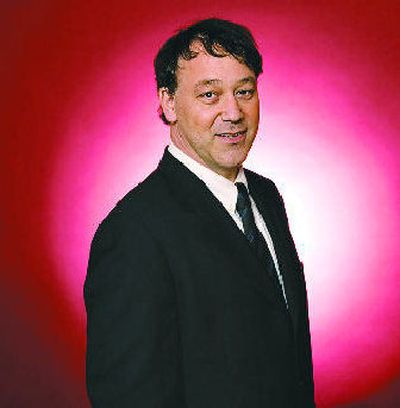
Sam Raimi must have looked a little like Peter Parker on a job interview when he walked onto the Sony Pictures lot seven years ago, hoping to land the most important film franchise in the studio’s history.
Sporting a baggy suit and ill-fitting glasses, Raimi was the 17th filmmaker to make a pitch to direct the “Spider-Man” series.
Bigger names had come before him. Tim Burton, who directed the first two “Batman” hits, was interested. So was James Cameron, whose “Titanic” remains the biggest box-office success in history.
But there was something about the sheepish director that caught the attention of producers. Raimi may have looked like an overworked accountant, but he talked like a man who had spent a lot of time, maybe an unhealthy amount, reading comics.
Specifically, “Spider-Man” comics.
“When he walked through the doors, I thought, ‘OK, what’s with this guy?’ ” recalls Avi Arad, the former head of Marvel Studios who produces the “Spider-Man” films.
“But when he told us he wanted to do the Peter Parker story, not the “Spider-Man” story, we knew,” Arad says. “This (film) was our baby; it was going to be an expensive gamble for us.
“We needed to hand it to someone who understood Spider-Man, but who really got Peter Parker.”
Peter returns to theaters today, and a lot more is riding on the webslinger’s shoulders than whether he gets the girl or if his foes get their comeuppance.
In every measurable way, “Spider-Man 3” is bigger – and riskier – than its predecessors.
Sony sank $260 million into the film, not including at least another $100 million in marketing and commercial tie-ins.
The special effects are more elaborate, the story lines more complex and the villains more plentiful (there are three this time, as opposed to one in the first film and two in the sequel).
Spidey fans – never reticent about airing grievances – expect a “Lord of the Rings”-style finale that ties up the loose ends of unfulfilled romances and unsettled rivalries.
Competing studios want a blistering start to the summer. And Sony is hoping Raimi will be on board for “Spider-Man 4”, which is already in the works.
It’s enough to make Raimi realize the perils of getting what you ask for.
Raimi, 47, has always connected less with superheroes than their alter egos. And despite moving into the thin stratosphere of directors who have the freedom to tackle virtually any project (New Line is dangling “The Hobbit”), he remains convinced someone will learn his secret identity: the unsure auteur.
“I’ve always heard people’s criticisms twice as loudly as their praise,” he says, rubbing his baggy eyes as he nurses a club soda at a Beverly Hills deli.
“Once we close this chapter on ‘Spider-Man,’ I need to just get away from things for a while. I’m too obsessed that the people who say critical things about me are right, even though I’m getting to do something I love.”
That love began when he was a seventh-grader growing up in Detroit, and his father, Leonard, brought home an 8mm camera.
Raimi shot a Western in his backyard called “Out West,” a silent shoot-‘em-up with school friends.
“We had a chalkboard to make subtitles, and there was a saloon and a lot of gunfire,” he says.
“I don’t remember much about it except getting shot. There wasn’t much plot.”
As he grew older, film was a way to avoid getting into his father’s appliance business. Raimi threw himself into making movies with friends and family, including cult character actor Bruce Campbell and younger brother Ted.
“I was actor, cameraman and caterer,” says Ted Raimi, who has appeared in most of his older brother’s films.
“Back then, our idea of ‘craft services’ was me running to the 7-Eleven on a Slurpee and Twinkie run.”
At Michigan State University, Raimi and Campbell would show their crime and horror movies in rented classrooms for $1.50 a head.
“We were making chump change, but learning,” Campbell says. “I was learning to act. Sam was learning a little more about directing.”
But, Campbell says, “we were still just kids from Detroit. You almost don’t allow yourself to think that big.”
Then, in 1978, Raimi, Campbell and college buddy Robert Tapert made a 32-minute short, “Within the Woods,” about ancient Indian demons who come alive to haunt campers.
The film did so well, the trio went on a campus film tour, raising more than $350,000 – enough to make a full-length version, “The Evil Dead”.
No one in Hollywood wanted it, but the filmmakers found an investor in England who distributed it in Europe.
“He told me, ‘Well, it ain’t “Gone With the Wind,” but I think we can make some money,’ ” Raimi says.
It took in $2.4 million when it hit North America and became a cult hit on DVD.
But despite the success of the “Evil Dead” trilogy (he later made “Evil Dead 2” and “Army of Darkness”), studios weren’t sure what to make of Raimi’s blend of horror and humor.
And when his 1995 Western with Sharon Stone, “The Quick and the Dead,” tanked, Raimi says, “I was on the outside again. I had a reporter ask me what it was like to have my best years over so soon. It stayed with me.”
Most painful for Raimi was his inability to land a comic-book film. He made a pitch to direct one of his favorite comics, “The Shadow,” but lost out.
Raimi created his own version, “Darkman”; to this day, he can’t bring himself to watch “The Shadow.”
He dabbled for three years in television until he got the script for “A Simple Plan,” a drama that earned Billy Bob Thornton an Oscar nomination and brought Raimi back into Hollywood’s good graces.
And it gave him the clout to at least take a shot at another comic-book adaptation – one that paid off big.
The “Spider-Man” franchise has not only taken in $1.6 billion worldwide, it also led the renewed charge of comics-based movies, now one of the most dependable staples of the film industry.
“I can’t imagine anyone else doing it now,” Topher Grace, who plays the villain Venom in “Spider-Man 3,” says of Raimi.
“He’s a guy who will talk all day about ‘Spider-Man,’ ” Grace says.
“From the way he listens to the way he dresses, I haven’t worked with anyone like him.”
Hollywood may be populated by the nation’s worst-dressed employees, but Raimi rarely goes to the job without a jacket and tie.
“My father told me to dress to reflect the respect you have for the people around you,” says Raimi, who is married and has five children. “I’ve never forgotten that.”
James Franco, who plays Harry Osborn (aka the Green Goblin) and has worked with Raimi since the first “Spider-Man” in 2002, has seen the director out of his suit just once.
“I almost didn’t recognize him,” Franco says. “I figured he must not be feeling well. Sure enough, he was pretty sick that day.”
He found Raimi wearing a “Spider-Man” T-shirt.
“This was the franchise he was meant to do,” Franco says. “It lets him do the action, some humor, some scary stuff, all in one genre.
“And all through one person, Peter Parker, that he really associates with.
“None of us thought it would be this big, but no one deserved all of this more. He’s put his heart into this. He loves Peter Parker.”
Forget love, says Bryce Dallas Howard, who plays a flirtatious pal of Parker’s, Gwen Stacy.
“He is Peter Parker,” she says. “He’s this quiet, dapper guy when you meet him. Then he gets behind the camera and does these amazing things.”
Raimi doesn’t take the compliments well.
“Right now, I’m able to make the movies I want to make,” he says.
“And someday, I’ll make a bad one and won’t be able to (do more).
“I’m just glad I got the chance to do this one. When you spend this much time on a character who wants to do good, who wants to be a better person, you can’t help but hope it rubs off on you.”
The modesty doesn’t surprise longtime friend Campbell.
“He wears nicer suits, but they’re still rumpled,” Campbell says.
“He’s making these huge movies, but he’s still learning. His skills are growing exponentially, but he wants to know what everyone else thinks.
“He’s become one of the best directors around. But he’s still Sam.”