
Working poor pay dearly at gas pump
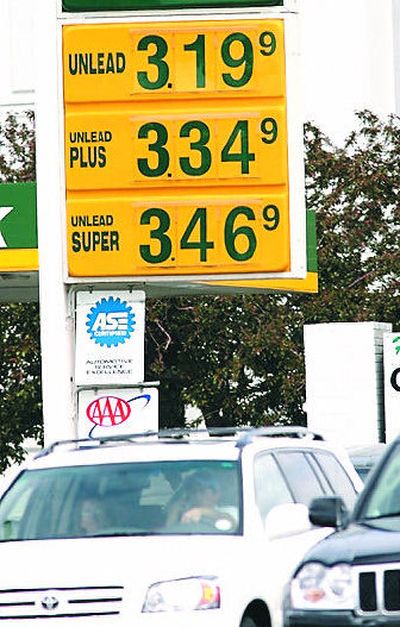

After gasoline rose past $3 a gallon last month, Coralynn Hatton, scrambling to find cash to fuel her car, faced a tough decision. She could save money by reducing the daily doses of her heart or diabetes or cholesterol pills. But which doses could she skip while causing the least harm?
The 46-year-old woman made her choices, cutting some pills in half and taking others every other day. But it riles her when she hears some of the more well-to-do people in her Portland church talk about how rising gas prices don’t affect them. “They say, ‘Well, it’s not bothering me,’ ” Hatton says. “They are not thinking about people on a set income, who don’t have money to burn.”
In the past, when U.S. gas prices soared, everyone but the rich felt the pain.
But now most of the hurt falls on the working poor, who must sharply curb their car use and shuffle other expenses to pay for gas, which had a national average per-gallon price of $3.035 on Monday.
“A lot of people tend to look at the price of gas as being elastic,” says Juan Sandoval, a Northwestern University urban sociologist who specializes in transportation and vulnerable populations. “They think customers will continue to pay and we won’t see lasting impacts. But that is only for the upper classes.
“I think we are going toward a new face of inequality.”
When gas prices climbed 66 percent between 1975 and 1980, Americans cut consumption by about 6 percent for every 20 percent rise in price, according to a recent study. But prices increased the same percentage from 2001 to 2006, and Americans reduced consumption by only 1 percent for every 20 percent increase. In March, gasoline demand actually increased over March of 2006.
Christopher Knittle, a University of California at Davis economics professor who helped write the study, says several factors have contributed to the change.
Suburban sprawl has commuters driving farther to work. The advent of the soccer mom means parents are constantly hauling kids from one activity to the next. In most households, two people now drive to work instead of one. And dual-earner families also have more disposable income, Knittle says, about 70 percent more for the average American than in the 1970s.
“If prices go up by a dollar, that is only a $50-a-month increase,” Knittle said. “That’s easy to do for most of us. In the ‘70s, it was a larger fraction of our disposable income.”
For the working poor, it still is. Lower-income Americans use significantly less gas than higher-income people, yet gas takes up a much greater percentage of their income.
Those earning less than $10,000 a year spend 12 percent of their income on gas. Those earning more than $50,000 spend 4 percent.
Many working poor are the sole wage-earners in their households. Many have long commutes, but for minimum-wage jobs where an hour of work will now buy about two gallons of gas.
The disparity will only get worse, Sandoval says, as gas prices climb and people who can ill afford to pay interest on everyday expenditures like gas and food lean more on credit cards and payday loans.
Record gas prices hit mom-and-pop shops particularly hard, Sandoval says. Chain stores can eat additional costs.
Small-business owners such as twins Erik and Peder Elder, 39, have watched costly gas sop up their profits. “It’s killing us,” said Erik Elder, who lives in a converted garage with his brother at their father’s home. “It’s completely killing us.”
The housing contractors say they can no longer afford to visit homes to give free estimates, which puts them at a competitive disadvantage. When the brothers were finishing a sheet-rock job in Beaverton, Ore., recently, they had to ask their client for $6 in cash. “We were completely out of gas,” Peder Elder said. “It was totally embarrassing.”