
Garbage open to Priest bears
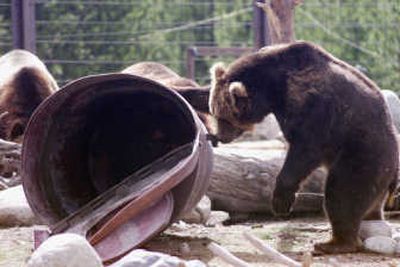
Priest Lake State Park, situated in Idaho’s most bear-rich region, does not have the most basic tools in preventing bears from becoming hooked on human food: bear-resistant garbage containers.
“We camp in Canada all the time and the garbage cans at even the roadside rest stops are all bear-proof,” said Brenda Bumann, a reader who responded to the newspaper’s query on whether wildlife feeders should be held responsible for impacts they cause to wildlife.
“I don’t understand why Idaho campgrounds such as Indian Creek, which have perennial bear problems, don’t mandate stricter garbage/food rules for campers and for the parks.”
“So, yes, the people who feed the wildlife should be held liable, but so should the Idaho State Parks Department, since they have terrible garbage policies.”
“No, we don’t have bear-proof dumpsters,” said Bud Justice, Priest Lake State Park manager. “It all comes down to funding. Our agency isn’t funded as well as others.
“However, we’re meeting (Tuesday) with the Forest Service and representatives of the National Wildlife Federation and Defenders of Wildlife to explore grants. Bear-proof trash containers are something that’s needed throughout the Priest Lake drainage.”
Defenders is best known for its program to pay landowners compensation for property losses caused by grizzly bears and wolves. “However, we’ve realized it makes even more sense to prevent economic hardship,” said Minette Glazer, Defenders spokesman in Missoula.
Since 1999, Defenders has paid $327,000 to share the cost of providing bear-proof garbage containers and electric fencing to keep bears from trouble with humans that would eventually lead to their demise.
The Forest Service has had bear-proof garbage containers at campgrounds in the Priest Lake, Sandpoint and Bonners Ferry districts for years, said Tim Layser, Priest Lake District wildlife specialist.
“Sometimes people have a hard time using them, but they’re pretty good at keeping out the bears,” he said.
Bear-resistant food lockers also have been installed at dispersed boat-in sites and some backcountry campsites at Upper Priest Lake and popular hike-in destinations such as Harrison and Fault lakes, he said.
“These are designed for safely storing your food away from bears while camping,” Layser said. However, he confirmed that in many cases, campers are stuffing the containers with garbage rather than packing garbage out of the backcountry.
“There’s a lot of room for more education,” he said.
After several black bears had to been killed or trapped and relocated two summers ago, the Forest Service enacted a rule that food and coolers had to be stored in hard-sided campers or vehicles when not attended in the national forest land around Priest Lake.
“We left the food-handling order in effect this year, and with campground hosts reminding campers, it had a big effect on reducing bear problems in our campgrounds this summer,” Layser said.
“We’re looking at food and garbage storage standards for homes that are leased on Forest Service land. We have no control over what people do on private land, but some places, such as Hill’s Resort and Priest Lake Marina, have voluntarily gone to bear-proof garbage containers.”
Forest Service and Fish and Game officials say it’s up to local residents to learn to live in bear country.
For example, the city of West Yellowstone, Mont., has a city ordinance requiring all residents to have bear-proof garbage containers.
“I don’t write more than a citation or two a year on it,” said Kevin Conlon, West Yellowstone police officer. “A warning usually suffices. Everybody knows the reason, and one company handles all the dumpsters. The first offense is $50, but it doubles every time. We have very few repeat offenders.”
Even in Idaho, Dalton Gardens recently passed an ordinance prohibiting deer feeding within the city limits.
“It’s a trend,” said Craig Walker, Idaho Fish and Game Department regional enforcement officer. “Some people are concerned about feeding because it lures in big, scary animals, but some people are just as upset about feeding that brings in animals that eat their tulips.”