
Getting ticked
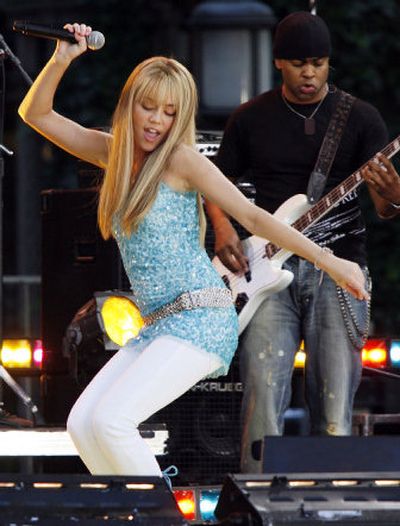
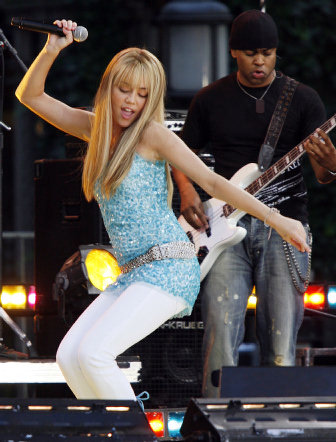
Ann Anderson is a scalper. OK, she’s not a shifty character whispering “Psst, need two?” from the shadows.
But the mom from Lincoln, Neb., became a ticket broker by default when her daughters ached to see teen queen Miley Cyrus, aka Hannah Montana.
Anderson ultimately succeeded where many parents failed: She got Josie, 11, and Kyle, 16, into the wildly sought-after “Best of Both Worlds” show in nearby Omaha, where Cyrus performed one set as herself and another as her Disney Channel TV character.
“About 15 years ago, I waited in a long line and got tickets to Guns N’ Roses, pretty simple,” she says. “This time was a little different.”
For those who want the dizzying details, see below. But for now, suffice to say that Anderson labored both online and off to buy multiple sets of tickets in two different cities, selling and swapping until she finally landed good seats for the show of her choice.
And spent four figures in the process.
“The girls loved the concert,” she says. “But I don’t know if I’d go through that again.”
A growing number of fans are fast realizing that landing any hot ticket these days – be it for sold-out shows like Neil Young’s Spokane concert last month, or 50-yard-line seats to almost any pro football game – seems to require great connections, lottery-like luck or stacks of cold cash.
Emphasis on cash.
“The secondary ticket market is growing fast, largely due to the Internet,” says Gary Bongiovanni, editor of Pollstar, which tracks the world of live events.
“Secondary market” is business-school lingo for scalpers, people who pay face value but feel the market can bear more.
“When tickets go on sale online, a lot of professional buyers are instantly in the mix,” Bongiovanni says. “You’re competing with people whose only job is to buy and sell seats.”
And you may not be competing with people at all, but robots.
As the uproar over the Hannah Montana tour made clear, robotic software programs – or “bots” – are sometimes employed to defeat security systems (those squiggly letters you’re always asked to retype) that determine the buyer is human.
Ticketmaster recently won an injunction against bot-maker RMG Technologies, which the mammoth ticket-seller sees as a “first step” in addressing the issues raised by Miley-mania.
“Hannah is a phenomenon, not the average case,” says Ticketmaster CEO Sean Moriarty. “But it was a wake-up call that draws attention to the huge demand for big shows, and the reform that’s needed to make the process more fair.”
There’s a bit of mystery involved in all this ticket madness. To begin with, the vast majority of events don’t generate hysteria and overblown prices. Often, a combination of numerous tour dates and lofty ticket prices (the Rolling Stones use both strategies) are enough to keep hysteria at bay.
But in-demand shows can quickly frustrate if you aren’t online (preferably, in a presale) or in line when tickets go on sale.
A USA Today/Gallup poll of 408 adults who have purchased tickets to at least two big live events in the past year reveals that 39 percent find the ticket-buying process very or somewhat frustrating, with 34 percent saying they frequently or occasionally pay above face value.
But three-fourths of respondents still prefer buying their tickets on a first-come basis to a lottery system where buying priority is randomly assigned.
Curt Vanwanzeele, a financial adviser from Indianapolis, found himself in atypical company while on his recent ticket quest.
Determined to score four Hannah Montana tickets to surprise his two daughters and niece, he spent hours outside Conesco Fieldhouse to get a number, which in turn put him in a lottery for a place in the actual ticket line. But that rigmarole wasn’t what surprised him.
“I was sandwiched between six homeless people, all of whom were given cash by some guy and told to buy the best seats they could,” he says. “People were ticked.
“I don’t begrudge anyone from making a buck. But you think the city would have had more control.”
Kevin Kotke has always felt that “part of the fun of getting tickets is waiting in line, but these days I do that only to find out all the tickets were bought up by people on computers,” says the law firm administrator from Milwaukee.
When Kotke heard that Annie Lennox would be performing in Chicago, he was compelled to join the Internet fray, ultimately scoring two tickets on Craigslist.
Some $600 later, plus $300 for a downtown hotel room as well as gas money and other costs, Kotke had seen his diva. But he was left feeling broke.
“I’m embarrassed I paid that much,” he says. “When you’re there you wonder, ‘What did everyone else pay?’ “
That’s if you’re lucky enough to even go to a must-see event. The whiplash speed with which Hannah Montana tickets disappeared prompted grumbling from many parents – folks who in many cases hadn’t bought tickets to a concert since the days when Pearl Jam was a little-known band from Seattle.
Their complaints were heard. Attorneys general from Arkansas, Pennsylvania and Missouri have begun investigating some secondary market sellers to see if state scalping laws were broken.
“Some say it’s just market forces at work, free enterprise, but I don’t agree,” says Arkansas chief deputy attorney general Justin Allen.
“The average consumer should have the ability to go to a show without paying far more than they can afford and without risking that the tickets could even be fake.”
Allen says his state is seeking information from five ticket-selling Web sites. So far, only San Francisco-based, eBay-owned StubHub.com has cooperated.
StubHub CEO Chris Tsakalakis says the company “is happily working with investigators because, in the end, it’s our sellers who decide price and our buyers who decide if they’ll buy.”
He adds that StubHub assumes tickets are lawfully obtained, and fraud is quickly pursued.
Not surprisingly, Ticketmaster’s Moriarty isn’t a fan of secondary market sites such as StubHub.
“I’m concerned when all you see posted are prices wanted, not prices paid. I’m also wary when specific seat locations aren’t available,” he says.
“There is no silver bullet. But there has to be a better way to do this.”