
Dahlias come out to play
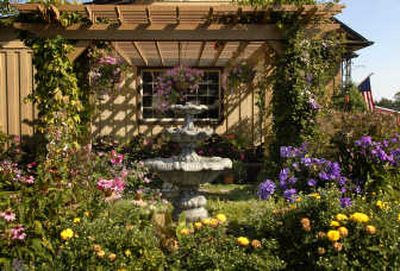
For Kay and Dan Loibl, the last few weeks have been the highlight of their gardening year. The dahlias are blooming. We aren’t taking about a few plants tucked into the border. The couple has 100 different varieties in almost every color of the rainbow on their property. While they are enjoying the beauty of the moment, the Loibls know the first frost is not far off and overnight the dazzling plants will be killed. All that will be left are black piles of mush.
That’s when it will be time to call in friends to help dig the tubers and store them for the winter. Dahlia tubers will not survive in the ground in our cold winters.
When the show is over
The Loibls let their tubers rest in the ground about a week after the frost to allow them to absorb water and cure their skins. They cut back the stem to about six inches and then gently work the entire clump of tubers out of the ground, being careful not to break them, and keeping the name tag attached to each clump. “You need to dig out further (from the stem) than you think because the tuber is spread out,” says Kay.
Each tuber and its name tag are put in a tub to keep the tags and tubers from becoming separated. They are then washed to remove most of the dirt and set out in a warm, sunny place to air dry for a few hours.
The tubers are then temporarily stored in individual small garbage bags for up to a week until the Loibls are ready to divide them. The clumps of tubers are carefully cut apart so that a growing eye is attached to each piece.
“I generally save about three tubers from each plant,” says Kay.
The Loibls don’t use any fungicide on their tubers but say that if you find a lot of mold or rot on stored tubers, it may be necessary.
Safe for the season
Each variety is then wrapped loosely in plastic wrap with a name tag. One tuber is placed on the plastic and rolled a bit before the next piece is added so they don’t touch. The goal is to provide the tubers some protection from drying out but not to completely seal them which often induces rot. Some people write the name of the variety on each tuber with a felt marker.
Once the tubers are wrapped, the Loibls pack them in Styrofoam coolers and place the coolers in an outbuilding that stays about 40 to 45 degrees all winter. “Small Styrofoam coolers are cheap,” says Kay. “Pack them in loosely, though.” The inside wall of a garage can work for sturage, unless we get an extended spell of freezing weather. Cooler basement rooms that can be kept below 50 degrees also work.
Check the tuber periodically for rot. If they appear shriveled, mist them lightly with water and adjust the plastic covering them.
Looking ahead
With a little work and care, you can have a garden full of dahlias. And next summer, like the Loibls, you’ll be rewarded with a rainbow of color.