
Giant worm denied endangered listing
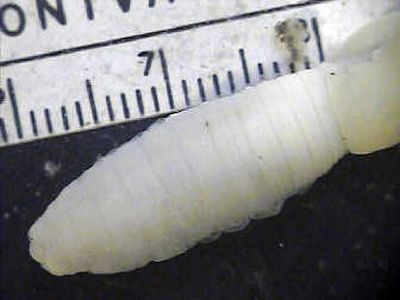
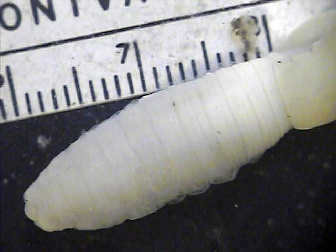
A giant and rarely seen Palouse earthworm won’t be added to the nation’s Endangered Species list but could find itself tangled in the courts as champions for listing vowed Tuesday to appeal the decision by the U.S Fish and Wildlife Service.
Saying advocates failed to provide “substantial scientific data” proving that protection is needed for the worm, which can grow to 3 feet long, the agency rejected a petition to consider adding the worm to the list of threatened and endangered species.
“There just hasn’t been a lot of information or studies done regarding this worm,” said Mark Snyder, a wildlife biologist with Fish and Wildlife Service.
The large, pale worm, which can emit a lily-like scent, has been spotted four times in the past 30 years. The most recent sighting was in 2005, when a University of Idaho graduate student accidentally chopped one in half while using a shovel to conduct research.
The lack of information regarding the worm makes it difficult to determine population numbers and other indicators of species health, such as habitat needs, according to federal officials who reviewed the petition.
That conclusion is “completely irresponsible,” said Noah Greenwald, a conservation biologist with the Center for Biological Diversity. Greenwald, who helped with the petition, promised to appeal.
“Are they waiting for it to not be seen for 50 years before they give it protection?” he said Tuesday. “I just think that given how rare this thing is and how much its habitat is being destroyed, it definitely needs study.”
The worm, first described in 1897 after its discovery near Pullman, was abundant, according to early settlers. Later road crews often found the worm’s tunnels running as much as two stories deep.
But several searches for the species since the 2005 sighting have turned up nothing.
The petition seeking protection was filed in August 2006 by a coalition including the Palouse Prairie Foundation, the Palouse Audubon Society, Friends of the Clearwater and three citizens. The groups last month filed suit, arguing the federal government was ignoring the petition.
Given the lack of information on the worm, the decision not to list it doesn’t surprise Jodi Maynard-Johnson, an assistant University of Idaho professor who specializes in soil ecology.
“I just think we need to get out there and keep sampling and try to fill in the holes,” she said.
Maynard-Johnson participated in an unsuccessful search for the worm last year with other scientists, including a renowned worm expert from Portland.
“They are hard to find. That’s part of the problem,” she said. “From a research point of view, it’s something that I’m interested in pursuing.”
The Fish and Wildlife Service said it welcomes further information on the worm and will cooperate to help monitor it.
“We share the petitioners’ concern for the species,” Susan Martin, supervisor for the Upper Columbia Fish and Wildlife office in Spokane, said in a news release.
More than 1,150 animal and 700 plants species make up the Endangered Species list. Since President Bush took office, 58 species have been added, compared with 522 species under Bill Clinton and 231 during the first Bush presidency.
Greenwald said humans have an ethical duty to protect all species, including the giant Palouse earthworm.
“It’s also just a neat part of the heritage of Eastern Washington or North Idaho,” he said. “The earthworm could serve as a balladeer for the last best places of Palouse habitat.”