
Helping the homeless
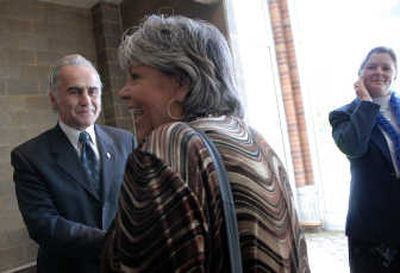
Saying homelessness is “a moral and social wrong,” the nation’s homelessness czar, Philip Mangano, called Thursday for Kootenai County to work to eliminate homelessness, not just manage it.
“We’re just tired of doing the same thing over and over again for our homeless neighbors,” said Mangano, executive director of the U.S. Interagency Council on Homelessness. “If good-natured and well-meaning programs and well-meaning gestures could end homelessness, it would be over decades ago.”
He found a receptive audience in the crowd of local officials, social service representatives and other residents who gathered in Coeur d’Alene to hear his talk and listen to regional experts about the scope of the problem in the county and across North Idaho. But many of the other people that he said need to be involved in the discussion, such as business people, weren’t there.
Councilman Mike Kennedy said the “political will” that Mangano said must back efforts to end homelessness has yet to be established in the city.
“There are a lot of people I would have liked to see here that aren’t today, but this is the first step,” he said. “I don’t think any community has pulled it off overnight.”
Mangano promoted a national campaign undertaken by the Bush administration to house the homeless by making more federal resources available and by encouraging cities to adopt ambitious plans that aim to eliminate the problem. The country has operated under the assumption that the problem can’t be fixed for too long, he said.
Kennedy said he plans to draft a resolution calling for the council to begin work on a 10-year action plan. More than 300 cities have either drafted such a plan or are doing so, Mangano said.
Mangano presented numbers on the cost of homelessness and the decline in homeless people in cities that embrace the goal of eliminating the problem. A study in Asheville, N.C., showed that 37 homeless people cost the city $800,000 in law enforcement time and medical attention over three years.
But since the Bush administration started its push to revamp how homelessness is addressed, cities that have embraced the idea have seen huge drops in the number of people living on the streets. Philadelphia has seen a 50 percent decline in homelessness since 2003. It fell 30 percent in Miami and 28 percent in San Francisco, Mangano said.
The situation in North Idaho differs in that the homeless are scattered at campgrounds and makeshift shelters all the way to the Canadian border, not gathered on busy city streets.
“Up here, it’s more scattered and less visible,” said Garry Loeffler of the Region I Homeless Coalition. “You gotta sort of lift the veil and see what’s really out there.”
Though the situation here is different, Mangano said finding a solution doesn’t have to mean reinventing the wheel. It means getting everyone in the community who’s affected by homelessness involved in the plan to stop it, and that’s everyone, he said.
Too many studies and plans get shelved because of a lack of “political will” in the community, he added.