
’Dark Knight’ keeps charging forward
Weeks later, film still drawing crowds
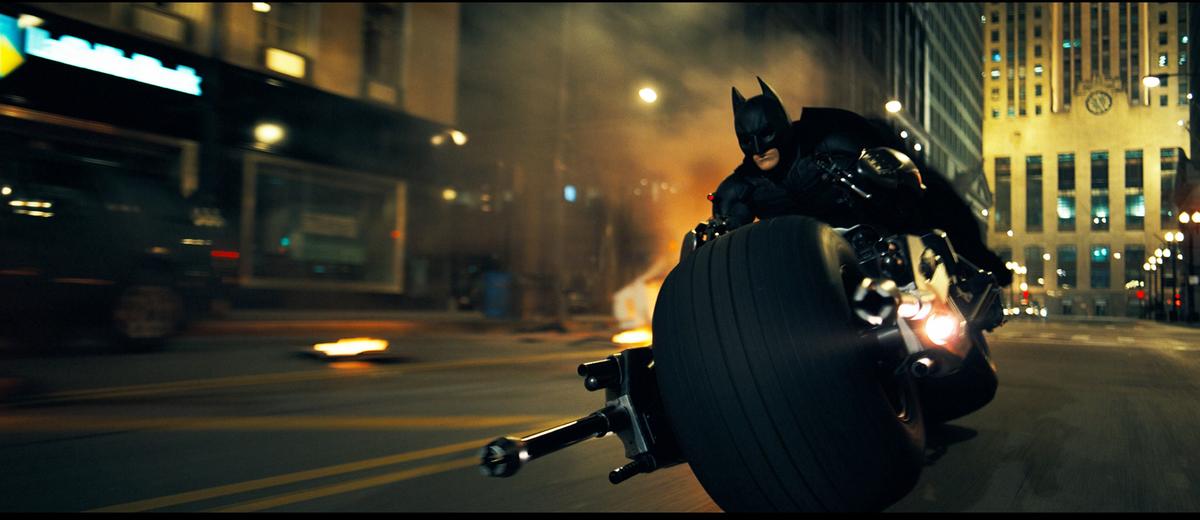
Now that the furor has died down at least a bit, maybe it’s time to pose the question: Just how good a film is “The Dark Knight”?
Yeah, yeah, I know: You’re tired of the topic. It seems as if Christopher Nolan’s Batman movie has been talked to death already. No film in recent memory has labored under such pre-release scrutiny.
And the fact that it’s still drawing big crowds – so much so that it’s now poised to become the second- highest-grossing film in history – means that we who write about film aren’t about to give it a rest anytime soon.
Then again, it is drawing those crowds. Four weeks into its run, and “The Dark Knight” outgrosses Seth Rogen’s stoner comedy “Pineapple Express”? Who in the name of bat love would have predicted that?
So as much as any film released in 2008, Nolan’s movie deserves the ink.
But not – and here is the sticking point – necessarily because it will end up being the best film of 2008.
Sure, “The Dark Knight” is bound to be on some critics’ Top 10 lists. Along with all the other obligatory inclusions – some existentialist study from Eastern Europe, say, or a Holocaust-themed documentary, a study of child labor in a Third World setting and at least one film made in France – this latest Batman flick no doubt will be mentioned in every critic’s year-end wrap.
The remarks made in those stories, though, are likely to revolve around the cultural force that the film has become. The importance of “The Dark Knight” involves how much it has become a part of our very language as well as a point of Hollywood economic pride (imagine the financial windfall it has provided Warner Bros Pictures, DC Comics and everyone else involved in the production).
Whatever else they say, though, the critics clearly will focus on the late Heath Ledger’s riveting performance as The Joker.
In fact, it’s impossible to talk about “The Dark Knight” without mentioning the contribution that poor, doomed Ledger made. To some of us, he makes the film into the special achievement that it ultimately is.
Nothing against Jack Nicholson, but his performance as The Joker in Tim Burton’s 1989 feature was totally a star turn. You can like what he did, but you can never forget that it is Nicholson behind that face paint.
Ledger, though, disappears into the role. If Nicholson’s performance is “Jack Nicholson as The Joker,” then Ledger’s is “The Joker, as interpreted by Heath Ledger.” Try as you might, you’re not going to see a vestige of Ennis Del Mar – Ledger’s Oscar-nominated character in “Brokeback Mountain” – in anything that Ledger does. Or says.
As for the rest of what Nolan did with “The Dark Knight,” well, we could argue all night long about that. It’s ambitious, it’s visually rich, it’s thematically mature. It’s also too long, Batman himself is a near nonentity, it’s overly complicated, and it skimps on plot development to the point where certain aspects of the final half hour seem virtually unintelligible.
And yet, and yet … the power of “The Dark Knight” is that, maybe for the first time, we can apply all the rules, all the requirements, of film criticism to a movie that is based on a comic book with a superhero at its center. The film succeeds despite its flaws; it can’t be dismissed merely because of them.
Yeah, this Batman epic isn’t “Citizen Kane.” It isn’t “The Godfather.” It isn’t even “Spirited Away.”
But it’s the best film of its type ever made. And that’s saying a lot.
I don’t think I’ll ever get tired of making that point.