
Spanish jet crashes on takeoff; 153 killed
Flight filled with vacationers headed to Canary Islands
MADRID, Spain – It was a troubled flight from the beginning. One attempt at takeoff was aborted. Departure was delayed by more than an hour. Passengers, many of them parents traveling with their young children, were grumpy and hot, eager to get on with it, to start their holidays in the alluring Canary Islands.
Several used their cellular telephones to call relatives and report the problems. Finally, they said by phone, the flight was going to take off.
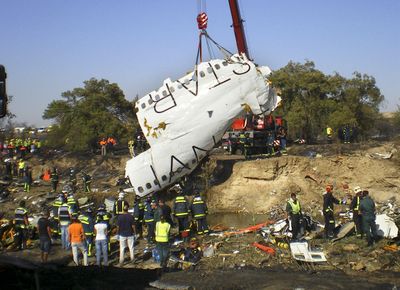
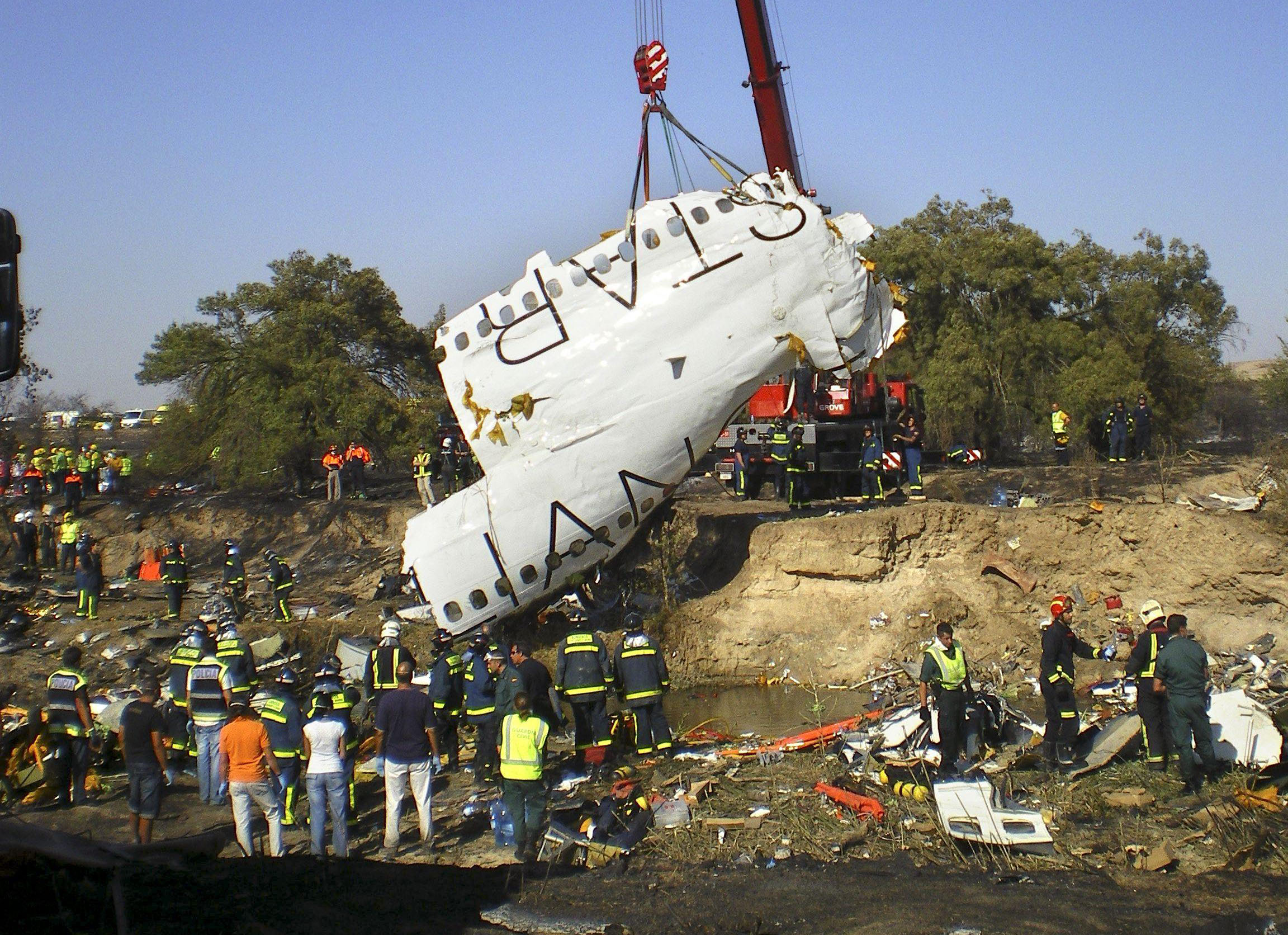
It tried. But seconds after Spanair Flight JK5022 barreled down a new runway at Madrid’s Barajas airport and began to lift off, the jet jerked to the right and plowed into a tree-covered ravine. The fuselage broke into two pieces, maybe more, according to witnesses at the airport, and burst into flames.
At least 153 people were killed in the deadliest accident at this city’s ultramodern airport in a quarter-century. Nineteen people, including two children, survived the fiery crash.
“I pulled out about seven people alive,” said Francisco Cruz, a private pilot who was among the people pressed into rescue service. “And then it was all dead bodies.”
The accident was also the latest in mounting woes for Spanair, the Spanish unit of Scandinavia Airline Systems (SAS) and Spain’s second largest carrier.
Spanair officials said it was too early to define the cause of the crash, but, as the doomed passengers indicated, there were numerous signs that the plane, a 15-year-old U.S.-made McDonnell Douglas MD-82, was suffering technical problems before takeoff.
Sergio Allart, commercial director for Spanair, said in a news conference that the aircraft had passed a routine inspection in January. He said he could not speculate on the cause of the crash but offered the airline’s cooperation with investigators who will include a team from the U.S. National Transportation Safety Board.
The investigation will reportedly focus on an engine that apparently caught fire as the plane lifted from the tarmac.
The plane crashed on a hot, clear day around 2:45 p.m. at one of Europe’s premier airports.
Scores of ambulances, fire trucks and other rescuers descended on the site, while helicopters overhead poured fire-retardant spray on the wreckage. White and gray smoke billowed into the air, visible for miles.
“This is a huge tragedy,” said Spanish Development Minister Magdalena Alvarez, whose portfolio includes civil aviation.
The Spanair flight was headed for Las Palmas, a popular summer vacation spot on one of the largest of the Canary archipelago off West Africa. Many of those on board were families destined for late-August holidays, and a number had originated in Germany and other parts of northern Europe, officials said. There were two Chileans aboard as well, the airline said.
Tearful, stunned family members arriving at airports in Madrid and in Las Palmas were whisked away to privacy to await confirmation of their relatives’ fate.
Spanair had already been suffering from a number of setbacks, including heavy debt, declining revenue and orders from the parent company to lose 1,000 jobs and eliminate routes. Spanair pilots earlier Wednesday had threatened to go on strike to protest cutbacks, alleging that management was forcing cabin crews and maintenance personnel to work overtime. SAS has been trying unsuccessfully to sell the money-losing carrier.
Although Barajas airport has not seen a major accident since 1983, the Canary Islands has a troubled record. It was the scene of one of history’s worst accidents in 1977, when an American PanAm jumbo jet collided on the ground with a Dutch KLM carrier, killing 583 people.