
Panel reviews volcano maintenance
Mount St. Helens expensive to run
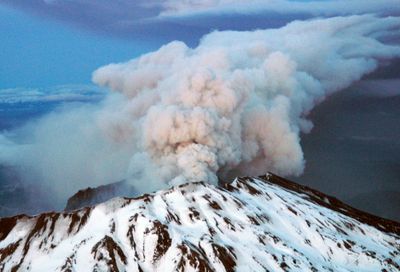
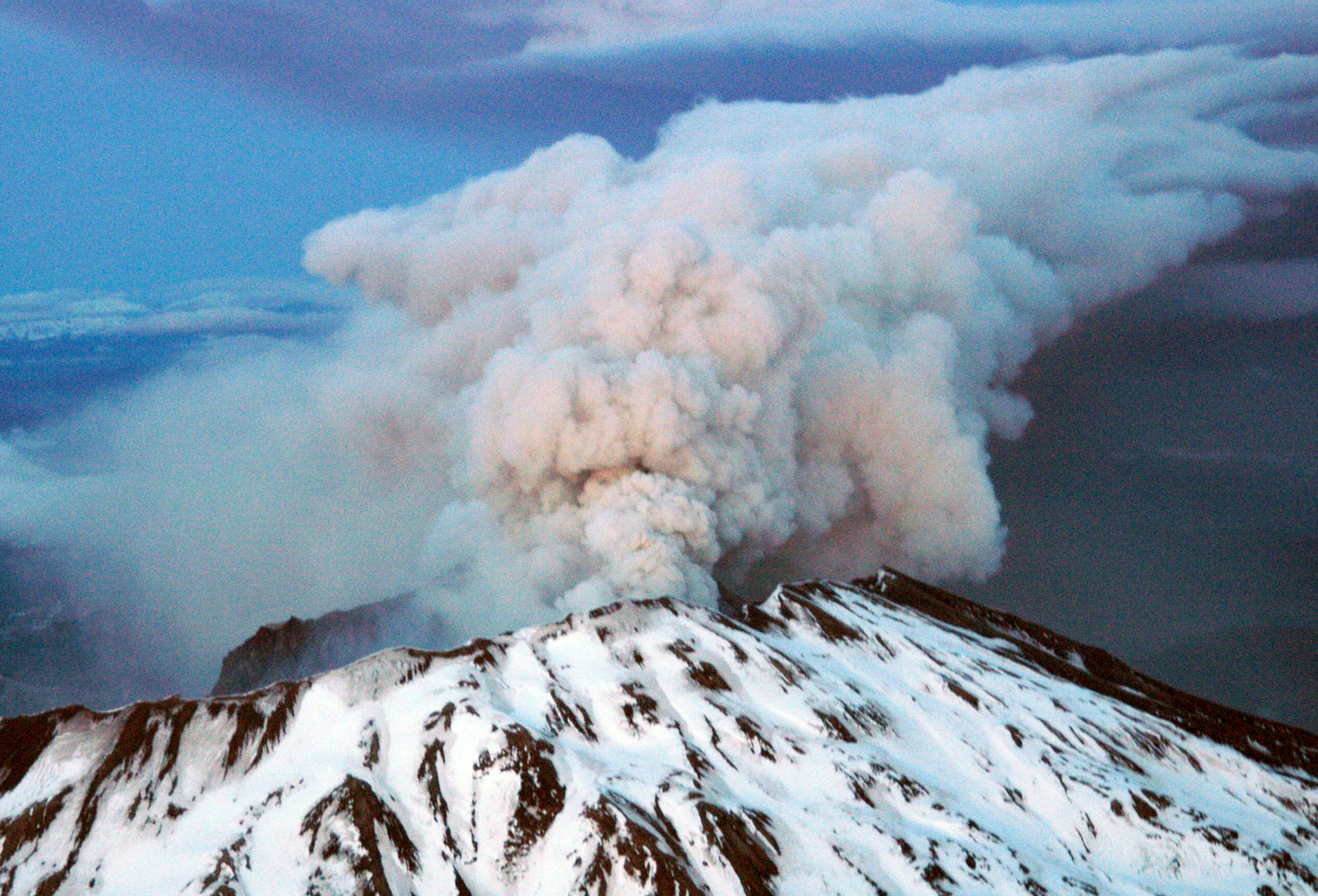
WASHOUGAL, Wash. – Who should manage Mount St. Helens?
In view of chronic budget shortfalls plaguing the Gifford Pinchot National Forest – the agency permanently closed the Coldwater Ridge Visitor Center last year – some politicians have raised the possibility of turning it over to another agency such as the National Park Service.
This may be the better question: Who would want it?
On Thursday, members of a committee advising members of Congress heard an earful about some of the unique maintenance needs created by the volcano’s harsh landscape. They learned that the national volcanic monument comes with a 20-mile underground power line, a 1 1/2-mile-long tunnel draining Spirit Lake, and miles and miles of roads covering the 110,000 acres.
None of those is easy or inexpensive to manage.
The committee was formed earlier this year at the behest of U.S. Sens. Maria Cantwell and Patty Murray and Reps. Brian Baird and Norm Dicks. The group expects to wrap up its review in December.
Nine of its 14 members convened Thursday in a back room of the Washougal Fire Department.
Tom Mulder, who manages the national volcanic monument for the Forest Service, outlined some of the peculiarities of providing modern conveniences – electricity, roads, safety – in an area scrubbed bare by the catastrophic eruption of May 18, 1980.
Spirit Lake Tunnel: The Army Corps of Engineers built the tunnel for $14 million in 1985 as a permanent shunt for the unstable debris dam formed by the 1980 eruption. The Forest Service is responsible for maintaining it.
Mulder said the costs were initially envisioned to be less than $100,000 a year, which the Forest Service easily covered when it was flush with timber revenue in the 1980s. Federal timber receipts have fallen dramatically in recent years. At the same time, Mulder said, tunnel upkeep has cost more than $3 million over the past decade.
The tunnel within the 2,000-foot-deep cavern must be regularly resealed, and the floating forest of dead trees must be cleared away from its Spirit Lake inlet.
The power line: It requires electricity to keep the lights on at multimillion-dollar visitor centers deep within the blast zone, so the Forest Service constructed its own underground power line running all the way from Kid Valley. Last year alone, Mulder said, the Forest Service rang up $300,000 in costs associated with maintaining it.
Roads: The Washington Department of Transportation maintains the reconstructed Spirit Lake Memorial Highway, also known as state Highway 504, all the way to its end at Johnston Ridge.
However, maintenance of myriad forest roads leading into and encircling the monument must be paid from the Forest Service’s chronically underfunded road budget. Many roads remain washed out by a severe rainstorm last December, underscoring a project backlog that Mulder estimates at $10 million.