
Classics series explores music of Mendelssohn
Wolfgang Amadeus Mozart is considered the model musical prodigy. He wrote little piano pieces before he was 6 and was a famous keyboard player by the time he was 10.
Some 50 years later, Felix Mendelssohn emerged as a comparable prodigy. By the time he was a teenager, he had written music for which we still remember him.
The Spokane Symphony and the Symphony Chorale will explore Mendelssohn’s gift for both symphonic and vocal music Friday in the Casual Classics concert at the Martin Woldson Theater at The Fox.
The orchestra, under music director Eckart Preu, will perform Mendelssohn’s Overture to “A Midsummer Night’s Dream” and his “Scottish” Symphony.
Preu also will lead the Symphony Chorale in two unaccompanied choral works: “Abschied com Wald (Farewell to the Forest)” for mixed chorus, and “Abendständchen (Evening Serenade)” for male voices.
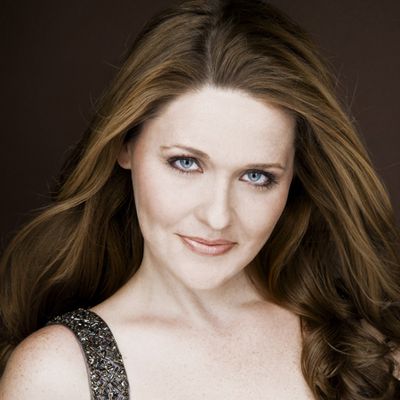
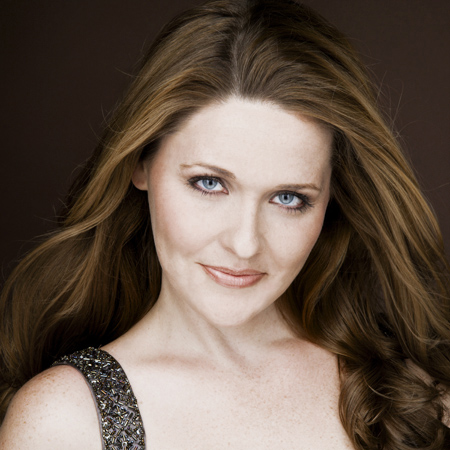
Together with the orchestra, the chorale will perform “Verlieh uns Fried (Give Us Peace).” Soprano Dawn Marie Wolski will be the featured soloist in “Hör mein Bitten, Herr (Hear My Prayers, O Lord),” Mendelssohn’s setting of Psalm 55.
“I think Mendelssohn is one of the most underrated of the great composers,” says Preu. “Just because his music is so beautiful and easy to listen to, people sometimes think it is shallow. But Goethe thought he was an even greater a genius than Mozart.
“But since Goethe’s time, Mozart’s reputation has always gone up, while Mendelssohn’s has gone down,” Preu adds.
The work everyone knows by Mendelssohn is the “Wedding March” he wrote when he was 31, as part of the incidental music for a Berlin performance of Shakespeare’s “A Midsummer Night’s Dream.”
“We’re not going to play the ‘Wedding March,’ ” Preu says. “But we are going to open our concert with the ‘Midsummer Night’s Dream’ Overture written when he was only 16.
“Already Mendelssohn had grown to unprecedented mastery. With this overture and the Octet for Strings, he raised the bar for everything he wrote from then on.”
Preu is closing Friday’s program with the composer’s “Scottish” Symphony, published as No. 3 of his five symphonies, but the one he wrote last.
“Each one of his symphonies has a completely different character,” Preu says. “And the ‘Scottish’ Symphony is the one with the greatest substance and the one that shows best Mendelssohn’s gift as a painter of musical landscapes.”
Orchestras in the U.S. regularly program the “Midsummer Night’s Dream” music and two of of the five symphonies.
“What is almost totally unknown here, though, is his choral music,” Preu says. “Like the music of the Italian opera composers, Mendelssohn’s choral music is really ‘written for the throat.’
“It is very comfortable to sing, not nearly so difficult to perform as Mozart or Bach, let alone Beethoven.”
Preu recalls his days as a member of the Cathedral Choir in his native Dresden, Germany, where Mendelssohn had 100 years earlier conducted the famous Gewandhaus Orchestra.
“We sang his choral music several times every season,” the conductor says. “Some of it was so familiar to me, I thought some of those pieces were folk songs.”
Vocal soloist Wolksi was a winner in the 2008 Zara Dolukanova International Art Song Competition in Russia. A graduate of the Manhattan School of Music, the Spokane resident has sung with orchestras in New York City and Washington, D.C., in addition to her performances in the Northwest with the Spokane and Coeur d’Alene Symphonies, the Oregon Mozart Players, and several local opera and chamber music series.
Preu will be assisted by members of the orchestra and chorale in providing spoken program notes for the works on Friday’s program.