
Museum bags summits
America’s only museum dedicated to mountains and mountaineering opened this weekend in Golden, Colo.
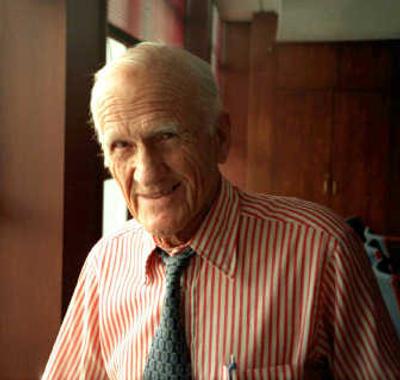
The new $3.5 million Bradford Washburn American Mountaineering Museum was built in a collaboration of the Colorado Mountain Club, American Alpine Club and National Geographic Society.
Covering 3,800-square feet at the American Mountaineering Center, the museum is designed to interest people of all ages from the curious spectator to the advanced climber, said Phil Powers, American Alpine Club executive director.
“It answers the age-old questions: Why do people climb and how do they get those ropes up there?” he said.
Interactive multimedia displays engage visitors with LCD touch screens, videotext and audio.
You can peer into a crevasse, touch and feel different types of rocks, hang from an ice ax, listen to climbers’ stories and see the world’s major mountains on a giant panoramic screen.
The museum shows how climbing works and explains mountain cultures, sacred mountains, Colorado’s climbing history, global conservation, and safety in mountain environments.
An extensive collection of artifacts is accompanied by stories that give each piece a place in mountaineering history.
For example, Pete Schoening’s wooden ice ax appears with the graphic story of how he used it to save five teammates from falling to their deaths on his 1953 American K2 expedition.
Artifacts from Mallory and Irvine’s expeditions on Mount Everest in the 1920s, and pieces of climbing gear from pioneering Colorado climber Albert Ellingwood are on view, among many others.
Maryland-based Quatrefoil Associates designed, built and installed the exhibits and Monolithic Sculpture, Inc., of Boulder, created the crevasse and faux granite spires. The space was formerly a high school gymnasium.
Bradford Washburn, who died last year, built the gallery’s centerpiece, a 14-by-14 feet, 3-D model of Mount Everest. Washburn was a renowned cartographer, world-class mountain climber, explorer, photographer and director of the Boston Museum of Science for 41 years.
“Washburn represented the kind of museum heritage and mountaineering achievement we wanted to exemplify at the museum,” said Powers.