
Opera via satellite
One recent Saturday in Fargo, N.D., moviegoers had a choice among “Aliens vs. Predator,” “The Great Debaters” – and “Macbeth,” live from New York’s Metropolitan Opera.
Murder, mayhem, romance – the plot elements of Verdi’s opera were packing ‘em in in North Dakota and about 600 theaters across North America, Europe, Japan and Australia.
It’s all part of a marketing strategy by Met general manager Peter Gelb to attract a new, younger audience.
“We’re creating, basically, satellite opera houses,” Gelb says. “But the Met offers something you don’t get at a performance – cameras that show action behind the scenes and interviews in dressing rooms, the equivalent of going into the locker room of a sports team.”
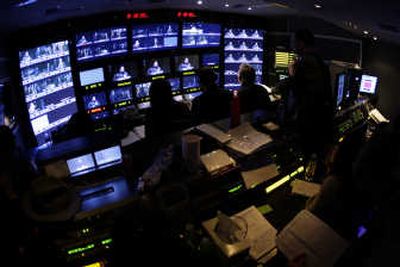
As “Macbeth” was beamed to theaters around the globe, Gelb sat in a satellite truck behind the opera house at Lincoln Center, editing on the fly as 13 cameras captured the drama on stage.
Some of the cameras rolled on a track just inches above the foot of the stage, low-angle shots.
“That’s never been done, because nobody believed there would be a market for it,” Gelb said.
Hundreds of venues around the world were sold out for “Macbeth,” even three theaters in New York – where tickets for the actual performance were still available, although at higher prices.
Moviegoers say they like the immediacy of the experience – the drama unfolds on 40-foot screens – as well as the informality.
“You’re a lot closer here than at the actual performance – you’re practically onstage,” said Craig Chesler, a 39-year-old rock guitarist watching “Macbeth” at a theater in Manhattan.
Gelb said the presence of cameras also is exciting for the performers, who never know when a camera might zoom in on them for a close-up.
“There’s a certain adrenaline level that goes up and it also gives a chance for members of the company to kind of step out,” he said.
Gelb, a former TV producer and Sony recording executive, began the simulcasts in December 2006, four months after taking over America’s premier opera house.
When he took on his new job, no more than about 75 percent of tickets for actual shows were selling, largely because of an aging audience.
To attract new enthusiasts, Gelb started a public relations blitz that included the live simulcasts; Internet and radio broadcasts; iPod downloads; splashy ads on city subway cars and buses; and a free screening on Met opening night in Times Square and at Lincoln Center, as well as regular telecasts to city public schools.
The cost of each theatrical simulcast, including satellite feeds, equipment and crew, is about $1 million, Gelb said. The Met expects to break even with the HD series by the end of this year, including revenues from repeat, taped transmissions and DVD sales.
Other opera houses are taking note.
The San Francisco Opera is preparing to offer six shows to about 200 theaters, beginning in March. The shows will be taped during a performance for later transmission.