
Receiving equal treatment
Distillery owners seek same guidelines as breweries, wineries
Trailblazers. Entrepreneurs. Pioneers.
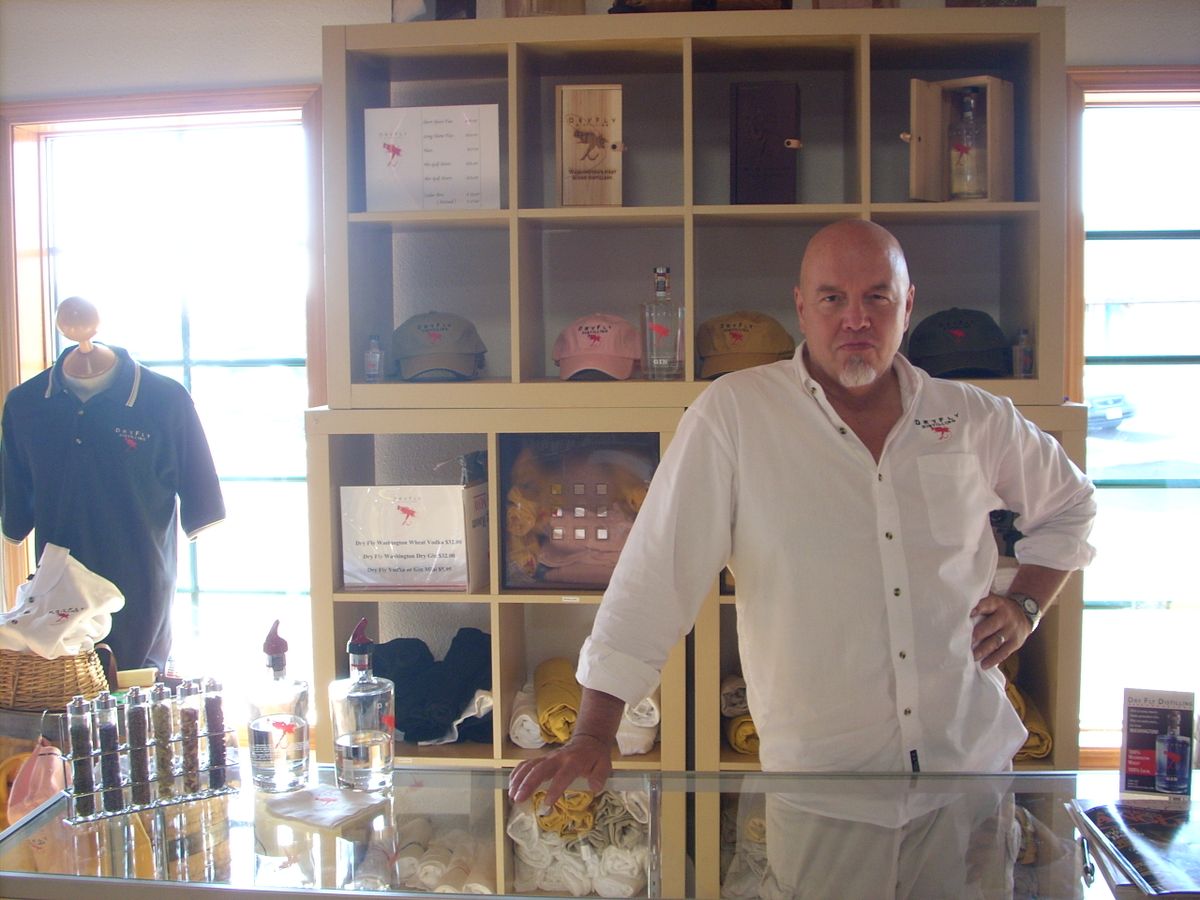
Don Poffenroth and Kent Fleischmann fit many descriptions, but as the enterprising founders of Washington state’s first post-Prohibition distillery, perhaps they deserve to create their own label.
“We’re like the 80-proof Lewis and Clark,” Fleischmann says.
Yeah, that’s the ticket.
The pair started distilling the state’s first legal liquor in nearly a century last September, and that was merely the beginning of what’s turned out to be an insanely busy year.
So far, Dry Fly can’t produce enough of its gin and vodka to meet demand. The guys recently purchased new fermentation tanks and a new still, which they hope will double production capacity.
Poffenroth and Fleischmann also started distilling whiskey earlier this year, and are aging three varieties: a single malt, a bourbon-style whiskey and the world’s first 100-percent Washington wheat whiskey.
And that’s not even the biggest news. The pair also launched a successful campaign to write new provisions into Washington state law to classify Dry Fly as a “craft distillery,” and allow it and those who inevitably follow suit to sell products on-site and also to allow in-house tastings.
“When we started, we knew there were some barriers that existed,” Poffenroth said.
Looking into the laws regulating the operation of a distillery, the pair landed in an interesting situation.
“We would ask the state, ‘OK, this is what we’d like to do.’ And they’d say, ‘Well, no, you can’t do that.’ … Because there are no laws that allow that. There are no laws that disallow it, either, but there are no laws that allow it.”
Guess that’s what happens when no one’s been in your situation for nearly a century.
How to solve this conundrum?
“They said the only way you can change that is to write a law,” Poffenroth said. “So we called (Senator) Chris Marr and said, ‘I guess we have to write a law about craft distilling. Here’s what we want to do.’ And he just jumped right into it.”
With help from Marr and others, the Dry Fly dudes took the first step toward creating the same guidelines for distilleries that the state has in place for breweries and wineries.
Part of the reason it worked was the pair’s close relationship with Washington farmers.
“The big key for us was the agricultural aspect,” Fleischmann said. “… Part of the bill was that we had to use (at least) 51 percent indigenous ingredients, making it an agricultural project.”
Since the pair’s entire philosophy from the start sprouted from a desire to showcase the fantastic resources of the Northwest, it was only a matter of working a little political magic.
“It’s an election year,” Poffenroth said, “so no one wants to do anything that’s anti-farm or anti-agriculture. So everything just clicked. There was one ‘nay’ vote out of both houses, so it was almost unanimous.”
Now that Dry Fly soared over that hurdle, the pair’s getting to work on further plans. They’re not finished working with legislators and the Washington State Liquor Control Board to create an atmosphere of fairness for Washington’s distilling industry – an industry that Poffenroth and Fleischmann essentially created
“Right now the laws are clear, they say, ‘brewery and winery,’ ” Poffenroth said. “So what we need to do is go through and on every one put, ‘and distillery.’ ”