
Deliberately quiet life
New poet laureate built career far from the literary mainstream
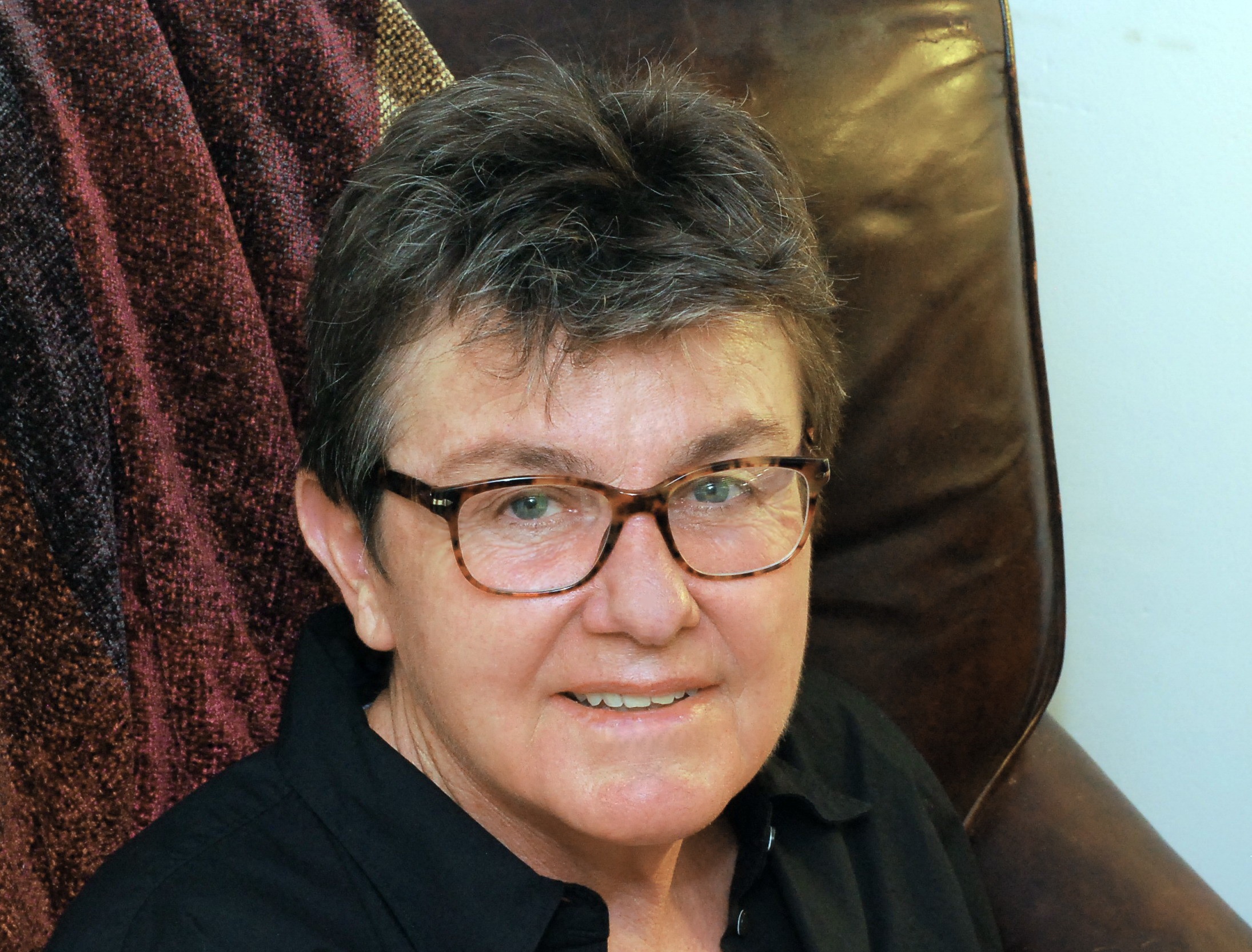
More than a decade and a half ago, despairing that her poems would ever find an audience, Kay Ryan found herself writing one about a turtle. It was about as personal as a Kay Ryan poem ever gets.
Ryan’s appointment as the nation’s new poet laureate, announced Thursday by Librarian of Congress James Billington, caps one of the most unusual careers in American letters.
Hers is “a very original poetic voice,” Billington says, “almost the antithesis of the things you hear booming at you every day.”
Yet when she wrote the concluding lines of “Turtle,” Ryan evoked a deeply pessimistic vision of her life’s work:
“… She lives
“Below luck level, never imagining some lottery
“Will change her load of pottery to wings.
“Her only levity is patience,
“The sport of truly chastened things.”
Still a bit stunned to have risen so far above luck level, Ryan can’t resist joking about her newly exalted status.
“I thought I might take it upon myself to prevent all bad poetry from being published during my reign,” she says, speaking by phone from her home north of San Francisco.
Then she tries to explain how a poet laureateship could happen to a 62-year-old woman who was rejected by her college’s poetry club, committed to writing poetry as a vocation only after she’d turned 30, and lived a deliberately quiet life, not cultivating connections within the literary establishment.
Her father was an oil well driller who died reading a get-rich-quick book when she was 19. Her mother taught elementary school, but you couldn’t describe the household as literary.
Asked about the origin of her poetic impulse, Ryan talks about learning, as a child, that language “could have a powerful effect on others.”
Take, for example, the time when, alone with a group of adults, she described “my sixth-grade teacher’s bottom jiggling as she wrote on the blackboard.”
“I caused a woman to spit her milk across the table,” she recalls.
At UCLA, the poems she submitted were judged not to meet the poetry club’s standards. She “leaped away, mortally stung,” and afterward “stayed pretty remote from the joining business.”
She taught remedial English part time at the College of Marin – a job she kept for decades because it allowed her time to write. She wasn’t yet seeing herself as a true poet, however.
That changed on a cross-country bike trip in 1976, when she was 30.
Pedaling up 3,500-foot Hoosier Pass in the Colorado Rockies, Ryan found herself slipping into a kind of boundary-free mental state, and she seized the opportunity to pose the question that had been troubling her:
“Should I be a writer?”
Back came an answering question that made everything clear:
“Do you like it?”
Yes, she did.
Still shying away from difficult themes, Ryan assigned herself a task: She would get out a pack of tarot cards, turn one card over every day and write a poem from it.
“So I had to start dealing with these abstractions like love, death, the wheel of fortune,” she says.
It took eight years to get a poem accepted at a serious poetry magazine, 10 more to get into the New Yorker.
Ryan says she doesn’t know how she could have endured the rejection without Carol Adair, her partner for nearly 30 years. They met when both were teaching classes at San Quentin State Prison. In 2004, during the brief period when San Francisco was issuing marriage licenses to same-sex couples, they married at San Francisco City Hall.
A book Ryan placed with the respected but tiny Copper Beech Press in 1985 “was met by profound silence.” Copper Beach also published “Flamingo Watching,” the collection that includes “Turtle,” in 1994, and Ryan was “profoundly discouraged” to think that nine years of work would once again go unnoticed.
But gradually, “Flamingo Watching” got read, and Ryan has since published three more collections with Grove Press. She became seriously visible in 2004, when she won both a Guggenheim fellowship and the $100,000 Ruth Lilly Poetry Prize.
Poet and critic Dana Gioia, chairman of the National Endowment for the Arts, calls Ryan simply “one of the finest poets writing in America,” adding that she has “the gift of being simultaneously very funny and very wise.”
Ryan says she tries to achieve “the quality of lightness,” aiming for “substance that evaporates,” poetry not as a burden but as something “rising, entering the air. I want it to make us feel like we’re taking in more oxygen when we breathe.”
As for the shortness of her lines, she explains: “I like a lot of exposure. A word on either end of a line has exposure. I like the danger of that.”
She also loves to bury rhymes inside her poems, and notes that “short lines cause the rhyme to bounce around.”
Did Ryan have to think twice about accepting the poet laurate position, given her lifelong desire to focus more on her writing than on notoriety?
“I did,” she says. “I was afraid of sacrificing the good opinion of Emily Dickinson by being ‘public, like a frog.’ ”