
Flood devastates small town

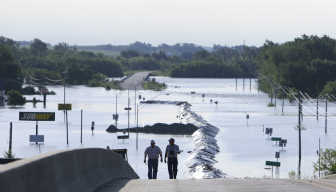
COLUMBUS JUNCTION, Iowa – Columbus Junction is at the convergence of the Cedar and Iowa rivers, which have wreaked havoc in Cedar Rapids, Iowa City and other points north during the Midwest’s devastating week of flooding. Local officials feared a “catastrophic levee failure” could swamp the small town with the fury of both rivers.
Such a failure has been averted, with the rivers cresting Sunday and slowly receding. Nonetheless, much of the town is submerged in up to 10 feet of water, and it will take weeks or months for it to recover.
Columbus Junction has only about 24 hours worth of water in its water tower, so residents have been ordered not to turn on their faucets so that the fire department can get water if needed. In fact, the department needed the water Sunday afternoon as a fire broke out in an apartment building on the only main commercial street not submerged.
City officials are supplying bottled water at the local high school and 50 Iowa National Guardsmen are providing bulk water for washing and flushing.
Columbus Junction is just one of countless small towns and many major cities devastated by flooding across the Midwest in the past week. In Cedar Rapids, it will be weeks before power is restored and many of the 24,000 evacuees can return home. Illinois, Indiana and Wisconsin have also been hard hit.
Though Columbus Junction did not suffer a major levee breach, water seeped through levees under railroad tracks and flooded much of the town along with a race track and fairgrounds. The river crested on this hot and sunny Sunday at 32 feet, well above the 28-foot crest during the historic floods of 1993.
“Now it will take us a week just to get back to that level,” said Mayor Dan Wilson.
The town is home to about 2,000 people, including commuters to Iowa City and many immigrant workers drawn by jobs at the nearby Tyson Fresh Meats pork meatpacking plant.
On the main drag of Mexican bakeries, taquerias and cowboy clothing shops, residents gathered to look at floodwaters lapping just yards away. Normally, the river is about half a mile from this street.
The Tyson plant is closed until at least Thursday because roads leading to it are flooded.
“We don’t get paid when we’re not working, but we’ll wait it out as long as we have to,” said Mario Corado, 24, who came here from Guatemala five years ago to work at Tyson.
When A.T. Docks moved to Columbus Junction from Chicago to work at Tyson in February, “I never thought I’d end up in a sci-fi movie,” he said, referring to the 1951 classic “When Worlds Collide” where the collision of planets causes humongous floods.
“I’m glad I’m here; this is historic,” said Docks, in his 60s, wearing the rubber wading boots he uses on the meatpacking floor, to duck under police tape and snap photos of a supermarket with water nearly up to the eves.
“Maybe it’s retribution for the high prices they charge,” he said.
Craig Howell, 66, grew up in Columbus Junction. As a boy, he caught rabbits by the now-submerged supermarket and sold the meat. He has lived here all his life, owning an antique shop and insurance agency before retiring. Now he and his wife have had enough – they are planning to move to New Mexico.
“We’re going to a mountain in the middle of a desert,” he said.
Twenty-five miles north of Columbus Junction in Iowa City, residents were thankful as the Iowa River crested Sunday afternoon, a day or two earlier and 18 inches lower than predicted. A large portion of the University of Iowa campus is under water, classes are suspended, and hundreds of people have been evacuated.
University buildings and stores which are not already flooded are wearing skirts of white sandbags three feet to four feet high. Miles of yellow police tape were strung around the city to enforce a curfew requiring people to stay 100 yards away from floodwaters overnight.