
Energy efficiency compatible with beauty
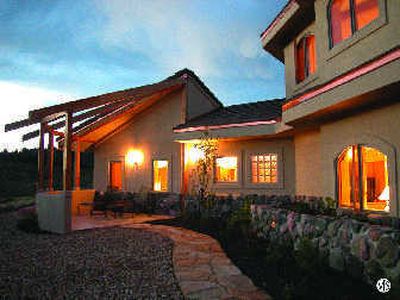
Eye-popping beauty for your home does not have to be sacrificed in honor of the environment. Take a look at the award-winning residence, Eagle Rising, a project on 20 wilderness acres near Fort Collins, Colo.
Project managers report that the key challenges on those windy, mountainous foothills were to limit the use of resources while achieving design grandeur, energy efficiency, sound resistance, and comfort.
“The application of concrete, not wood, is the answer to each one of those structural requests,” said Todd Blyth of Nudura Corp. “Home builders and commercial builders are on the leading edge of this technology.”
The form system consists of stay-in-place concrete units, which deliver superior insulation, Blyth explained.
“The system is vastly superior to the traditional stick framing method. The interlocking units (of reinforced concrete sandwiched between two layers of expanded polystyrene foam insulation) produce a home that is environmentally friendly, but also with a foundation that is up to nine times stronger, with far more fire protection, far more sound insulation, and with the potential to reduce energy costs up to 70 percent.”
Take a look at Eagle Rising as an illustration:
Eagle Rising Residence
Winner: Best Custom Home and Best Overall Project in 2006, awarded by ICF Builder Magazine.
Project Description: To build a 4,400 square-foot home with a combination stone stucco finish. The owner wanted an energy efficient house, with high ceilings and curving walls. Sound resistance was also top priority in this very windy location.
Energy Efficiency: Superior insulation and sustainable materials were first priority. Concrete, which fills the core of the interlocking units, is ideal on the exposed site where winds can exceed 161 km/hr (100 mph). The system provides the ideal combination of R-value, mass, and zero air infiltration to maximize the energy efficiency.
Sound Control: Structurally, the house is far more stable than traditional wood framing methods and the concrete foundation provides an excellent thermal sound barrier.
Beauty: The Eagle Rising architect was able to incorporate a house with high ceilings and many curving walls. Unlike conventional building methods of the past, the forms offer versatility — and therefore walls and ceilings can be made to curve.
Comfort: The interlocking forms are also resistant to thermal bridging, where outside cold travels easily through walls to create uncomfortable cold spots, drafts, and mustiness. The form system is also resistant to mold.