
How to build a home responsibly
The use of sustainable materials is now one of the Top 5 priorities voiced by Canadians when building their homes. Safety, beauty, energy efficiency and comfort are also included on that list — and these priorities require sound decisions every step of the way.
“Canadians readily ask about building methods that deliver energy efficiency without impacting the environment,” says Todd Blyth at Nudura Corp., a leading name in concrete home technology. “To meet, and surpass these expectations, builders are discarding the traditional wood-framing method in favor of concrete.”
Here, courtesy of Nudura, are the answers to the most frequently asked questions on this subject:
Q: Why do builders prefer concrete?
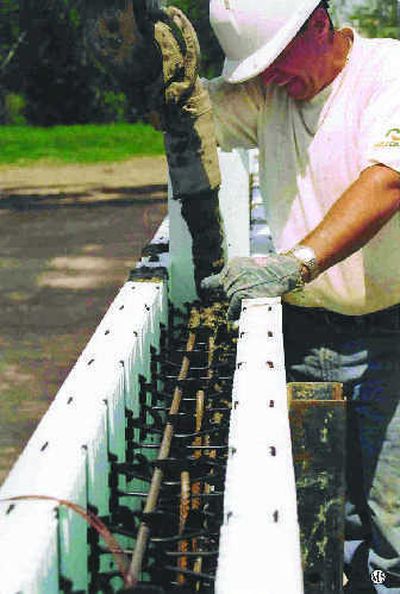
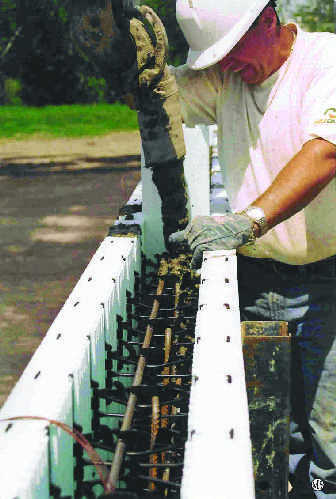
A: The newest technology for walls, ceilings and floors consists of stay-in-place concrete forms, which are considered vastly superior to construction with wood. These Lego-like blocks allow more freedom in design. The pre-assembled units cut construction time in half, and they produce far less waste than the traditional wood-framing method.
Some builders are now opting for these interlocking units (of reinforced concrete sandwiched between two layers of expanded polystyrene foam insulation) to construct better homes, schools, hospitals, condominiums, hotels, offices, and other public buildings.
Q: What do I get?
A: Your energy bills could be reduced up to 70 percent. With this type of concrete structure, you’ll also get a home that stands to be:
•1. Twice as energy efficient, since there are no air spaces or studs — and the technology evens out the effect of external temperature swings.
•2. Up to three times more sound resistant due to the double-foam, insulated concrete core.
•3. Up to four times more fire resistant, since the walls are built with steel reinforced concrete and foam treated with a non-toxic fire retardant.
•4. Up to nine times stronger, a superior feature in high-wind, tornado, or hurricane areas.
•5. Far more resistance to thermal bridging, where outside cold travels easily through walls to create uncomfortable cold spots, drafts, and mustiness.