
This play’s definitely a stinker
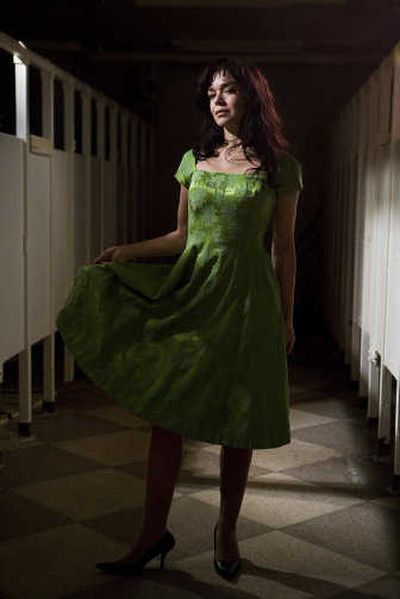
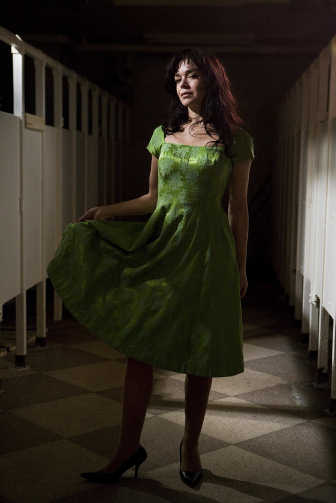
NEW YORK – For most visitors to Central Park, the public bathrooms are a facility of last resort, visited only in desperation after consuming one too many cups of coffee. They’re dark and creepy, filled with spiders, foul odors and puddles of questionable origin.
But for Irish director and playwright Paul Walker, the damp, the chill and even the smell are all part of the experience – the theatergoing experience.
His prize-winning play, “Ladies & Gents,” is a noir thriller performed entirely in the covered men’s and women’s bathrooms in Central Park’s Bethesda Terrace.
The action takes place near the sinks and urinals; the audience stands, clustered in front of the row of stalls. Each of the two pieces that comprise the play runs simultaneously in both bathrooms, and it doesn’t matter the order in which they are seen; the audience splits in half and switches facilities at intermission.
Set entirely in a bathroom, the show portrays the seedy underside of 1950s Dublin, when double-talking politicians professed piety but entertained prostitutes on the side.
“So, pretty much like the state of New York right now,” Walker said, referring to former Gov. Eliot Spitzer’s prostitution scandal. “These themes are always relevant.”
Walker and Karl Shiels, the artistic director of the experimental Dublin theater troop Semper Fi, decided an actual bathroom was the best place – no, the only place – to stage the play. The space is intimate, unpretentious and uncomfortable. Walker’s previous site-specific plays involved busing bewildered patrons to an abandoned warehouse, and a play that meandered through all the rooms of Dublin’s Sick and Indigent Roomkeepers Home.
“When you take the audience out of their comfort zone, there’s a different energy to the production,” he said.
The limitations of toilet theater, however, are many. Aside from the small space and acoustic challenges of echoing tile, countless rehearsals were interrupted by single-minded tourists on urgent business.
One man came in and urinated in front of the actors, said John O’Callaghan, who plays a pimp in the show. The actors protested but the man was undeterred, and unapologetic. “He was a bit belligerent, really,” O’Callaghan said. “I guess when you have to go, you have to go.”
The toilets are long enough to cram in a fair number of patrons – about 25 per restroom – and the blue-green tile and white wooden stall doors lend the rooms a retro charm. The porcelain toilets themselves create atmosphere only; although O’Callaghan’s character does spend some time sitting on the throne, no one actually uses the facilities during the performance.
To make the space workable, the production team had to rent space heaters, a giant 9700-watt generator to supply enough power to light the low, windowless rooms, and two sets of portable bathrooms (located a short walk from the brick-and-mortar bathrooms) to discourage the audience from using the set for its original purpose.
Staff with umbrellas will be on hand on rainy nights to usher patrons from West 72nd Street through the winding paths to Bethesda Terrace, in the heart of the park.
“The venue is pretty unglamorous,” said Aidan Connolly, director of the Irish Arts Center in New York, who along with Georganne Aldrich Heller is producing the play. “There’s a reason plays aren’t put on in bathrooms all the time: You have to really want to be there to make it happen.”