
Foreclosure forum puts face on crisis
After working for five years for a small, family-owned company, Heather Howard was laid off in fall 2006. She didn’t immediately qualify for unemployment, and she faced payments on her credit cards and car loan, medical costs and mortgage costs – all on $1,050 a month.
Her biggest fear was losing her home.
“The drop in income level was quite frightening,” Howard told U.S. Sen. Patty Murray during a roundtable talk Monday in Spokane. “I had about $60,000 of equity in it.”
Howard credits help with a mortgage payment and utility bills from nonprofit Spokane Neighborhood Action Programs with saving her from foreclosure during five months of unemployment.
“I feel I have come out of it; although credit card poor, I am fairly unscathed,” Howard said. “There needs to be more information out there about these kinds of programs.”
While Howard kept her home, borrowers nationwide increasingly are feeling the effects of adjustable-rate mortgages and tightening credit. And funding for regional housing counseling is spotty, even as people look to take advantage of vulnerable homeowners, said local lenders and counselors.
Last year, 304 completed bank foreclosures were recorded in Spokane County, down from a peak of about 1,150 in 2002. More than 100 already have been filed this year.
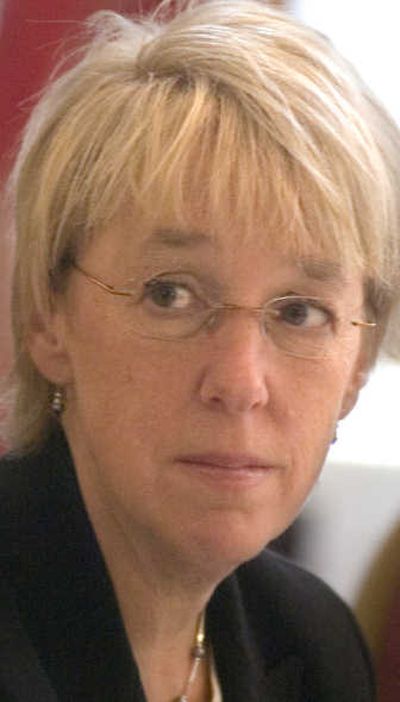
Legislation to combat “predatory lending” and encourage “financial literacy” is needed to address a national foreclosure crisis in the wake of the subprime loan meltdown, Murray asserted during the forum at West Central Community Center, one of several she’s held statewide.
“We are not doing enough to help educate people about the complexities of buying a home or the help they can get if they find themselves in trouble, whether it’s a health care crisis or a divorce or a loss of job, and they get in a position where they can’t afford to pay their mortgage,” Murray said afterward. “There’s help out there, but if they sit at home and don’t ask for it, they get to a point where it’s too late.”
Peggy Burrell, a housing counselor with Spokane Neighborhood Action Programs, said job or income loss and health problems are the primary causes for mortgage defaults among borrowers her organization assists. Some simply shouldn’t have received a loan, she said.
“Early intervention is something we probably really need to take a hard look at,” Burrell said, adding most lenders are not interested in “loss mitigation” until a borrower is three months behind on payments.
She decried services such as www.youwalkaway.com, which drew criticism from some financial experts for encouraging borrowers to just walk away from mortgages. Community organizations offer free help.
Gene Fitzpatrick, vice president of lending for Numerica Credit Union, said his institution has seen a rise in delinquent payments.
“People just don’t have any money to get through a month’s worth of bills if something unexpected comes up,” Fitzpatrick said.
It’s important that borrowers in trouble call lenders early, because banks will work to avoid losing money, he said.
“We don’t want your house back; that’s the last thing we want, because 99.9 percent of the time we lose money on foreclosures,” he said. “And so we will do whatever we can to keep you in the house.”