
Columbia dam ‘trading’ pollution
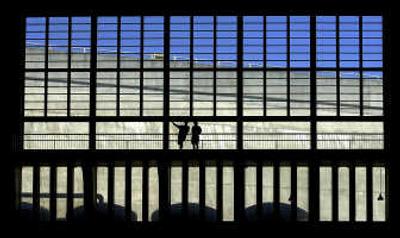

WASHINGTON – For nearly 50 years, Rocky Reach Dam on the Columbia River has been quietly producing enough low-cost electricity to power two cities the size of Seattle. Now the Washington state dam is on the front lines of the nation’s effort to control greenhouse-gas emissions and curb global warming.
The owner and operator of the dam, the Chelan County Public Utility District, figures that recent improvements it’s made mean that 700,000 metric tons of carbon dioxide won’t be pumped into the air. And it registered these “carbon offsets” on the Chicago Climate Exchange for sale to companies that need to reduce their emissions.
Other exchanges trade pork bellies, gold, Treasury bonds or wood pulp. But on the Chicago Climate Exchange, carbon offsets or credits are traded in what could be a precursor to a new national effort to slow climate change.
The players range from Fortune 500 companies to California’s Sacramento County, Florida’s Miami-Dade County and the Kentucky Corn Growers Association.
The system is called cap and trade. Early this summer, Congress is expected to consider legislation that would make it the cornerstone of U.S. efforts to reduce greenhouse gases.
Congress already is involved. Late last year, the House of Representatives purchased $98,000 worth of offsets on the Chicago Climate Exchange to offset greenhouse-gas emissions from its office buildings, including the U.S. Capitol. Among the offsets that the House purchased was one that involved farmers in North Dakota tilling in a way that preserved the carbon in the soil.
Other offsets for sale on the exchange include dairy methane reduction, reforestation, wind and biomass projects, not just in the United States but around the world, in such places as India, Germany, China and Brazil.
The idea is simple, but a cap-and-trade system could be enormously complicated to implement.
In a nutshell, federal law would cap greenhouse gas emissions at a certain level, and the cap would be reduced over the years. Manufacturers, utilities, state and local governments and others have to reduce their emissions if they exceed certain levels, either by installing equipment to lower the emissions or buying offsets or credits from other entities. If they’re below their caps, they have offsets or credits to sell.
A similar program helped significantly reduce sulfur dioxide emissions in the 1990s, which were causing acid rain.
Formed in 2003, the Chicago Climate Exchange, known as CCX, doesn’t have a floor with traders yelling orders in a frenzy of bidding. Everything is handled electronically.
The exchange has nearly 400 members, including large industrial companies, utilities, local and state governments, universities and nonprofit organizations.
Some, such as the Chelan PUD, just offer carbon offsets for sale. Others undergo thorough audits of their emissions and then sign an agreement to start reducing them. The members have reduced their emissions, on average, by 12 percent below their commitments, representing more than 180 million metric tons of greenhouse gas emissions. Credits, or offsets, are selling at about $5.50 per metric ton, though the price fluctuates daily.
Similar exchanges have been established in Europe, where a mandatory cap-and-trade system is already in place, and in Canada.