
Re-educating the masses
Whitworth University has embarked on a master’s degree in theology as a way to address the biblical and theological illiteracy its faculty perceives in today’s society.
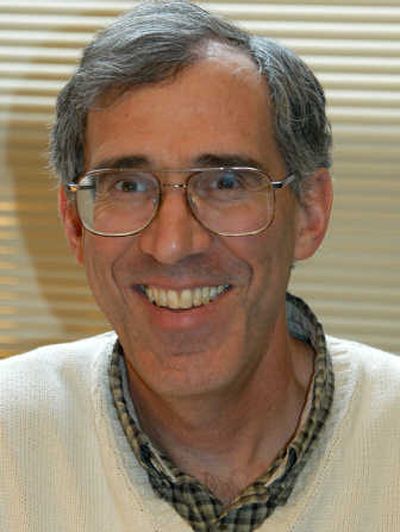
“Many lay people lack grounding in biblical, theological and church history studies,” says Tim Dolan, director of the master’s program. “Many don’t know what happened over the 2,000 years of the church that connects to more than their own denominational experience of faith.”
Beyond that, he adds, “The program is more than opening heads and pouring in content. We plan to develop the heart as well.”
The university, which has long wanted to develop the program, already has faculty in place to teach it. They have been involved in teaching the required and elective religion courses Whitworth offers its undergraduates.
Dolan has been at Whitworth for 10 years as director of the Institute for Clergy and Lay Leadership Development with the Weyerhaeuser Center for Faith and Learning. He will continue in that role, in addition to his duties with the master’s program.
“We have talked about having a graduate program ever since I started here,” Dolan says. “The center has brought people to campus to sample our faculty for nondegree programs, for certificates or diplomas.”
The other main theological education resources in the Inland Northwest are Gonzaga University’s Religious Studies Department and Moody Bible Institute’s Northwest Center for External Studies, he says.
The Whitworth program will operate on a cohort model, in which participants take the same courses together as a group.
More than 20 students are signed up to form the first cohort learning community, which will take courses for 27 months, from this month through August 2010. The goal is to start a new cohort every May.
Students can also do the degree at their own pace. Next summer there are plans to offer an option to complete the program full-time in 16 months.
The 37-credit program includes 10 core courses and two electives. It is designed for working adults, with evening, weekend and weeklong classes so that people out of the area can participate.
There will be elective courses in such areas as congregational renewal, organizational leadership, youth and family ministry, the global Christian movement, church planting and leadership, and theology and the practice of worship.
The students in the first group come primarily from Washington. Many have participated in Weyerhaeuser Center for Faith and Learning courses and have asked for such a program.
Beyond academic content, the program includes community building and spiritual formation. The students will gather for Matins, evening worship and shared meals, as well as participating in classes.
Dolan says the program is for youth ministers, Christian education directors, volunteer coordinators, pastors, nonprofit staff, lay ministers and “anyone looking to commit to a journey of personal spiritual enrichment.”
It begins with an introductory weekend retreat, May 30 and 31, when Whitworth President Bill Robinson will give a presentation on Christian leadership.
Upcoming sessions include a weeklong course on Church History I: The Great Tradition, taught by Jerry Sittser in June; a weeklong course on Church History II: Reformation and Renewal, by Keith Beebe in July; a fall weekend course on Christian Spirituality taught by Karin Heller; a weeklong course on Christianity and Culture taught by Todd Cioffi in January 2009; a weeklong course on Pastoral Ministry taught by Dolan in May 2009; and a weekend session led by Robinson next May.
Other courses will be on Old Testament Theology, by Scott Starbuck; The Life of Jesus and the Early Church, by Jim Edwards; Letters of the New Testament, by Roger Mohrlang; Christian Theology, by Adam Neder; and Teaching and Preaching the Scriptures. Faculty for the last class is to be announced.
The faculty represents different church backgrounds, most coming from the Reformed tradition.
“In this ecumenical program, students will gain from the faculty’s and other students’ church traditions and theological perspectives, along with exploring their own traditions,” Dolan says.
“They will be able to explore where they come from, and how similar and different they are from each other.”
Dolan, who attends Colbert Presbyterian Church, says the program will appeal to people who serve as pastors but have no theological degree, and to certified lay pastors, lay people serving formally and informally, and anyone seeking more grounding, nurture and enrichment in their faith.
Some graduates may go on for other studies and some may want to transfer credits to a seminary for a master of divinity degree. Whitworth, which has 2,600 students in more than 50 undergraduate and graduate programs, is preparing agreements with seminaries so that will be possible.
“We live in a credentialed culture,” says Dolan. “This is one means locally to equip people for ministry, wherever they serve and work.”