
High court race offers contrast
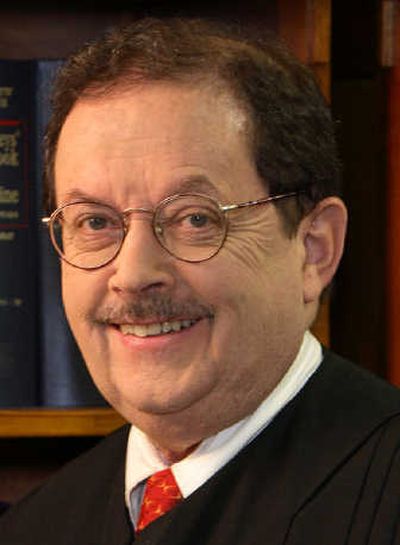
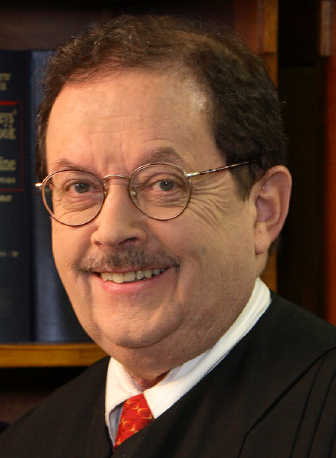
BOISE – Idaho’s May 27 election is not just the primary election – it’s also the final say on the nonpartisan contest for the Idaho Supreme Court.
Two seats on the high court are up for a vote this year, and one is a contested race, between recently appointed Justice Joel Horton and court-reform advocate and state District Judge John Bradbury of Lewiston.
Recent appointee Justice Warren Jones is running unopposed. Here is a look at the two candidates in the contested race:
Justice Joel Horton
Horton, 48, was appointed to the Idaho Supreme Court in September by Gov. Butch Otter to replace retiring Justice Linda Copple Trout. He practiced law in Lewiston for a year after graduating from the University of Idaho College of Law in 1985, then moved to Twin Falls, where he was a deputy prosecuting attorney for two years. He worked as a deputy Ada County prosecutor and a deputy Idaho Attorney General from then until 1994, when he was appointed an Ada County magistrate judge specializing in family law. In 1996, he was appointed a district judge.
Said Horton, “I have pretty clear ideas that our role of justice is fairly limited.” Because of that, he’s declined to propose major changes to Idaho’s justice system, as has his opponent, who is running on a judicial reform platform. “The focus really ought to be on the respective merits of the candidates,” Horton said.
An Idaho State Bar survey of lawyers and judges around the state rated Horton higher than his opponent on such measures as integrity and judicial temperament, though more knew him than knew Bradbury. Said Horton, “I was obviously gratified by the results.”
Horton said as he’s talked with people about the race, he explains why he pursued the Supreme Court position: “To me it’s an extension of a career that has been committed to public service.” Horton said he saw his appointment to the high court as “a product of my abilities as a judge and my performance as a trial court judge.”
Horton defended the state’s current judicial selection process, which calls for election of justices but allows appointments to fill unfilled terms. “It’s not as if I’m campaigning that we ought to do away with the election process,” he said. “When I took this appointment, I knew that it’d be subject to the potential for a contested race.”
Judge John Bradbury
Bradbury, 71, is a Korean War veteran with 42 years of experience before state and federal courts. He’s been a district judge in Lewiston for five years, and was elected twice to the position. An Orofino native, he was the founding partner of a 35-lawyer firm in Anchorage and Seattle; served as a special assistant attorney general for the state of Washington; and won the judicial excellence award in 2006 from the Idaho Criminal Defense Lawyers Association.
Bradbury is on something of a crusade to reform Idaho’s court system, which he says has become too pricey and inaccessible for most Idahoans. “Why should a local mechanic have to give up a day’s pay to fight a traffic ticket he thinks is unfair?” he asked. “It’s the triumph of judicial comfort.”
Bradbury said costs could be reduced in Idaho courts by holding Saturday and night courts, and by utilizing modern technology such as electronic filing and taking motions by telephone, something he’s already doing in his court. “In civil cases, we’d save millions of dollars in Idaho today if experts could testify by tele-video,” Bradbury said.
He’s also calling for complaints against judges to be public information; they’re now kept secret. “We are not anointed priests, we are public servants, and what we do should be made public.”
But Bradbury’s top issue is election of judges. Though it’s required by the Idaho Constitution, he said only six of the district and appellate judges in Idaho were elected; the rest were appointed to fill out a term, after which they stand for election as incumbents. Bradbury contends the appointment system is a political one, and makes judges less accountable than election; he’s calling for prohibiting any appointed judge from running to succeed himself in office. That’s what his opponent, Horton, is doing.
“I’m not running against Horton – I’m running against the system,” Bradbury said. “I think he is a part of the legal establishment and is happy with it as it is, and I am neither.”