
Hiring a nanny with care

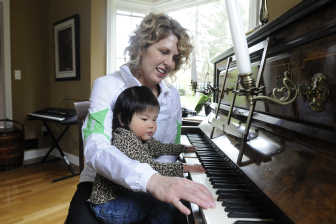
When Heidi Duffy started searching for a nanny four months ago, the Spokane mom vowed to do all she could to find the best fit for her children. A resume and a list of references weren’t enough, she decided.
To ensure the safety of her kids, Duffy was determined to use a hiring process that was just as stringent as any business or nonprofit looking for the ideal employee.
So Duffy not only conducted interviews and called previous employers; she also required each candidate to fill out a three-page application and took notes while observing them with her children.
In addition, she did a little investigative work. Besides doing Google searches on the applicants and checking out MySpace pages and other information available on the Internet, she also paid money for background checks on the finalists to verify their employment and academic history, their proof of legal working status and any criminal records.
“I’ve never had a nanny before and I wasn’t about to leave them with just anybody,” said Duffy, whose family moved to Spokane two years ago. “Nobody wants to compromise their kids – you’re not just shopping for a car.”
Finding someone to care for their kids can be a difficult task for most parents, especially those with newborns or children who have never been left alone with anyone besides mom or dad. Numerous blogs and Web sites such as “I Saw Your Nanny” – created by an anonymous woman in New York who worked as a nanny for 10 years – are full of nightmare stories involving caregivers who mistreat their wards.
It’s sometimes hard to figure out whom to trust, according to parents, let alone find someone who’s both capable and willing to work with young children.
But instead of relying on secret webcams or the people who post on the nanny-spying Web sites, most people prefer to be cautious from the very beginning.
There’s no fool-proof method to ensure children’s safety, some parents say, but doing a little investigative work can sometimes bring some peace of mind.
“By leaving a child in someone else’s care, you’re still taking a risk,” Duffy acknowledged. “I just wanted to minimize the risk as much as possible.”
From her experience screening potential nanny candidates, Duffy discovered that a few of the women who supplied the best résumés and appeared impressive during job interviews were actually people who had been in trouble with the law. Through criminal background checks or even by mentioning that she was conducting one in the first place, Duffy found out they had histories that included reckless driving, shoplifting and even theft of prescription drugs.
“Everybody sets out to hire the best person they can find, but people sometimes forget about the obvious things,” Duffy said. “All the information is out there, it’s just a question of finding it.”
A stay-at-home mom with a husband who travels frequently for work, Duffy was looking for someone who could take care of her kids, ages 6 and 2, for about 10 to 20 hours a week so she could run errands and get some work done around her South Hill home.
She placed an ad in the newspaper, posted on the job Web sites for area colleges and universities, and contacted employment services agencies. She also placed several listings on Craigslist and spread the word among her friends and neighbors.
Like most parents, Duffy wanted someone who not only had experience, but also enjoyed taking care of children. Sometimes, people decide to be nannies because it’s the only work they can find, she said.
She also had some “non-negotiable” requirements: a valid driver’s license and a car; CPR and first-aid training or the willingness to take a course; a nonsmoker; and someone who would agree to provide their social security number and other pertinent information for Duffy to conduct a background check.
“I wanted somebody I could trust and that I could feel good about having in my home,” said Duffy, who has a background in social work, sales and customer relations.
More than 60 people called to inquire about the job. While some didn’t follow up because their schedules didn’t mesh or they weren’t able to provide a year-long commitment, enough people showed interest in a home visit and follow-up conversations.
Those who wanted a second interview had to fill out a three-page application that asked for all kinds of information: their last three jobs including their starting and ending pay; proof of insurance; and their last two addresses and how long they’ve lived there. When they signed the application, they also had to give their driver’s license and social security numbers and agree to a criminal background check.
Some of the applicants didn’t pass the phone interview, Duffy said. Others, however, presented compelling résumés that included a background in early childhood education.
But when she contacted references and followed through with the screening process, she discovered that “the ones with the most impressive backgrounds often have baggage.”
One candidate who told her she had worked in child care for 30 years came to her home extremely prepared, she said. The woman brought letters of recommendation, photos of the kids she had taken care of and even a toy for Duffy’s 2-year-old to play with. But when the background check came back, Duffy found that the candidate had a record for reckless driving and shoplifting. She also had a restraining order against her.
After Duffy mentioned the required background check, another candidate just bowed out and abruptly ended the interview.
Like some companies that recruit young people on college campuses, Duffy also took the time to use online search engines for her background checks. If their names came up on a social networking site such as MySpace, she checked out what the potential nanny posted on her page. “You get a feel for their level of maturity and their personality,” she said.
While Googling the place of employment of one of the candidates, Duffy found that the young woman had worked at an adult care facility that recently got its license revoked by the state. She also learned that the facility was actually owned and operated out of the home of the applicant’s mother.
Three months into her nanny search, Duffy started losing hope. She came to a point where she began to question her own judgment. She almost concluded that perhaps it wasn’t such a good idea to leave her kids alone with someone they didn’t know.
When she was just about to give up, Duffy heard from a college student from Whitworth University. The young woman, who graduates with a business degree this month, needed a part-time job for about a year before going to graduate school.
She had glowing references, prior experience as a nanny for a family with four kids and a solid background.
“I had a good gut feeling about her,” said Duffy. “She’s intelligent and well-educated. I was impressed with her activities. I liked her demeanor.”
After passing the background checks, the woman made it to the final challenge: She received an invitation to dinner.
During her three-hour visit with Duffy, her husband and their two children, the Whitworth student impressed the entire family. She played with the kids while Duffy made dinner. She even got along with the family’s two dogs.
“It seemed very pleasant and natural,” said Duffy. “When she left that night, we could picture her hanging out with our family.”
After hiring the young woman this month, Duffy put together a two-page employment contract that included the nanny’s job duties, her rate of pay ($11 an hour) and the fact that she would receive a formal job evaluation within 90 days. The contract also guaranteed a minimum number of work hours per week.
Looking back at her nanny search, Duffy said she’s actually not surprised at how difficult it was to find the right candidate. Child care is an industry that doesn’t pay enough money, she said, so not everyone is interested in being a nanny.
Duffy and other experts advise that when looking for child care, it’s best not to wait until the last minute. The hiring process, depending on how much time you spend each week, can take as long as six to 12 weeks, Duffy said.
“Make sure that you plan for this like any other major event in your life,” Duffy advised.
Parents also should pay attention to their instincts, she suggested. While background checks screen out some people who shouldn’t work with children, it’s important to keep in mind that some perpetrators have never been caught and have no criminal record.
So even if a candidate has a great résumé, “listen to your gut feeling,” Duffy said.