
Cork Goes Pop!
Touted as “one of nature’s wonders,” cork adds beauty to a room when used as the floor. Find out more about this environmentally conscious resource and how to make it work for your home
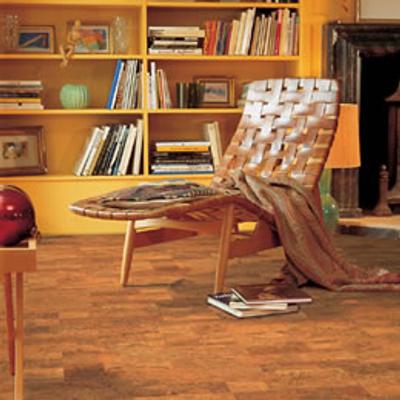
Remember those trivets your Aunt Myrtle made out of old wine corks? The ones that you secretly thought were super cheesy? Careful: The day may come when you choose to floor your entire home in the same material Aunt Myrtle used for her craft projects.
Robert Sawyer is technical training director of Amorim Revestimentos, the world’s largest supplier/manufacturer of value-added cork products. “Cork is one of nature’s wonders,” he says, “the perfect balance between the demand for beauty and [an] environmentally conscious resource.” Amorim has produced cork oak floor material for Wicander Cork Floors since 1868, proving that the attraction to this alternative flooring method has been around long before everyone started going “green.”
Cork floors are made by processing cork harvested by hand (without the use of chemical herbicides or fertilizers) from Cork Oak trees found largely in the Mediterranean. The wine stoppers are created first and then the small bits of cork, split planks, and even some cork dust, are used to produce agglomerated cork material, perfect for what’s called “floating” flooring and other construction insulation.
“Floating floors require little effort for installation due to a no-glue click system,” says Sawyer. “The size of floating floor planks is 12” x 36”. With a floating floor, replacing a damaged plank is very simple.” Laying down small cork planks is something that a lot of people can do themselves, as opposed to wood paneled floors or linoleum, which usually can’t be installed without the help of a professional – and a lot of smelly glue and varnish.
Cork floors might reduce your energy bill, too. The thermal properties of cork are so impressive, NASA has been known to use the material in space shuttle construction. But how does it look? And will it last? Most cork floor lovers crow about the natural, warm look of cork flooring and say the modern coating options preserve the color and strength of their floors, as opposed to the older, less-effective waxing method. Some claim, however, that cork floors are easily chipped and require extra care to maintain.
“Floating floor average price ranges from $7 to $12/sq ft., depending on product line and collection,” says Sawyer, adding that “Glue-down price is $8 to $12/sq ft., plus installation, averaging $2.50 to $3.50/sq. ft.” When you consider that some conventionally tiled floors can cost up to $14/sq ft. (plus an installation fee that can reach $6), it still appeals to some to spend the money to replace a damaged or faded plank every few years.
Aunt Myrtle would approve.