
Seed money
Now in its 100th year, Spokane Seed is a worldwide agricultural player
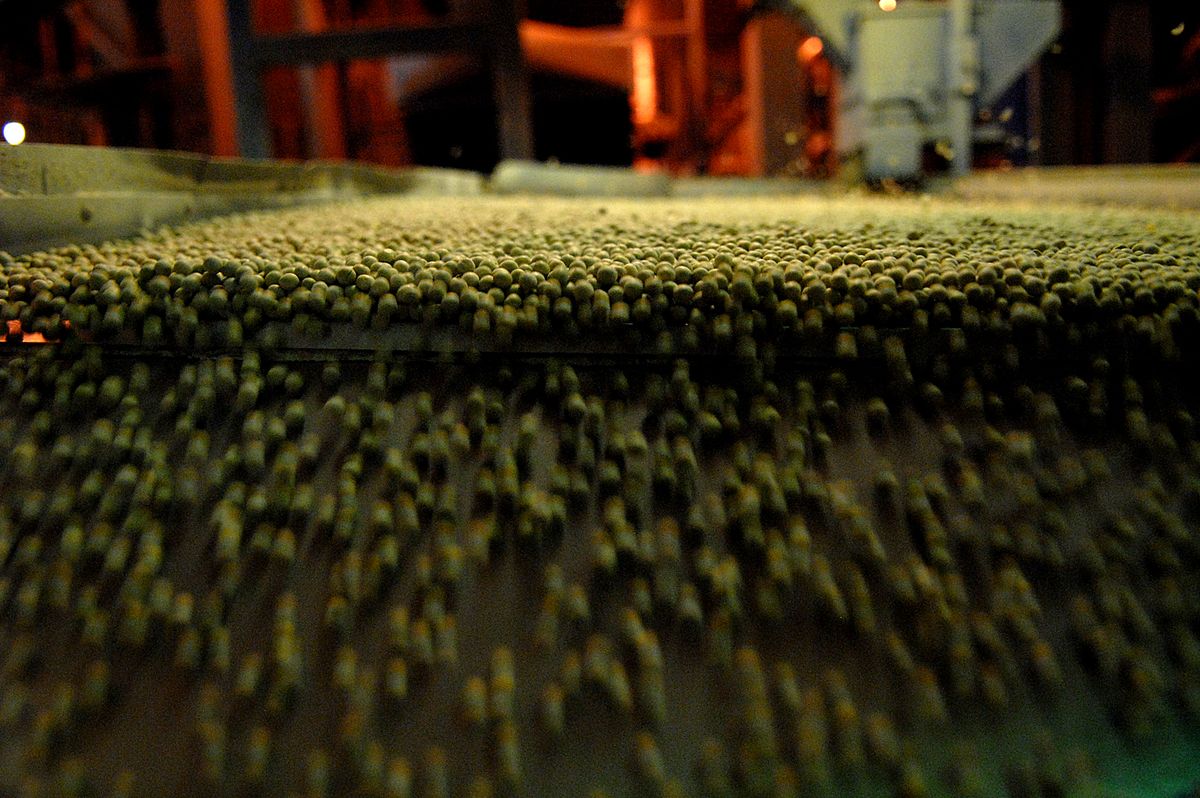
Any food processing business must contend with the weather and its impact on profits. Spokane Seed owner Pete Johnstone said the harsh winter and late spring snow on the Palouse had an impact on the quality of peas, lentils and garbanzos it processes and sells to customers worldwide.
But for Johnstone and his co-workers at Spokane Seed, there’s bad weather and “good” bad weather.
“When we call back to the East and talk with buyers, we ask them if their If the winter’s a bad one, he just smiles.
“The worse the winter is, the more soup companies like Campbell’s will sell. The more soup they sell, the more peas and lentils they’ll buy from us,” he said.
Now in its 100th year in business, and guided by the same family that entire time, Spokane Seed is a reminder that the Inland Northwest remains an agricultural hub and a direct link between Palouse farmers and dinner tables around the planet.
Today the company operates two processing plants, one in Colfax and the main one in Spokane Valley. During normal operations the company has about 50 workers, most of them in Spokane.
The name of the company hardly reflects what Spokane Seed does. In 1908 it opened its doors in downtown Spokane and became a retailer of seeds, bee supplies, nursery stock and poultry supplies.
By 1930 the company, run by Johnstone’s grandfather Curtis “C.C.” Whealy, evolved into a processor and wholesale distributor of “pulse” crops. That term refers to peas, lentils and other legumes such as garbanzos. It does collect and sell seeds for those crops, but that amounts to a small portion of its business.
Each year the company signs contracts with growers across the Palouse and the Blue Mountains of Eastern Oregon. In July and August the harvested crops are hauled to storage bins across the region, or are hauled by train or truck to the Spokane Seed processing plant at 6015 E. Alki Ave.
“We’re working here from early morning till 9 p.m. at night, as the trucks come in from growers and drop off their loads,” said Andrew Fontaine, the company’s sales manager and Johnstone’s nephew.
Grain crop prices in recent years have caused a slight dip in the volume of pulse crops brought into processors around the area, said Johnstone. Palouse farmers who contract with Spokane Seed grow pulse crops in rotation with their wheat and other grain crops. The major benefit from planting peas and legumes in rotation is adding nitrogen to the soil and reducing the use of fertilizer.
Even so, “the growers do adjust to (market) prices and do the math,” Johnstone said.
U.S. Department of Agriculture data show that Washington farmers grew 66,000 acres in lentils in 2006 and 55,000 acres by 2008; Idaho farmers went from 38,000 acres to 40,000 acres in that same period. Dry edible peas, which typically fetch a lower price for farmers, went from 67,000 acres to 70,000 acres in Washington in that two-year period. Idaho pea farmers stayed the same, at 30,000 acres, according to the USDA.
Johnstone said current market prices are highest for farmers growing garbanzo beans (also known as chickpeas), followed by lentils and peas. “But I will say that pea prices are currently three to four times the price we were paying the grower not long ago,” he said.
Once the crops are loaded into the processing facility, Spokane Seed’s workers run the peas, chickpeas and lentils through a series of screeners, cleaners and sorters. The machinery, which continues being upgraded to maintain quality control, runs practically nonstop year-round.
“We do stop for a week or two every year to do maintenance and cleanup,” Fontaine said.
At one of the early processing stations, a platform uses vibration and airflow to separate good quality peas or lentils from odd-sized or cracked ones. The separation allows Spokane Seed to keep the higher quality products for customers like the Campbell Soup Company, Gerber Foods or Progresso, and use the lesser-quality products for other customers or for animal feed.
Peas then move to a steamer and splitter, which cracks them in half and moves them to the next step, a rotating drum that operates much like a clothes dryer. That process helps polish and brighten the peas, leaving the green variety with a soft and smooth surface.
Throughout the processing, the stream of peas, lentils or garbanzos pass over magnets that grab or separate any metal that could have been brought in during harvest.
Fontaine said higher quality has become a constant focus, partly in response to customers, partly as a preventive measure in keeping with federal dictates to protect the food supply from bioterrorism.
Roughly 65 percent of the processed products go to domestic customers and the rest are shipped overseas, Johnstone said. The largest export areas are South America and India.
Johnstone’s father, Pat, took over Spokane Seed in 1957 and ran the business until 1988, when Pete succeeded him.
The processing industry has changed a lot in the past three decades, Johnstone said.
“Back in the 1950s, peas and lentils were only grown in the Northwest,” he said. “Growing those crops was an isolated cottage industry.”
That changed in the 1960s and ’70s when Canadian farmers turned to pulse crops in a big way. By the mid-’80s the Canadians were producing 10 times the crop totals produced on the Palouse, Johnstone said.
With increased competition came a shift in marketing. Instead of relying on global exports as the best and most reliable market for peas and lentils, Palouse growers and processors began looking for ways to boost the domestic consumption.
As Americans revised their diets toward healthier foods, beans, peas and lentils all grew in popularity, and Spokane Seed and other processors across the Northwest were able to sell a lot more of those items to U.S. companies like Heinz Foods, Campbell’s or General Mills, the parent company that makes Progresso soups.
Campbell’s, based in Camden, N.J., has become one of Spokane Seed’s largest customers.
“We’ve had a relationship with Spokane Seed that probably goes back 30 years,” said Campbell’s spokesman John Faulkner.
“We have seen an increased interest across the country in healthier foods and high-quality ingredients,” he added. “That is why we definitely work with companies we know, like Spokane Seed.”
Campbell’s has four plants across the U.S. that make canned soups and broths, he said, with about five million pounds of peas and lentils used each year.
Come January, when farmers are beginning to think about spring planting, Johnstone and his sales staff will check the weather reports from the East Coast and the South.
All it takes, he said, is a cold snap back East and Spokane Seed will enjoy a busy stretch from January through March, filling 100-pound bags with peas, garbanzos and lentils and shipping them across country.
The companies that have survived in the pulse-crop processing industry are the ones that have adapted to changes in the business, Johnstone said. “So far, we’ve done OK.”