
Plug your nose! Shore ills confronted
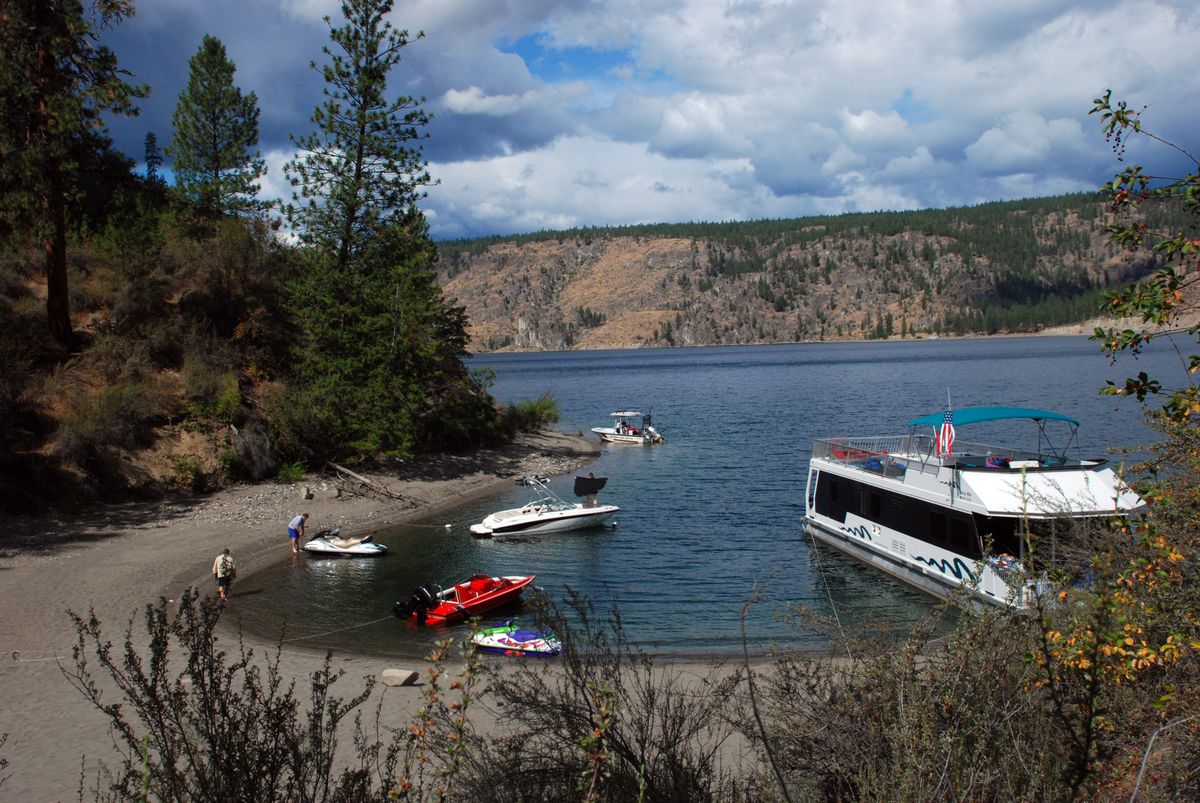
Most of Lake Roosevelt’s 1.4 million annual visitors have come and gone for the season, and what many of them left behind will make you wince.
The brush and woods behind popular undeveloped camping beaches along the 154-mile-long reservoir are littered with toilet paper and human waste.
The mess is just one of several issues prompting the National Park Service to begin taking public comment this month for a shoreline management plan that will be developed over the next year and a half.
“The first time I came out to these beaches, I wasn’t prepared for how disgusting this is,” said Debbie Bird, Lake Roosevelt National Recreation Area superintendent.
“Even though campers are required to have portable toilets, many of them don’t bother. What you see here is all from this season, because we came out and cleaned these beaches this spring to get a handle on the problem,” she said on a recent boat tour to view a portion of the Columbia River reservoir’s 500-some miles of shoreline.
“We treat these beaches as a bio hazard and suit up to clean them,” said Sean Smith, regional director for the National Parks Conservation Association. “Then Joe Shmoe comes out here and walks around through this filth in flip flops.”
The national recreation area provides 70 vault toilets, 20 flush toilets and four floating toilets along shores plus nine pit toilets at boat-in campgrounds, said Ray Dashiell, Park Service facility manager in Coulee Dam.
“But it would be cost prohibitive to try to maintain toilets at all the undeveloped beaches we can’t reach by road,” he said.
“We made an effort this summer to get the word out about sanitation at boat launches and in patrols, but we fell short,” Bird said. “There are so many access points.”
Human waste sanitation kits are available at marinas along the lake. Lyle Parker of Seven Bays Marina showed one option: a bag with a chemical kit that renders the human waste safe for disposal in a dumpster.
The multiple-use bag sells for $6. Parker showed how easily it can be attached to an optional $19 folding toilet seat stand. The marina also carries a tent-like portable shelter for toilet privacy.
“But really, the only time we sell any of these is to people who come in after they’ve been contacted by a park ranger and told they have to have one in their camp,” he said.
The Colville and Spokane tribes manage nearly half of the reservoir’s shoreline along their reservations, and they require campers to buy tribal permits.
Camping outside of developed campgrounds on the national recreation area lands has always been free.
“It doesn’t cost you a thing to come and use this place,” Bird said. “There’s a boat launch fee and a campground fee, but there’s no fee for playing on the sand or staying on the undeveloped beaches.
“This has been a place of incredible freedom for people of all income levels. It’s where people come to teach their kids how to fish and how to swim and how to camp. It holds a very important place in the future of public lands.”
The shoreline management plan will seek to keep it that way, while confronting issues that threaten to spoil the experience, she said.
Those issues include:
•Development on lands bordering the recreation area, and demands for private access to the lake.
•Public access points that are overcrowded in peak season.
•Increasing infestations of aquatic vegetation.
•Increasing size and noise of vessels.
The natural character of Lake Roosevelt National Recreation Area’s shoreline is protected by a ribbon of federal land, excluding the Indian Reservations, that prevents private development directly on the shoreline.
As private lands bordering the recreation area are developed, people are expecting some sort of private access to the lake, Dashiell said.
“At least five Realtors were advertising lots with beach access even though it’s not legal to cross the federal land,” he said. “We’ve been contacting those developers.”
“We have up to 300 known encroachments into the park. One is a quarter-mile-long road bulldozed from a home to the beach. Not all are that egregious, but we contact them and put them on notice to stop, then we decide whether to go ahead and seek restitution.
“We settled one case last year and got $65,000 for restoring the disturbed land and vegetation. Still, we become aware off five-to-10 new encroachments a month.
“The standard procedure around here has been ‘don’t ask permission; ask forgiveness.’ But word is starting to get around that we’re getting less forgiving.”
While scattered development poses issues, even concentrated development needs answers, he said.
“Deer Meadows near Seven Bays was formerly a ranch,” he said. “Where the park used to have one neighbor we now have hundreds of lots and they all want private access to the lake.”
Aquatic weeds that are clogging many of the reservoir’s popular boating and swimming bays are a natural evolution in a maturing reservoir, Dashiell said. “But we’re trying to balance the need for recreation,” he added.
Most of the vegetation is native to Washington, as opposed to exotic Eurasian milfoil that’s invading many waterways.
“We simply have more silt buildup that’s making a garden for these plants in popular swimming beaches like Porcupine Bay.”
This year the Park Service chemically treated 12 acres of the reservoir and used a black mesh to subdue the weeds at Porcupine Bay.
“There’s no perfect solution, and the fish managers don’t want an assault on weeds because they provide nutrients fish need in a reservoir that turns over its water so quickly,” he said. “That’s why we want the public to help guide us as we proceed.”
Said Bird, “We know that in dealing with all of these issues, we have to be reasonable and we have to make a difference.”