
Future teachers using in-school garden to inspire students
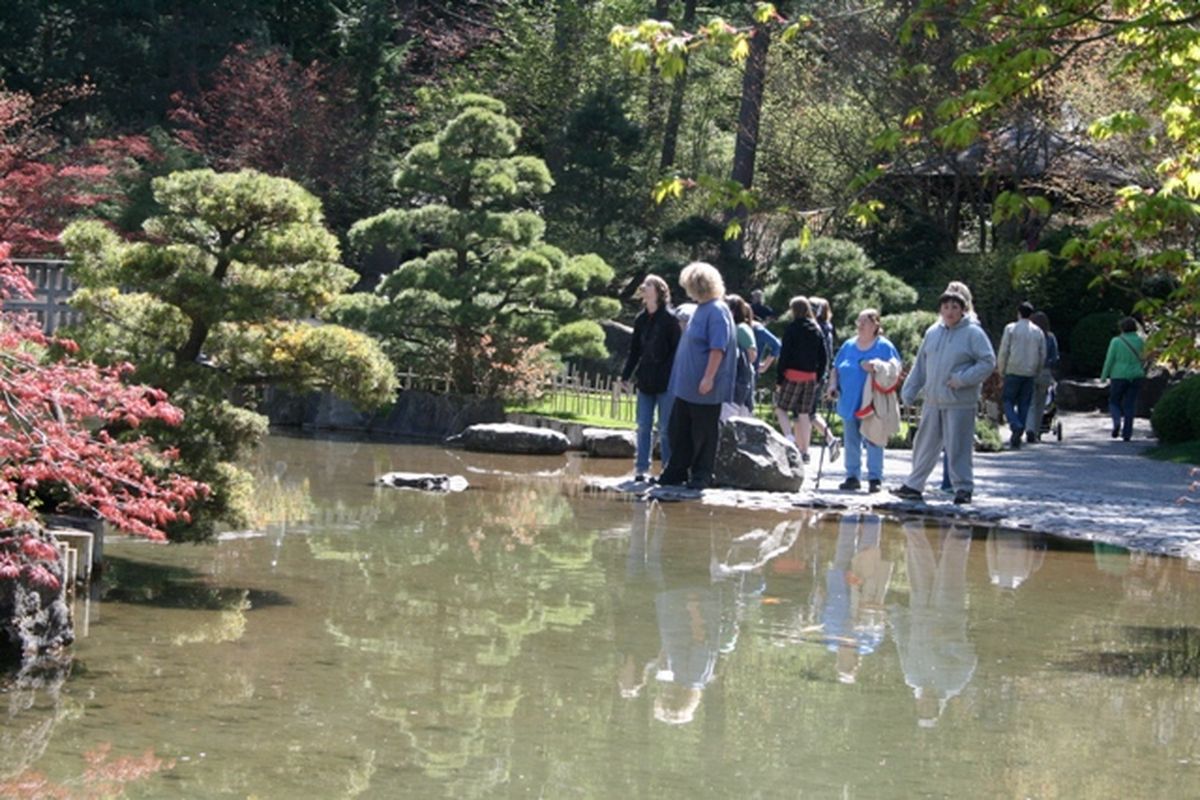
On a recent Friday afternoon, about 50 students from Post Falls Middle School and their teachers descended upon Spokane’s Manito Park.
Some sat alone, sketching statues, flowers, benches or whatever else they saw that inspired them. Others talked excitedly with their classmates about their surroundings, whether they were pointing to a “giant goldfish” in a pond at the Japanese Gardens or the variety of plants surrounding them in the Gaiser Conservatory.
The students were there to gather ideas for a “usable garden” they’re designing and creating in a courtyard at their school. When it’s done, the garden will provide herbs that will be used in the school’s cafeteria every fall. It will be wheelchair accessible. An interactive mural depicting world history will cover a wall and a memorial center honoring a student that died will be built around a tree that was planted in her memory.
The project not only exposes the children to environmentalism, but is also an opportunity for students of different ages and skill levels to work together, as well as a chance for future teachers from the University of Idaho, who are guiding the students through the project, to get a taste for working in a the classroom—albeit an outdoor classroom.
“We’re creating a mini classroom environment for these (future) teachers … and we’re also modifying and beautifying our school,” says Mary Strobel, one of five educators behind the project.
The idea came about last winter when Cherie Major, a professor at the University of Idaho Coeur d’Alene Center’s education department, landed a $600 service-learning grant from the university. Major and Strobel have worked together in the past, and the two brainstormed ways they could expose the college students to middle school students of varying abilities to give them a true taste of what it’s like to work in a heterogeneous classroom.
“We wanted to have a total learning environment for these (future) teachers,” Strobel says. “We wanted them to experience students from the whole spectrum.”
Post Falls Middle School already had a small garden project run by teacher Kathy Hearn’s life skills students, so Major and Strobel decided to build upon that and include students from Strobel’s resource classroom, Diane Haney’s leadership class and Ann Cunningham’s talented-and-gifted program.
For the past couple of weeks and until June 5, the college students have been at the middle school almost every day. Each future teacher works with a small group of students on a particular project, such as building an outdoor classroom (complete with seating for 30 and an instructional podium and dry-erase board) or building two large sandboxes that will be used later by the middle school’s science classes for simulated archaeological digs and forensics lessons.
Herb gardening will be done in raised beds the middle schoolers are building on legs so that students in wheelchairs can sit with their legs underneath, comfortably sowing seeds, weeding and harvesting alongside their classmates.
Post Falls Middle School is a U-shaped building, and the garden is being developed in the space in between the building’s three corridors.
“In center of that is a really—well, it could be really nice—but instead it’s really funky area,” Strobel says, laughing.
Part of the project includes building a fence around a utility unit that’s somewhat of an eyesore, she says.
The college students develop lessons that connect the hands-on activities to the state of Idaho’s educational content standards. Instead of mindlessly choosing flowers to plant in the garden, for example, the students study the science behind which plants do well in North Idaho’s climate and what will bloom when; as the crews build the outdoor classroom and sandboxes, they’re exercising their mathematical muscles; and as the students prepare a compost bin and worm farm that will handle the school’s food scraps, they’re digging into environmental science.
The work is being done outside over the course of four periods each day, and is proving to be a great way to engage the younger students during a time of year when it’s traditionally difficult to concentrate on schoolwork, Major says.
“You would not believe at the end of the first work day what got done,” she said shortly after the project got under way. “The middle school students love being outside, and the college kids do, too.”
Not that the younger students are focused 100 percent of the time. But those are learning opportunities for the future teachers, who end up discussing the real-world challenges they face in Major’s class at the end of each day.
“They’ll write in their daily reflections, ‘I have a student who doesn’t want to do it. How do I engage them?’” she says.
The University of Idaho students taking part in the program are sophomores and juniors, so many of them are still more than a year away from their student-teaching experience. But they’re no strangers to the K-12 classroom, since the university ensures that the future teachers are “literally in the schools in every single education course” they take, Major says.
The project is a bit over budget, but thanks to a $250 donation by Major of pay she received for attending a workshop and a 20 percent discount on supplies provided by a Lowe’s home improvement store, they’re making ends meet.
The school will celebrate the new garden with a party on June 3, and organizers hope they’ll receive some donations then to completely cover the costs. The school’s band and choir will perform.
When asked about the extra time and energy this sort of project requires of teachers, Strobel shrugged off any praise and shifted the spotlight onto the students.
“This kind of recharges our batteries, too, to see the kids’ enthusiasm,” she says. “That’s the reason we all went into it. It’s nice to end the year on that note.”