
Super simple soda bread

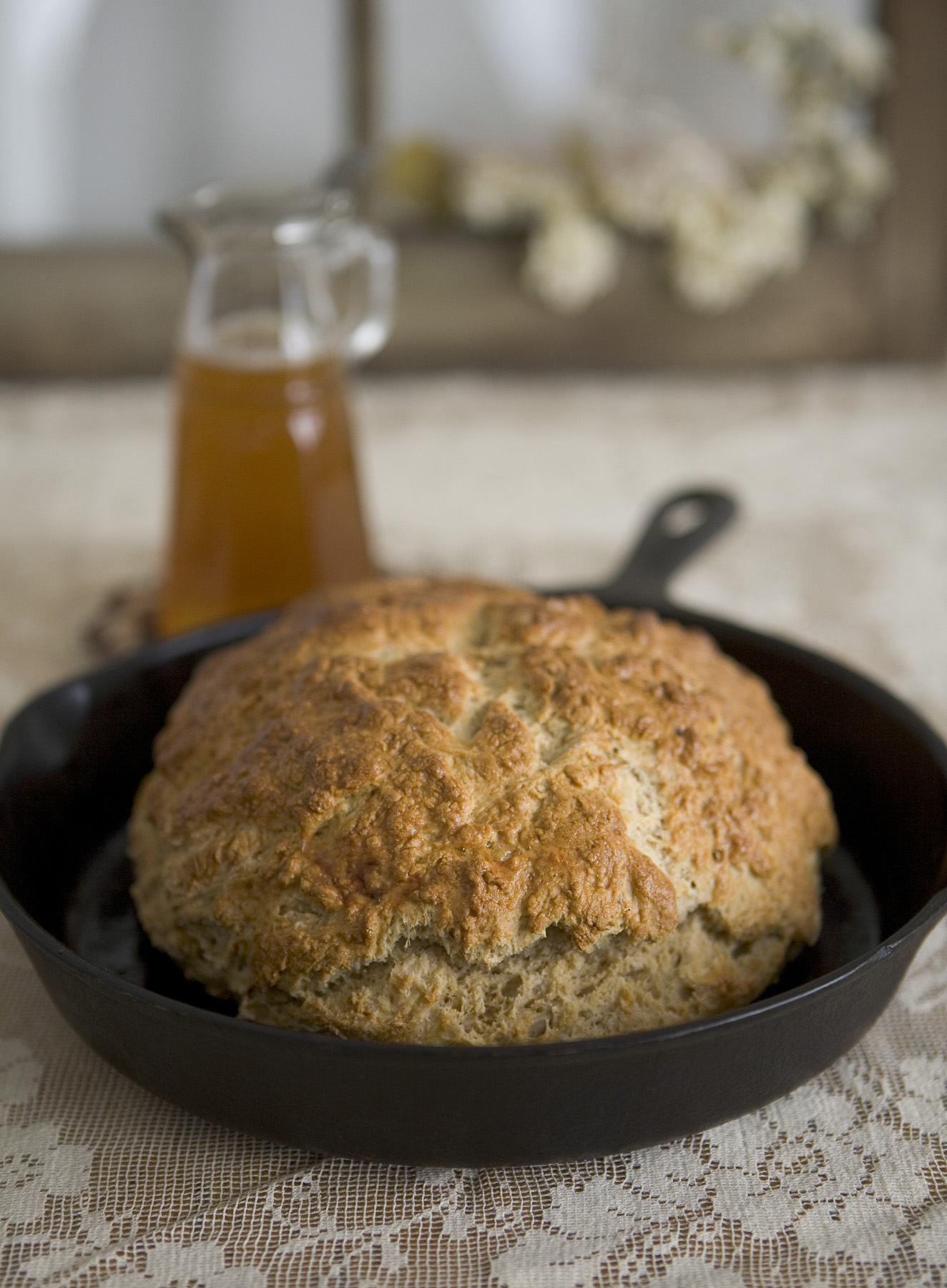
Who among us doesn’t love a chunk of warm bread, right out of the oven, to accompany our meals on these chilly November evenings? But, of course, bread takes time — the mixing, the kneading, the rising. It’s not something you can simply scrape together spur-of-the-moment. Or is it? Before you resort to buttering a slice of that store-bought loaf in your cupboard, preheat your oven to 425 F, and let me share one of the simplest breads in baking history.
In the 1800s, the humble homemakers of rural Ireland relied on four readily available ingredients to make hearty loaves that became a staple of their diet. World-renowned Irish Soda Bread was born of whole-meal flour from homestead wheat fields, buttermilk left over from churning the family cow’s cream, sea salt and a new-fangled yeast alternative: baking soda. Unlike yeast, baking soda (sodium bicarbonate) worked quickly as a leavening agent, and it produced a more consistent loaf. When mixed with buttermilk, which contains lactic acid, baking soda reacts to form tiny bubbles of carbon dioxide that guarantee a reliable rise every time.
Better yet, for bakers who are short on time, soda bread requires no kneading. Yep, you heard right. In fact, the best bread results from mixing the ingredients with a minimum amount of handling. The more you mix or mash it, the tougher it gets. Soda bread is naturally more dense than most yeast breads, but that doesn’t detract from its deliciousness. Crusty and steaming, it is a superb complement to cold-weather dishes such as stews and roasts. Smaller loaves are perfect for individual “bread bowls” filled with savory soup. Plus, the dough can be dolled up with spices, nuts and fruit bits to become a sumptuous sweet bread.
Traditionally, the dome of the rounded loaf was cut before baking, creating the shape of a cross. The gesture was regarded as a blessing to “let the devil out of the bread.” Practically speaking, a crosscut allows heat to penetrate into the thickest part of the bread and encourages the bread to expand.
The Irish baked their soda bread in a heavy cast-iron pot called a “bastible” that was placed directly onto the coals or turf fire. Using a Dutch oven, this is still a great way to bake bread while camping. But soda bread also bakes beautifully in a modern kitchen oven in less than an hour.
You can use straight white flour, whole wheat or any combination you prefer. My favorite mixture incorporates a little of each with a bit of oat flour for added moisture. My basic bread works wonderfully with any meal, but it is also amazingly adaptable. Try caraway seeds for traditional Irish flavor, a dash of dill, currants or raisins, or even a sprinkle of cinnamon. A pinch of sugar will enhance browning of the crust.
Explore new territories of taste, and enjoy home-baked bread as often as the craving calls.
Super Simple Soda Bread
2 cups white flour
1-1/2 cups whole-wheat flour
1/2 cup oat flour
1 teaspoon salt
1 teaspoon baking soda
2 cups buttermilk
1 egg, lightly beaten
1. Preheat oven to 425 F. Sift flour, salt and baking soda in a large mixing bowl.
2. Make a well in the center of the flour mixture. Add buttermilk, and mix with a wooden spoon until dough is too stiff to stir. (Do not over-mix.)
3. Dust dough with flour and form into a round loaf. Resist the temptation to knead.
4. Place dough on a greased cast-iron skillet or baking sheet.
5. Using a serrated knife, cut a cross into the top of the dough, about 1 inch deep. Brush with beaten egg.
6. Bake until the bread is golden brown and the bottom sounds hollow when tapped, about 40 minutes.
7. Remove from oven and cool for 5-10 minutes. Serve warm with butter. (If you have leftovers, try toasting slices for breakfast the next day.)