
Rainwater collection: a break in the clouds
State tries to clear up rainwater usage regulations
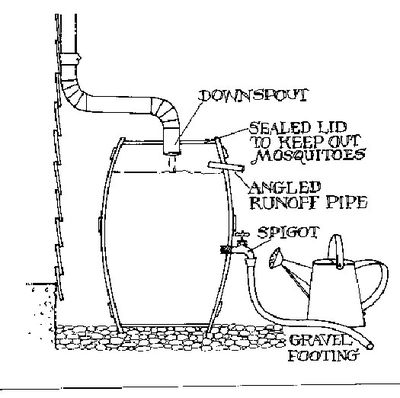
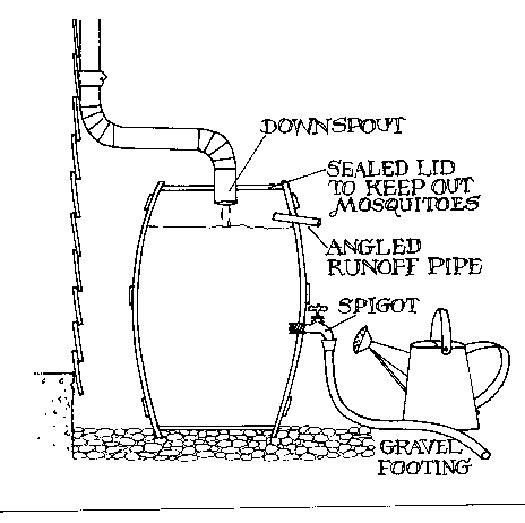
Urban gardeners throughout the state have known for years that an efficient way to water their landscapes is to collect rainwater from rooftops, store it, and use it during dry periods.
However, Washington state law on the subject of rainwater harvesting has been, well, a bit cloudy. A recent Ecology interpretive statement, signed by former Director Jay Manning, is clearing up questions about rainwater harvesting. This isn’t a change to the 1917 law, rather guidance to ensure consistency on how Ecology staff administers the law.
The statement creates a policy that allows Washington residents to collect rainwater for on-site use without a water right permit.
And this isn’t just for the gardeners. Both commercial and residential water users can collect rainwater for uses such as: watering lawns, gardens, or flushing toilets.
The key criteria is that the water must be used on-site, not conveyed to another location. Ecology also reserves the right to regulate the storage and use of harvested rainwater if and when the cumulative impact is likely to negatively affect stream flows or existing water rights.
Practicing rainwater harvesting is not just a tool for water-efficiency. It can also help Washington residents manage stormwater run-off. Stormwater is rain and snow melt that runs off surfaces such as rooftops, paved streets, highways, and parking lots.
As water runs off these surfaces, it can pick up pollution such as: oil, fertilizers, pesticides, soil, trash, and animal waste. From here, the water might flow directly into a local stream, bay, or lake.
Or, it may go into a storm drain and continue through storm pipes until it is released untreated into a local waterway. Capturing rooftop rain will prevent excess pollution from reaching Washington waters.
Brook Beeler is the Watershed Education Coordinator for Washington Department of Ecology’s Eastern Region.