
Spokane builders to show off Green abilities
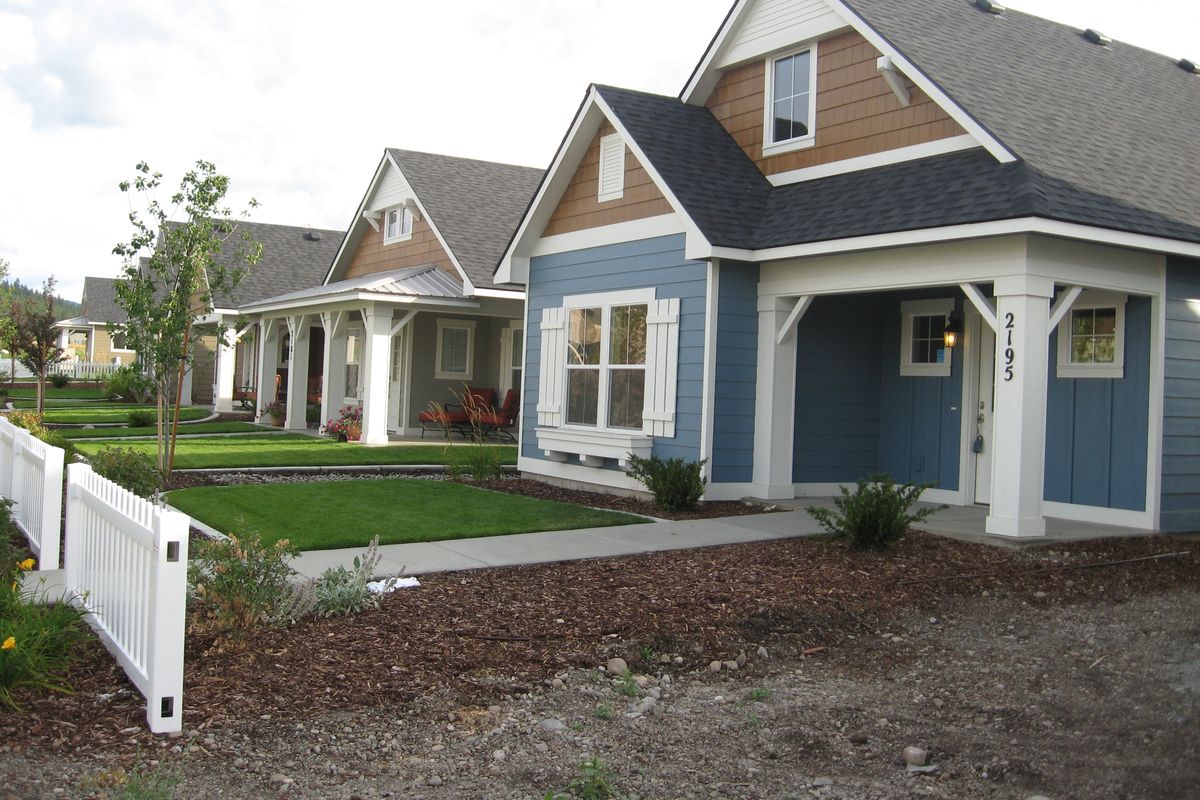
Phil Folyer admits he was skeptical about the whole Green thing.
Sure it’s always smart to include the latest, most efficient products in a home. “Most of us were halfway there anyway – we build good, quality homes,” said Folyer, owner of Morse Western Homes in Spokane. “But you wonder how much more time is required to go Green, whether it’s worth it, and will you really sell more homes this way.”
These days, chalk him up as a believer that Green can benefit everyone – your clients, the environment, and fellow builders.
“A few years ago I had built a home with EnergyStar products,” he said. “During the winter I was blown away that the home’s monthly utility bill was half my own.”
Now, he’s part of a growing group of Inland Northwest builders interested in all aspects of sustainable construction. “We’re really coming together to share notes, discuss what’s new, what’s good,” he said.
This fall, Folyer and about 20 other builders will show the results of these efforts in the Spokane Home Builders Association’s annual Fall Festival of Homes.
For the past five years, the September and October event shows off area custom home projects. Visitors love seeing new construction and what’s for sale.
“We have homes of any price in any neighborhood, and it’s all free to attend,” said Katherine Morgan, SHBA’s marketing and events director.
This year’s festival has a new twist – about 10 of the 37 homes are certified “Built Green,” a local benchmark that recognizes that the builder and any subs use certain techniques, products and processes. Extra points are given for behaviors like re-using construction materials on other jobs, or banning smoking on the job site.
During the Built Green process, each home receives a value from 1 to 5 stars, based on materials used, energy systems installed, wastewater methods and more. Homes with 3 stars or higher also require third-party certification.
“This way it’s not just the builder saying something is Green or uses Green products, but verifies that it has attained certain standards,” Morgan said.
One of the participants will be Greenstone Homes, which has been working toward more efficient homes in all its neighborhoods.
“I actually don’t like the term ‘Green,’ said Jayson Hunnel, director of sales. “Sustainable is better – it means that you don’t just use Green materials, but the whole home is built properly and with higher quality. You don’t just put down bamboo floors, but test to make sure everything is tightly sealed.”
A sustainable home has appeal to anyone, not just those with Green philosophies.
“There really are a lot of tangible benefits, like saving $50 a month on your power bill,” Hunnel said.
Greenstone has been part of the Fall Festival of Homes since the beginning, and this year its Rocky Hill neighborhood in Liberty Lake will be the eastern host site.
Hunnel said the growing interest in Green building has led to more sustainable products. More often than not, these are affordable, whereas in the past, some ‘environmentally friendly’ products were considered pricy luxuries.
“We are seeing better products, not just things that are environmentally conscious,” he said.
Builders say the EnergyStar certification has opened a lot of doors for Green building. The program is jointly funded by the U.S. Environmental Protection Agency and the U.S. Department of Energy, and helps consumers save money and protect the environment through energy-efficient products and practices.
The EPA launched the program in 1992 to reduce greenhouse emissions, originally focusing on computers and monitors. In 1995, it was expanded to other office equipment plus residential heating and cooling.
Today, there are 60 product categories and thousands of EnergyStar products, from appliances and lighting to home electronics and entire homes and buildings, plus other resources like building assessment tools.
Corey Condron, owner of Condron Homes in Spokane, has seven homes in this year’s Fall Festival, all certified EnergyStar homes.
“Homeowners will save at least 20 percent on their energy consumption,” he said.
Condron didn’t utilize Built Green regulations in these homes, but said the EnergyStar designation is a good indicator of sustainability.
“We’ve already been building at the EnergyStar level, with things like appliances, high-efficiency windows and 95 percent efficiency furnaces,” he said.
The Built Green checklist has similarities to EnergyStar, but is designed for the Inland Northwest climate.
Jeff Fountain, principal architect for Copeland Architecture and Construction in Spokane, is one of the chairmen of the Built Green Inland Northwest chapter.
He and others in the building field, utilities like Avista, and government officials spent almost two years researching Built Green programs in other communities before crafting the local standards.
With the creation of our area’s version, there are now seven Built Green chapters in Washington. Some like Pierce, King and Snohomish counties, are geographically close, but different in terms of their regulations and density.
“It doesn’t work to try to do a national or even a state program,” Fountain said. “So we took some of what they all did, and added things to fit this area.”
The first version of Built Green Inland Northwest was geared to residential single-family construction, and the committee is working on companion guides for remodelers and developers.
What’s next for local Green building efforts?
First, a continued push toward ‘bigger isn’t necessarily better.’ Less square footage can mean less material used and is easier to heat or cool.
“We’re seeing a concept of ‘not so big a house’ these days,” Fountain said. “It’s now about being smaller and being more efficient.”
Kris Eiffert, Built Green coordinator for Spokane’s Brent Peterson Construction, said a smaller home has a smaller carbon footprint in terms of energy savings.
The home they’ve built for the Fall Festival, “The Celadon,” in Greenstone’s River District in the Liberty Lake area, is the only five-star Built Green home in Spokane County. It features everything from outdoor solar panels to sensors in the closets that turn off LED lights after the door is closed.
Sprinklers are programmed to not come on when it’s raining, and there’s a ‘smart’ skylight that closes when it senses rain and opens when the sun emerges. An ‘old becomes new’ innovation is that rainwater is collected into a cistern and made available for watering.
“When people start hearing what we’re doing, they get excited,” Eiffert said.
Clients can also help further Green methods by asking builders about their Green philosophies. “We’re trying to create more brand awareness for the Built Green program, and would love for clients to ask for the checklist,” Fountain said. “That would really promote more builders to use it.”
The first Green certification training program for about 30 area Realtors was offered earlier this summer, and other classes are planned. There is even talk about adding Green features to property listings.
“You can use your Built Green checklist as a way of choosing your home, looking for something that will save money, be more durable and more efficient than other homes,” he said. “We never have people saying ‘I’ll take the less efficient home.’”
The 2009 SHBA Fall Festival of Homes presented by Pro-Build runs from 10 a.m.-5 p.m. Sept. 25-27 and Oct. 2-4. The 37 participating homes by 22 builders are scattered through Spokane County. For more information and directions visit www.spokanefestivalofhomes.com/
For more information about the Built Green Inland Northwest program or other building programs or events, visit www.shba.com.