
Grittiness, frequent failures drive politically incorrect ‘Jersey Shore’
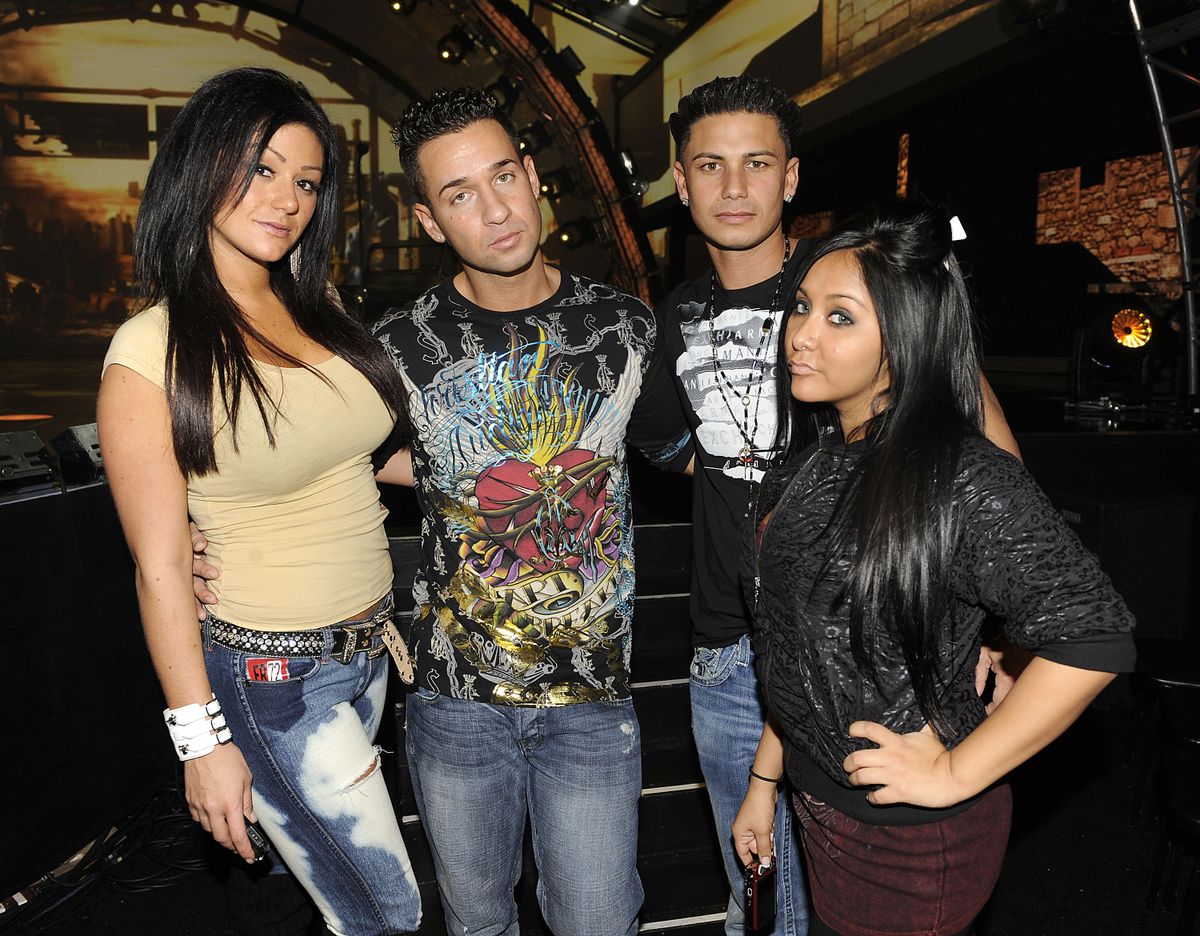
How did a freak show like “Jersey Shore” become 2010’s must-see TV event?
Take eight young adults – brash, mouthy kids from what is often disparaged as “the bridge-and-tunnel crowd” – and pack them in a rental house in a blue-collar beach town in New Jersey.
Give them jobs in a souvenir shop on the boardwalk and let them blow all their wages on bronzer, hair products and steroids before sending them out bar-hopping every night.
What you get is reality TV with a far larger component of reality than the genre usually trucks in.
The antics of this crass, copper-toned crew fascinated viewers. And repulsed them. The point is, they couldn’t stop watching.
Among other things, “Jersey Shore” made it shockingly clear how intent many young men are nowadays on developing the kind of freakishly bulked-up physiques previously associated with competitive body building.
The series’ alpha male, Mike, prefers to go by the pet name he has given to his rippling abs: “the Situation.”
In one episode, female housemate J-Woww said, “Tall, completely jacked, steroids, like multiple growth hormones … that’s the type I’m attracted to.”
But “Jersey Shore,” recently renewed for a second season, didn’t become the “It” show of the year just because of its brawn.
Rather, it was the way it made eight working-class kids seem so exotic and so ordinary at the same time, the way it exploded ethnic stereotypes by embracing them.
“Ethnicity is often used to signify authenticity in media,” says Laurie J. Ouellette, an associate professor of communications at the University of Minnesota and co-author of “Reality TV: Remaking Television Culture” (NYU Press, 2008).
“I think there’s been a backlash against the type of MTV programming that has been about debutantes and trust-fund kids, like ‘The Hills,’ ” she says.
“In the midst of the economic recession, this program is a little grittier. It feels a little less polished. I think there’s an enormous attraction to that at the moment.”
Certainly Pauly, Vinny, Mike and the rest never put on airs. They were just a bunch of young people trying to take advantage of a carefree summer, to party and hook up as much as possible before jobs, kids and mortgages land on their heads.
And if they made fools of themselves in the process … well, that’s why they call it “reality TV.”
“In this show there is a healthy dose of failure, of characters crashing and burning,” says Chad Dell, associate professor of communication at Monmouth University. “In this country we love heroes, but we also love to see people fail. It makes us feel better about ourselves.”
“Jersey Shore” has floated the boat of everyone involved. MTV saw its ratings more than triple over the course of nine episodes. And the show has spiked off-season tourism for its setting, Seaside Heights, N.J.
“People are still coming down,” says John Camera, borough administrator. “The neighbors tell us there are still people out on the street every day taking pictures. The (house) owners are renting it out for Sweet 16 parties. So they’re getting some mileage out of it.”
Cast members have been exploiting their summer fling avariciously, retaining publicists and managers and making more personal appearances than a Super Bowl-winning quarterback.
Their overnight notoriety is going to make a second season very tricky to pull off.
MTV plans to begin taping as soon as next month, presumably in a warmer climate. But that kid-next-door aura can never be recaptured.
“Jersey Shore” is a perfect example of Newton’s Second Law of Pop Celebrity: The brighter a phenomenon burns, the faster it flames out.
The Calamari Kids understand this. From the beginning, they seemed comfortable with the dual nature of reality-show fame – that we are laughing both at them and with them.
They certainly know it’s only a matter of time before they’re manning a booth on the boardwalk with a sign: “Arm wrestle Ronnie from ‘Jersey Shore’ for $5!”