
Weaving made easy
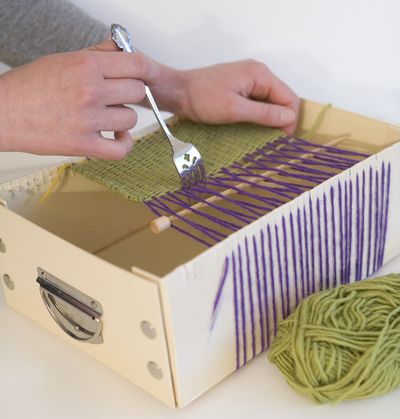
Do you have dreams of weaving, but haven’t a clue where to begin? You’re not alone. Countless modern women who have been raised with all sorts of practical skills and talents have nonetheless lost touch with the many-splendored arts of fabric and fiber. Not to worry. If you’re yearning for supple skeins of yarn and woven wonders, I’m here to tell you that there is nothing stopping you from fulfilling your fabric fantasies. No stress or expensive equipment required. All you need is a cozy midwinter day and a smidgen of stuff to begin. (You may even have some of the materials lying around the house.)
I’ll help get you started right here, right now — plenty of time to practice for next year’s Christmas gifts. Whether you’re imagining something decorative or fabulously functional, you’ll be able to satisfy your creative cravings before you know it. Once you get the hang of it, pass your newfound passion along to another budding weaver, whether she’s 8 years old or 80!
Weaving Made Easy
Remember weaving on a piece of cardboard way back in grade school? Silly as it may seem, a cardboard loom is a perfectly useful and inexpensive tool for learning to weave. Setup is a snap, and there are no limits to what you can create once you start weaving. Start with mug rugs and trivets, and work toward tapestries. All you need are:
— a sturdy box (a shoe box is ideal)
— a sharp knife
— cotton or wool yarn to “wind” or string the “warp”
— a ruler or knitting needle
— wool yarn, rag strips, or other imaginative materials for weaving the “weft”
— a wide-toothed comb or fork
Step One: Make Your Own Loom
Place your box open-side-up. With your knife, make small notches along two opposite edges of your box that are about 1/4 inch (or one pinkie finger) apart. Make your notches about 1/2 inch deep. Beginning at one corner, push the end of your warp yarn down into the first notch, and tape the end to the underside of the box. Pull the yarn straight down to the notch on the opposite end of the box, making sure it’s nice and tight, and slip the yarn into that notch.
Now, wrap your warp yarn around the entire box, wedging it into each top and bottom notch as you go, gently pulling it tight from top to bottom. When the box is fully strung, cut and tape the end of your warp yarn to the underside of the box. That’s it! You have created a loom on the open side of the box, and that’s where you’ll begin weaving.
Step Two: Ready, Set, Weave!
First, weave in a “header,” a single piece of scrap yarn that will help align the warp and provide a base for the weft yarn. Use a simple over-under pattern, snaking the yarn through each strand of the warp. You’ll remove the header when the project is finished.
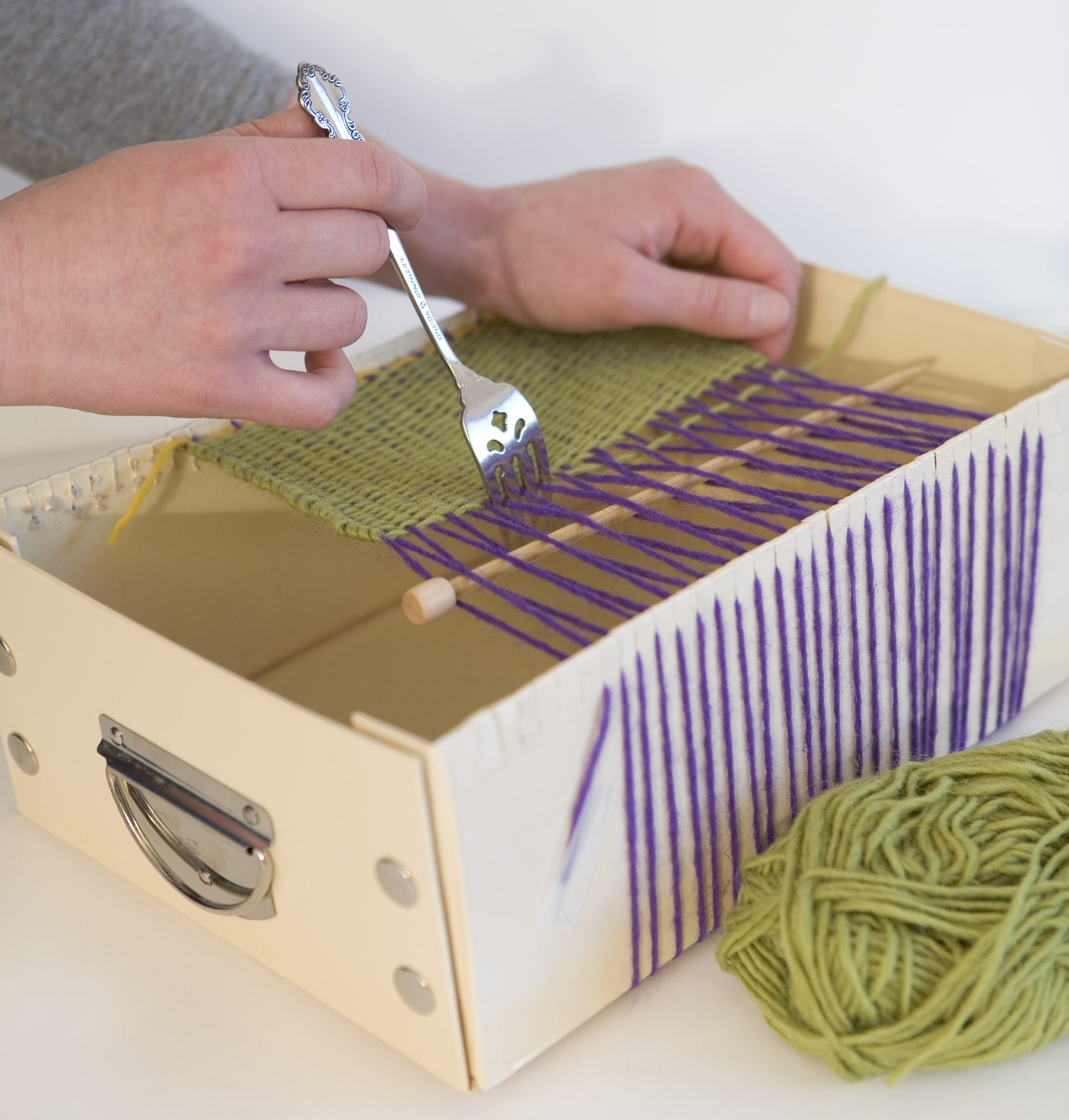
Slide your ruler or knitting needle into the warp threads, picking up every other strand (opposite of your header). Prop the ruler on the edges of the box to hold the raised threads in place. This opening is called the “shed.”
Using your fingers or a knitting needle, draw the weft yarn through the shed in an arc rather than straight across. This prevents the weft from constricting the warp strands. Using your comb or fork, gently “beat” or press the arc of weft yarn down against the header.
Start the next row by lifting the alternate warp strands with the ruler and weaving the weft thread back across in an arc. Continue this alternating pattern until you reach the top of your loom.
Step Three: Cutting Off
Gently pull your header strand from the loom.
Cut two warp threads at a time, leaving enough length for fringe, and tie them together before moving to the next pair. Once your piece is removed from the loom, you can add beads or a twig at each end, or simply trim the fringe to the length you desire.
For most of us, it’s helpful to see pictures of any new process, so I suggest looking up the free tutorial “Learn to Weave Using a Cardboard Loom” at the All Fiber Arts Web site (www.allfiberarts.com/library/aa01/aa040201.htm). It details the making of a box loom and the weaving process with helpful photos of each step.
If you’re ready to dig a bit deeper, I highly recommend the book “Kids Weaving: Projects for Kids of All Ages” by Sarah Swett. Written with kids in mind, it provides simple instructions for several fun weaving projects. A longtime friend and accomplished weaver, Sarah’s work is sure to inspire. Visit her Web site at www.sarah-swett.com.