
Make your own vanilla
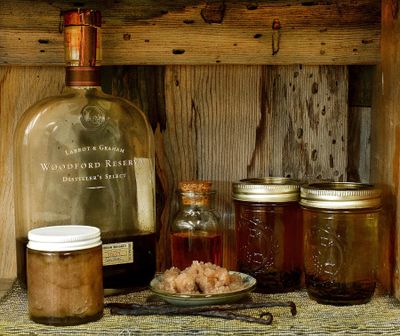

The fragrance of pure, homemade vanilla extract is so rich, sweet and exotic that I can’t help but dab a bit on my wrists while I’m preparing food. I want to inhale it for hours to come! Few other culinary flavors have such an irresistible natural allure that we crave them in edibles as well as perfumes, lotions, potpourris and candles. That heavenly scent is like Cupid’s arrow, compelling us to fall head over heels for the elixir of vanilla before it even begins to tantalize our taste buds. Imitation vanilla has flooded the market, showing up in everything from cookies to cosmetics, but don’t be fooled. There is nothing that compares to the sensory bouquet of real vanilla.
A Robust History
True vanilla flavoring comes from the ripe fruit pods of a type of orchid that is native to Mexico. These orchids were first cultivated by Pre-Colombian people called the Totonac, who inhabited Mexico’s Gulf Coast region. According to Totonac mythology, the orchid’s origin can be traced back to the tragic story of a young goddess and her mortal lover. Forbidden to marry, the two fled into the forest but were eventually captured and killed. It is said that where the lovers’ blood touched the ground, the first vanilla orchid sprouted.
Attempts to cultivate the orchid failed for centuries, as pollination of the plant was dependent on local species of bees and hummingbirds that were able to penetrate the tough membrane between the plant’s pistol and stamen. But in 1819, French entrepreneurs attempted to produce vanilla orchids on islands east of Madagascar. Incredibly, a 12-year-old slave on the island of R‚union discovered how to pollinate the flowers efficiently by hand, and the vanilla industry was born. Even today, hand pollination is used to propagate vanilla outside its native region where it is still pollinated naturally by the birds and the bees.
Fragrance and Flavor Revealed
What we call the vanilla “bean” is really a fruit whose fabulous fragrance, known as vanillin, lies waiting in the seeds and oils within. When fresh-picked, vanilla beans are virtually odorless. Only after an intensive fermentation process does the magic of vanilla manifest. Once cured, vanilla pods that are loosely packaged will develop tiny white strands of crystallized vanillin called givre, meaning “frost” in French. While not an absolute indicator of quality, givre is a sure sign of sensational fragrance and flavor.
Veritable Vanilla
Imitation vanilla contains synthetic vanillin, a woefully inferior replica of the natural pod’s substance. Synthetic vanillin is a byproduct of the pulp and paper industry, made from waste substances that are cheap and easier to come by than fermented vanilla beans. Even the “pure vanilla extract” commonly found in supermarkets is likely to contain synthetic vanillin and other fillers such as corn syrup. While these artificial alternatives manage to pull off a scent similar to vanilla, they inevitably lack the depth and delicacy cultivated in the tropical orchid’s fruit.
Of course, true vanilla extract is more expensive than imitation vanilla because more effort is required to harvest and process the beans. But there is no need to settle for cheap alternatives. You can actually get more vanilla extract (and I mean the good stuff) for a bargain price when you make your own. The ever-knowledgeable people at Mountain Rose Herbs shared their simple recipe with me, and I’ve been vamping up the vanilla in my kitchen ever since.
Commercially, vanilla extract is made in a manner much like brewing coffee. Instead of water, though, alcohol is percolated through chopped, cured beans. At home, the process is even simpler. All you do is combine the ingredients in a jar, shake daily, and wait for the marvelous infusion of flavor to take place.
Homemade Vanilla Extract
You’ll Need:
2-3 whole vanilla beans (I recommend buying certified organic or biodynamic certified beans from Mountain Rose Herbs, www.mountainroseherbs.com.)
1 cup brandy, vodka or bourbon
— Split beans lengthwise with a knife, leaving the seeds inside intact.
— Place beans in a jar, cover with alcohol, and cap tightly.
— Agitate the mixture by shaking the jar once per day for 4-6 weeks.
The mixture will turn dark brown and become stronger in flavor with time. You may infuse the vanilla beans for as long as you would like, and add new vanilla beans to the jar to make a stronger and more concentrated extract.
Once the flavor of the extract has reached the desired strength, strain the liquid from the beans and bottle it for use in any recipe that calls for vanilla extract. (Amber-colored bottles are best for preserving flavor, but any glass bottles may be used.) Vanilla extract will last indefinitely, and will become even more pronounced in flavor as it ages.
Tip: To make your bottles even more attractive, you can insert a vanilla bean into each bottle. If giving as a gift, then you can also tie a ribbon around the neck of the bottle and attach a label listing the ingredients and date created.