
Soldiers turn to gardens for peace of mind
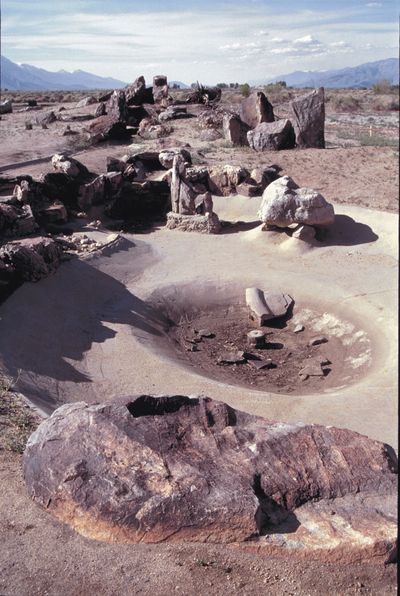

Gardening can be comforting – even therapeutic – for troops trying to shake the stresses of war.
There’s a long history of soldiers growing plants in the extreme conditions of a war zone.
“Trench gardens” produced needed food as well as healing diversion for soldiers mired in the muck on both sides of the Western Front in World War I.
American prisoners of war cultivated “barbed wire gardens” to augment starvation rations and provide some mental escape during World War II.
Most recently, such “defiant gardens” have cropped up at isolated combat outposts in Iraq and Afghanistan, much as they did around GI Quonset huts in the Vietnam of four decades ago.
“Such gardens stand not in harmony with but in opposition to their locations, asserting their presence,” writes Kenneth Helphand, a professor of landscape architecture at the University of Oregon, in his “Defiant Gardens: Making Gardens in Wartime” (Trinity University Press, 2006).
The late John Creech, a World War II infantry officer who survived several German prisoner of war camps to become director of the U.S. National Arboretum in the 1970s, jokingly introduced himself to Helphand as “the only soldier ever awarded a medal for gardening.”
After being moved to a camp in Poland that had an unused greenhouse, Creech talked his captors into letting him operate it, supplementing a moldy bread and watered-down-soup diet for 1,500 fellow prisoners.
That earned him a Bronze Star for merit – which he was said to have valued more than the Silver Star won earlier for gallantry in action.