
Smart phone app tracks soldier moods
Lewis-McChord center devises self-assessment program
TACOMA – A question like “How do you feel?” can sound a little touchy-feely to a battle-hardened soldier.
But ask the same question on a smart phone application that a soldier can stash in his fatigues? That just might get a straight answer.
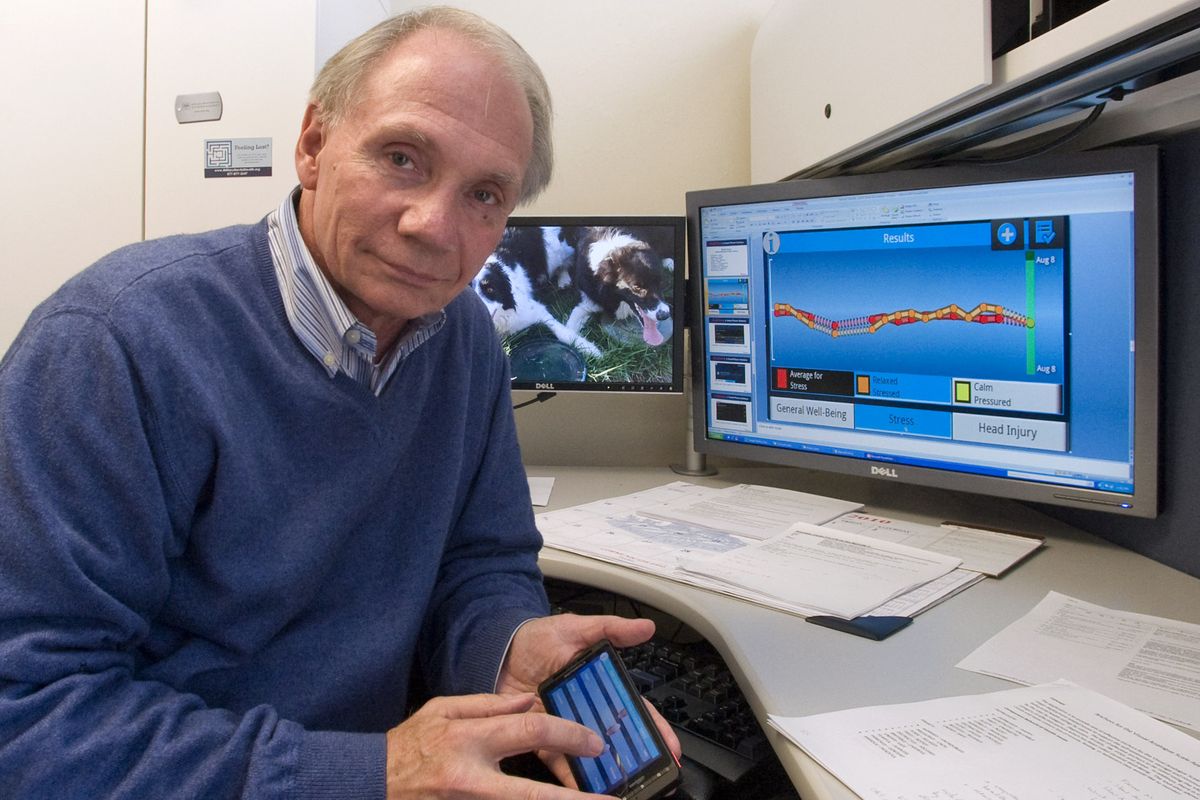
Enter the T2 Mood Tracker, a free smart phone application the Defense Department released last week to help service members and veterans monitor their emotions with a few strokes on a touchpad.
The application was developed at Joint Base Lewis-McChord in a tight cluster of portable offices that contain the National Center for Telehealth and Technology. The three-year-old program aims to boost military mental health services by infusing them with new technology.
Inside, psychologists and engineers collaborate on virtual-reality programs and enhanced communication devices. Smart-phone apps take up a lot of their time, including one that would help soldiers practice breathing exercises.
Another would let someone create a personal “hope box” with uplifting images or sounds to call on in moments of depression.
And for soldiers on combat deployments, engineers at the local center are working on an app to use after traumatic events. It would ask a few questions and deliver responses to a counselor who could determine whether the soldier should see a therapist.
The Lewis-McChord center is targeting smart phone applications as a core effort this year because soldiers and veterans are spending less time with their laptops and more with their iPhones and Androids.
“We need to be building tools that are meeting the needs of our population, which is predominantly young and tech savvy,” said Robert Ciulla, a division chief who oversees the center’s Population and Prevention Programs.
One of the first applications out of the box is the T2 Mood Tracker. It’s designed to yield information that can assist doctors and therapists in addressing common responses to combat, such as post-traumatic stress and depression.
“The very first question a doctor or a therapist asks is ‘How have you been doing since I saw you last?’ Everything that follows is based on that answer,” said Perry Bosmajian, the psychologist behind the new phone app. “With this, it’s all documented, how you’re feeling.”
Bosmajian pitched the application last spring when an engineer in his office asked around about ideas for a contest called “Apps for the Army.” They made the May submission deadline and won first prize in the morale, welfare and recreation category.
Other winners included an application that helps soldiers in the field plan their mission routes. Another answers common questions for new recruits, such as how to differentiate ranks.
The T2 Mood Tracker isn’t a tool to diagnose mental health issues, but it can be used privately by soldiers or veterans to help them gauge how they’re doing over time.
Every day, the user can check in with the application and rate his mood. The device compiles the self-assessments over weeks or months, and a therapist can spot trends and ask more direct questions to help a patient.
It features groups of questions tailored to draw out emotions related to depression, general health, traumatic brain injuries, post-traumatic stress or other stress.
For example, someone who wants a sense of how he’s coping with post-traumatic stress would rate his emotions on 10 scales he can slide with his fingertip on his phone’s screen. Some of those prompts are “jumpy to relaxed,” “guarded to trusting,” “numb to responsive,” “hyper to calm” and “hopeless to hopeful.”
Bosmajian said that data would be especially reliable because the user can track it in the moment instead of jotting down notes before therapy sessions.
“In the past, you’d have your appointment with your therapist and you’d go in the parking lot and fill the whole thing out how you’ve been doing for the past two weeks,” he said. “This won’t let you do that.”