
Test of survival
Worldwide about 13 million babies are born prematurely each year, which has exacted a heavy toll on families, medical systems and economies
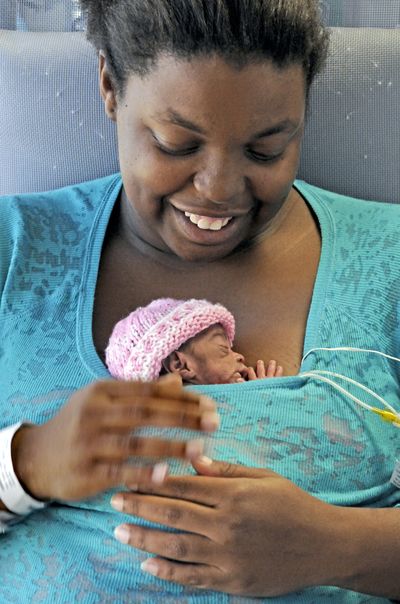
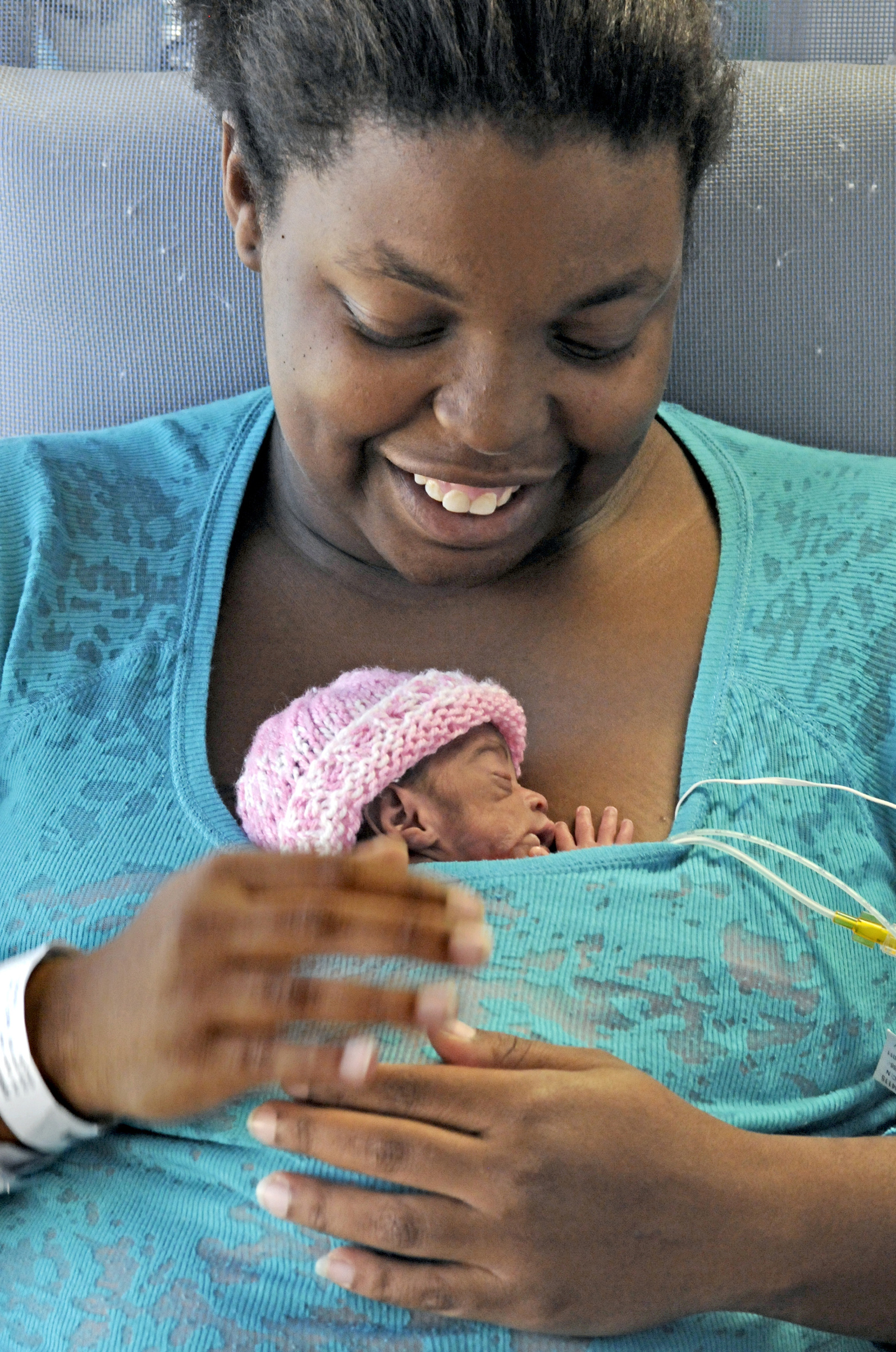
MIAMI — Sixteen years ago, Megan McDonald and Jim Vernon of Key West, Fla., were frightened new parents. Their daughter arrived way too early, at 28 weeks, and way too small, at 3 pounds, 5 ounces.
McDonald, now 56, still shakes when she talks about the three scary months that tiny Anna spent at the Neonatal Intensive Care Unit at Jackson Memorial Hospital in Miami, fighting for her life inside an incubator.
She had a blood transfusion. Her hair was shaved in spots. Her body, less than half the size of an average newborn, endured 21 IVs and was hooked to monitors that constantly beeped.
“We called it the frog pond,” Vernon said.
Anna’s medical problems weren’t over when she came home. She and her parents have dealt with food allergies, brittle bone disease and scoliosis that required a back brace. But now, she is a thriving high school sophomore, with a room that doubles as a shrine to pop star Justin Bieber.
For the past two years, Anna has made annual pilgrimages to the special place that saved her life. She brings bins full of preemie clothes and blankets that she passionately collects from thrift stores and buys with proceeds from her homemade greeting cards.
Anna would like to become a neonatologist. Unfortunately for the welfare of newborns, the need for that profession is greater now than when she was a preemie.
The first World Prematurity Day was Nov. 17. The March of Dimes joined organizations in Europe, Africa and Australia to raise awareness and call on governments to do more about this growing problem. Worldwide, about 13 million babies are born prematurely each year. One million of them die, while the surviving 12 million preemies take their toll on families, medical systems and economies.
“There actually is more prematurity now than there used to be,” said Dr. Shahnaz Duara, a University of Miami professor of pediatrics and medical director at Level 4 Project New Born Neonatal Intensive Care Unit at Holtz Children’s Hospital, part of Jackson’s public health system.
While modern medicine has substantially increased the survival rates of preemies over the past two decades, the percentage of births that result in premature labor also has increased during that time.
Without enough time in the womb, the babies are born with lungs, brains and organs that are not fully developed.
For those who survive the birth, there can be a lifetime of medical problems, which include cerebral palsy, lung issues, learning disabilities and vision and hearing loss.
Duara has been a neonatologist for 30 years. She cited several reasons for today’s high prematurity rates, including the trend of women having children later in life and the growing success of in vitro fertilization, which often leads to multiple births. At one time there were two sets of quintuplets in the unit.
Another big reason for prematurity is the rising cost of health care, which leaves many women without proper prenatal care.
In Florida, the highest risk for premature delivery was for uninsured women, at a whopping 28.5 percent. That’s even higher than for women who smoke, at 17.3 percent.
“Prenatal care is vital,” Duara said. “Once your baby is here, you can’t go back and say I wish I hadn’t smoked. I wish I had watched my blood pressure. I wish I had lost those 10 pounds before I got pregnant.”
Some premature births are easily preventable, caused by elected early induction of labor or Caesarean sections.
“Some doctors think if a woman gets to 37 weeks that’s good enough,” Duara said. “But even the best ultrasounds can be off by a week of two. And when research came out that said c-sections can protect against birth asphyxiation, it took the lid off everything.”
While babies born just a couple weeks early probably are not at risk of dying, they do end up in intensive care units and “cost everybody something,” Duara said.
Jackson’s neonatal intensive care unit, which was ranked the top center in Florida this year by U.S. News & World Report, has 40 high-tech incubators nicknamed The Beamers, because at $35,000 apiece they cost about the same as a BMW.
“Babies that are very, very small require high humidity,” said Dianne Bennett, associate director of the unit. “Sometimes it can look like a rainforest, but it’s good for them, like a day at the spa.”
Premature babies usually have to stay in the hospital about as long as they would have been in the womb full term. So if a baby is born eight weeks early, the hospital stay would be about eight weeks.
At 25 weeks, survival rates are about 70 percent. They increase to 80 percent at 26 weeks and more than 90 percent for the largest premature babies.
These survival rates are better than most centers. It’s a great benefit that many of the unit’s babies are born under controlled circumstances at the attached Perinatal Center. While in labor, mothers receive drugs that help the premature babies’ undeveloped lungs prepare for the outside world.The staff can empathize with their moms, some more than others. Neonatal intensive care nurse Roxanne Britton has worked at Jackson for 32 years. Twenty-six years ago, her son was born prematurely and had great difficulty breathing.
She said since then some wonder drugs have come along that greatly aid lung development.
Twenty-two years ago, neonatal intensive care nurse Yamile Cuyan’s daughter was born at 26 weeks. She weighed 660 grams, about 11/2 pounds.
“It took me a day and a half in order to come and face her,” Cuyan recalled. “I was very, very scared and didn’t think she was going to make it. But she was a fighter, and got excellent care here.”
She named her daughter Milagros. “It means miracle,” she said. Her daughter now is in college in Boston, studying architecture.
But while the staff celebrates all the miracles that take place regularly in the unit, Duara, the medical director, would like fewer miracles and more babies born full term. “The best thing to do for prematurity is prevent it.”