
Wildlife photographer has something to crow about
Coeur d’Alene’s Tim Christie gets great shots close to home
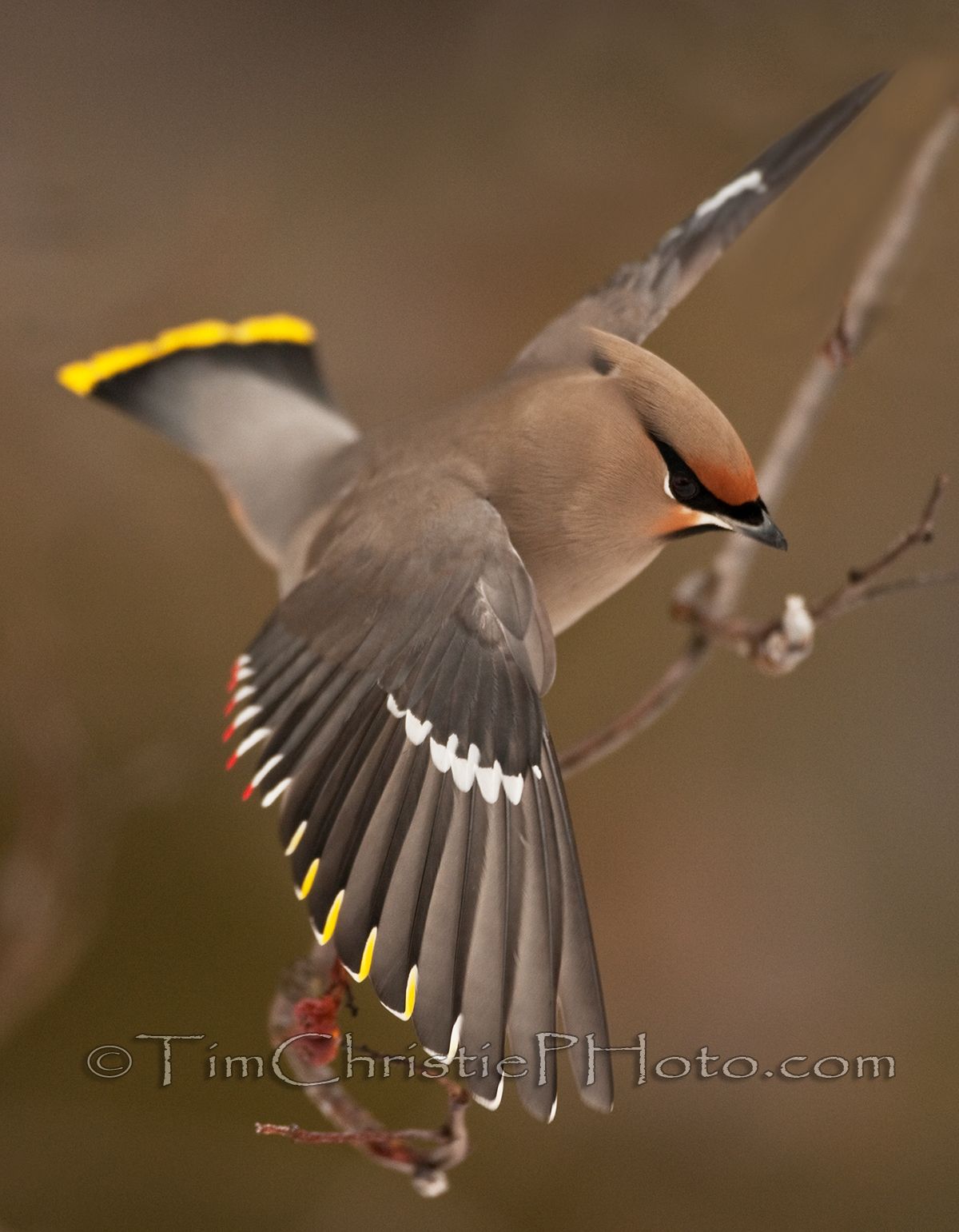
He’s traveled the continent with cameras to whet the world’s visual appetite for the great outdoors. In the process, he’s been treed by a grizzly, charged by an Alaskan bull moose and nearly skewered by a bull elk.
Yet one of his favorite photographs involves a common pheasant captured in a unique moment of perfect light just 10 minutes from his Coeur d’Alene home.
Professional wildlife photographer Tim Christie says he’s “very proud of that shot” of a rooster ringneck at the peak of crowing as a puff of breath steams from its mouth.
It was the culmination of his spring quest for pheasant photos, involving days of driving, searching, sitting and shooting thousands of frames through his telephoto lens.
“The photo editor at Field & Stream told me it was one of the most unique photos he’d seen in a long, long time; high praise,” Christie said. The magazine featured the photo in November for the two-page spread it devotes 12 times a year to showcase the best wildlife-related images available.
Even though he’s published thousands of pictures, including more than 500 magazine covers over 30 years, Christie says he could wallpaper his home with rejections slips from photo editors.
A thick hide is essential to surviving in the business, he says, along with persistence, willingness to keep pace with technology and eagerness to head into the field very early, stay out late and then devote even longer hours following up on the computer.
The basic rules for wildlife photographers haven’t changed during his career: Great photographs aren’t made from the comfort of a warm bed, he said.
Yet the warm cab of his pickup tends to be the most productive photo blind.
“Many creatures are accustomed to vehicles,” he said, showing the special sand-bag rest he uses to stabilize a telephoto lens he points out the cab-door window.
“But as soon as you step out of the truck, they’re gone.”
Christie has seriously pursued photography since 1978 after purchasing a used camera to photograph his young son.
Then he started focusing on even wilder subjects.
Soon the lifelong hunter found himself spending more time chasing wildlife with a camera than with his guns or fishing rods.
His first published photo featured a mountain goat on the cover of American Hunter magazine.
While teaching communication classes at North Idaho College, he also offered a wildlife-nature photography class before retiring in 2007.
He continues to pursue the outdoor photography business he started in 1981.
“Half of getting great photos is being there,” he said, noting a day last week when he decided to drive to Wolf Lodge Bay to photograph bald eagles. “I suspect many photographers were dissuaded from venturing out by the fog that blanketed the area,” he said, noting that he saw only one other person with a camera.
But the sun eventually burned through the freezing fog onto trees still flocked in frost.
Christie was ready when an eagle snatched a kokanee and flew it into a nearby tree. As the eagle dined on the fish, Christie feasted on the opportunity the sun, weather and wildlife presented in those few moments.
“Photography is all about the light,” he said. “I was blessed to be there.
“I’ve photographed all over North America but find most of my images within 500 miles of home, many of them near Coeur d’Alene.”
His wife, Kathleen, is accustomed to waking from a night’s sleep and finding a note on the counter saying something like, “It’s going to be a great sunrise, I’ve gotta be there,” he said.
“Luckily, she considers my photographic work my ministry.”
Christie came close to seeing his Maker while photographing wildlife in Glacier National Park in 1986.
He was following a big whitetail buck that was hanging with a doe on Oct. 6.
“I drove up on this buck and doe off the Camas Creek Road, and they weren’t alarmed,” he recalled.
“If an animal is not afraid of you initially, a photographer who doesn’t seem threatening can often stay with the animal for hours.
“I was wearing running shoes, and I remember looking at the boots in my car and thinking I should put them on before going into the forest. But I decided I needed to move quickly.”
He walked with the deer for some time, getting close enough to shoot full-frame head shots of the buck with his 300mm lens.
“Then I noticed the buck suddenly got edgy,” he said.
Moments later, he saw a small dark fur ball through the timber. Then came the trembling bawl of a grizzly cub.
“This is before pepper spray, and I knew I had to get up a tree,” he said. “When I heard brush crashing toward me, I became very motivated to climb.”
He was about 15 feet up a tree when the grizzly sow raced into sight to fend off any danger to its cub.
“The tree shook when she hit the tree with the force of a truck,” he said. “I was climbing as fast as I could but she was climbing faster, using the tree limbs like the rungs of a ladder.
“Her jaws were popping and she was growling and drooling. She was really pissed.”
The bear caught Christie and chomped on his foot.
“She knew she had me, so she crashed down out of the tree, but all she got was my running shoe. She’d broken all the branches when she went down, so she couldn’t get back up.
“If I had put on my high-top boots, that situation could have turned out much differently.”
He said he mounted the running shoe, clearly showing the holes in the heel, as a trophy of survival.
Meanwhile, some 400 miles away in Yellowstone Park, another wildlife photographer was mauled and killed by a grizzly at the same time Christy was being treed.
“It was a sobering moment in my life,” he said, noting that he’s looked at life differently since then, but he’s never lost his passion for looking at wildlife through the lens of his camera.
“I told a photo editor for a major magazine about that incident and he immediately asked if I got any pictures, Christie said. “I said, ‘You don’t understand; this was a life-and-death situation.’
“The photo editor said something like, ‘You missed a good opportunity to get a great photo.’ ”
Photo editors have become even more demanding in the age of digital photography, he said.
Twenty years ago, his clients would advertise their photo needs in January for a June publication. “Now I get an email and they say they want an image in an hour. If you don’t respond within that short time, they’ll get it from somebody else.”
Editors have never had so many options.
“There are a lot of people out there who want to do what I want to do,” he said. “It’s never been an easy business, but it’s harder to compete now because of the proliferation of good equipment. Auto-focus has improved my photography by 10-fold, especially in action shots. But it’s also made it easier for amateur photographers to get good, sharp photos.”
While photographing big-game near Yellowstone Park last year, Christie said he saw 78 photographers gathered around one bull elk.
“I’m not talking about tourists with snapshot cameras,” he said. “These were people with serious equipment, including 500mm lenses. I looked them over and figured they averaged out to about $30,000 of gear apiece.
“Add it up: That’s well over $2 million in camera gear in one spot. You can bet there are a lot of good pictures being made when you have so many well-equipped people communing with nature.”
Constantly changing technology from lenses to camera sensors makes it enormously expensive to keep up with the Jones in the field.
“You have to sell a lot of photos to justify a new $15,000 lens,” he said.
Digital photography is a powerful tool that’s still in its infancy, he said.
A photographer can see what his camera is capturing in the field and make instantaneous adjustments to maximize the opportunity a wild situation offers.
Digital imagery also allows the photographer to use computers to manipulate a photo, perhaps adding warmth into an image made outside the perfect window of morning or evening light.
“But when you get a really good shot the old-fashioned way from your skill and experience, you find yourself having to justify it,” Christie said.
“When a photographer friend of mine saw the pheasant photo in Field & Stream, he immediately emailed and started giving me a bad time about adding in the little cloud of breath after the shoot.
“It’s sad that we now suspect every good image has been Photoshopped.”